

The Doorway System: Stop Losing Your Keys, Post and Bag
Eleven minutes searching for keys. The post is somewhere. Your bag is in a different room from the thing that was supposed to be in it.
Eleven minutes this morning, looking for your keys.
They were in yesterday's coat. The post from Tuesday is somewhere in the flat, unopened. Your bag is in the bedroom and the thing that was supposed to be in it is on the kitchen table, where you put it down so you would not forget it.
The doorway is where most lost objects and missed deadlines are actually created. Everything enters and leaves your home through one metre of space, and if that metre has no system, the things you need get scattered across the flat in the four seconds it takes to walk through. One shelf and three rules fixes a surprising amount of your week.
Why the door is the critical point
Every key, letter, parcel, bag, receipt and pair of shoes passes through the same spot twice a day. It is the highest-traffic place you own.
It is also the worst possible moment for decision-making: you are arriving tired or leaving late, carrying things, thinking about something else. Anything that requires a decision there will not get one - the item just gets put down wherever your hand happens to be, and then it is out of sight and immediately out of mind.
So the doorway should ask nothing of you. It should have one obvious place for each of four or five things, and nothing else.
Build the landing spot
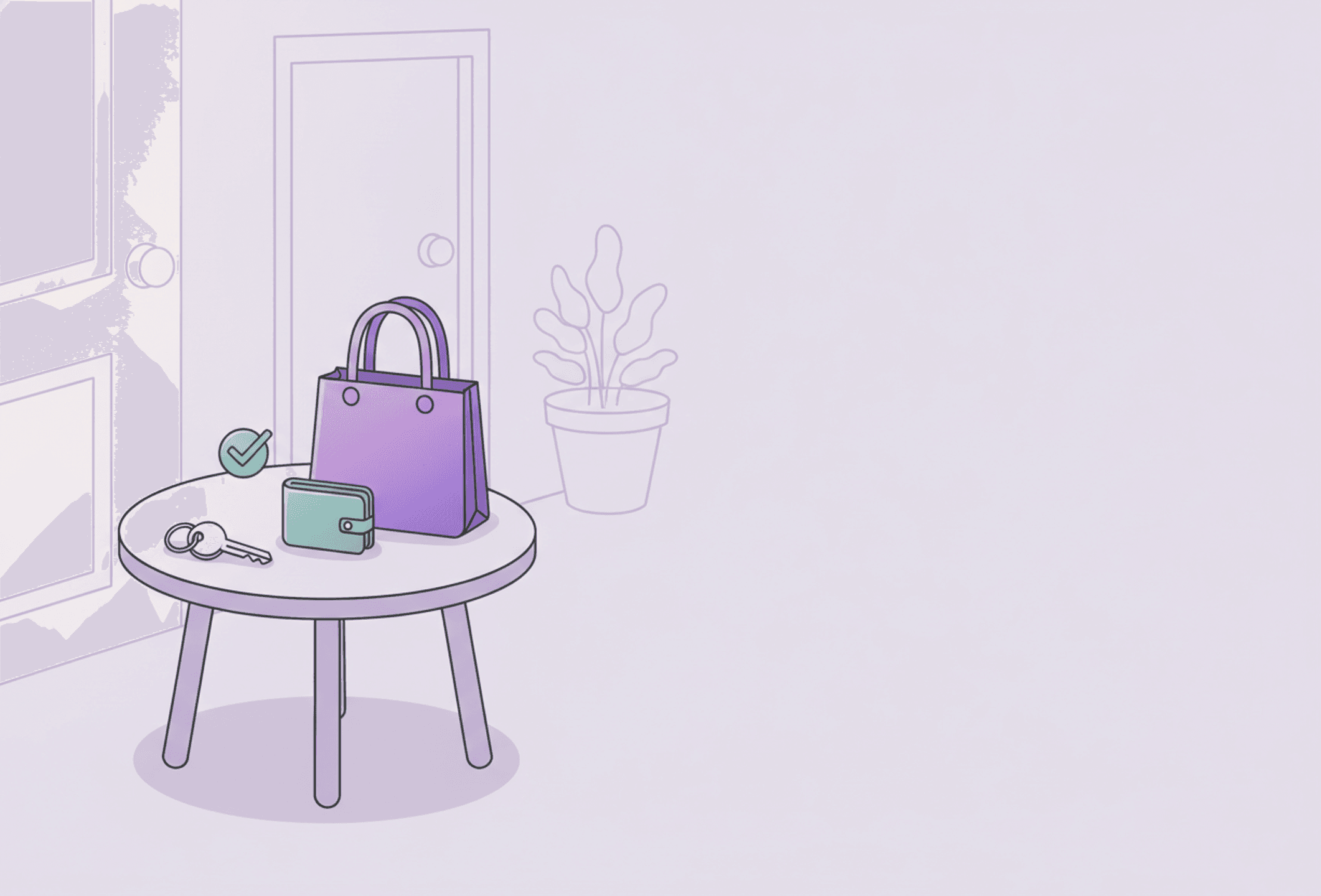
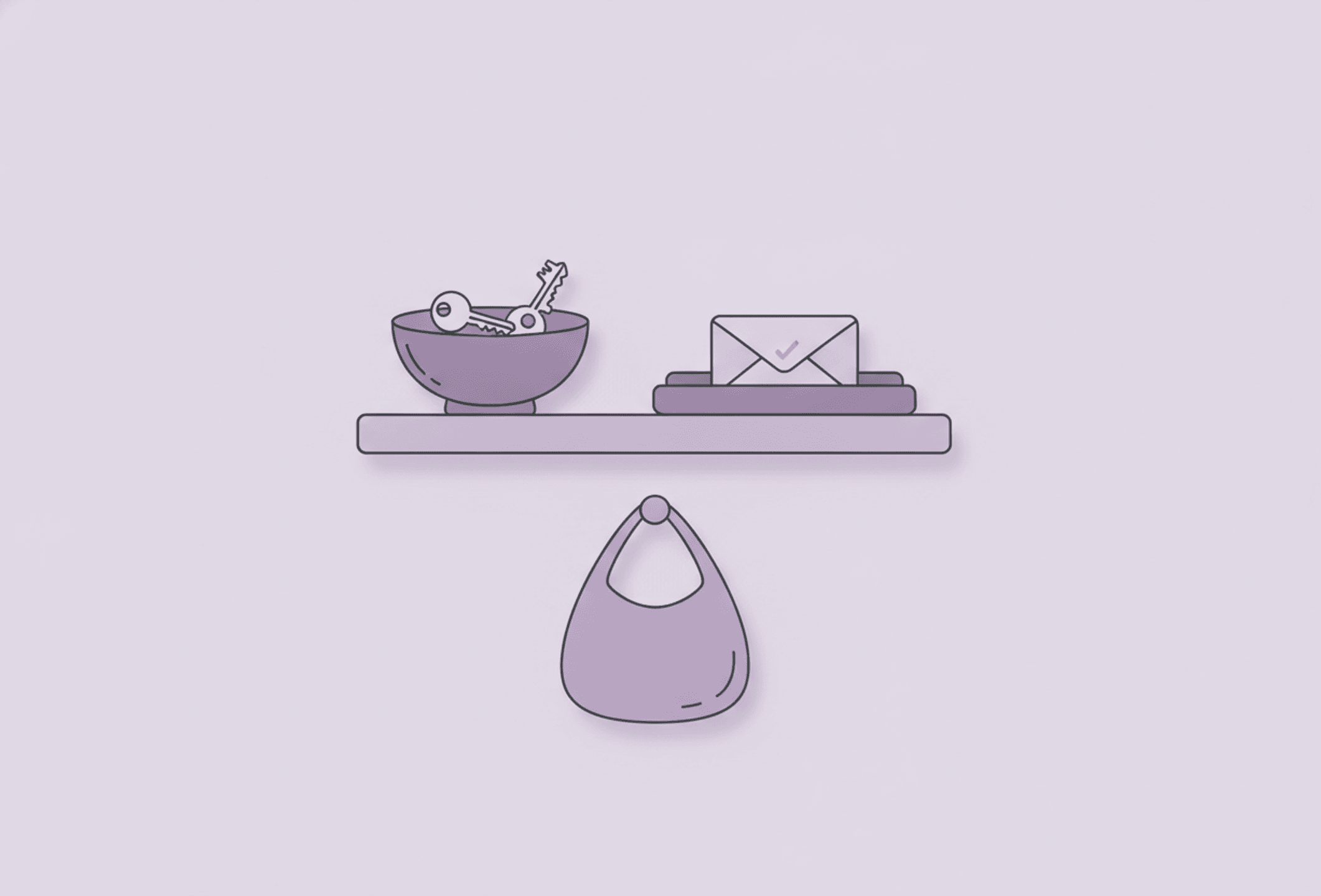
You need a shelf, a small table, or a hook rail within arm's reach of the door. On or around it:
- A bowl or tray for keys. Not a hook you have to aim for while holding shopping - a bowl you can drop into without looking.
- A hook for the bag. The bag lives here, always, so that packing it is a single-location job.
- One tray for post. Everything unopened lands here and nowhere else.
- A place for shoes that is not the middle of the hallway.
That is it. Four destinations, all reachable without putting anything down first, which is the property that makes it work at all.
The three rules
Keys go in the bowl before anything else. Before the coat, before the shopping, before the phone. It is the first movement through the door, every time, and it is worth being slightly religious about, because keys are the item that costs you an appointment.
Post goes in the tray, opened or not, immediately. Not on the side, not on the stairs, not on the kitchen table - the tray. Post left in the wrong place is how a fine arrives.
Nothing that needs to leave goes anywhere except the bag or the floor in front of the door. The library book, the parcel to return, the form. If it is not physically in your path, it will not go with you.
Put outgoing things in the way
The last one matters more than it sounds. Anything that must leave tomorrow goes physically in front of the door, on the floor, where you will step on it.
Putting it "somewhere you'll see it" does not work, because you will see it and walk past. Putting it where you must physically move it to leave works nearly every time - which is environment design in its crudest and most reliable form.
The ten minutes after you get home
The doorway also decides how the evening goes. A short arrival sequence, in the same order every day, is worth building:
1. Keys in the bowl. 2. Bag on the hook, and anything that came out of it today put back in. 3. Post in the tray. 4. Shoes and coat away.
Ninety seconds. It stops the day's belongings from spreading across the flat, which is where piles are born, and it makes the morning cheaper because everything you need is already in one place.
Prepare tomorrow's exit tonight
While you are there: bag packed, coat out, anything that must leave placed in front of the door.
Doing this at nine in the evening is a completely different task from doing it at ten past eight in the morning, when you are late and cannot think. Most of the leaving-on-time problem is not the leaving - it is the assembling, and the assembling can be done the night before by a calmer version of you.
Duplicate the things that go missing
Some items are not worth a system. Buy a second charger, a second set of headphones, a spare pair of reading glasses, and a spare key kept with someone you trust.
Twenty pounds spent on duplicates removes a recurring twenty-minute search and a recurring argument with yourself. That is a good trade, and it is the cheapest ADHD tax reduction available.
Trackers for the two things that matter
For keys and wallet specifically, a Bluetooth tracker is a genuinely good purchase - not because you will stop losing them, but because finding them becomes thirty seconds instead of eleven minutes.
Attach it once and forget about it. It is the rare gadget that requires nothing from you afterwards.
Keep it to one metre
The system fails when it grows. If the shelf accumulates batteries, receipts, a screwdriver and three cables, it stops being a landing spot and becomes another pile.
So: reset it in thirty seconds every few days, keep it to the four destinations, and put a small bin or a drawer nearby for the things that would otherwise colonise it.
The short version
Most lost objects are created in the four seconds you spend walking through your own front door. Give that metre a bowl for keys, a hook for the bag, a tray for post and a place for shoes, then keep three rules: keys in the bowl first, post in the tray immediately, and anything that must leave goes physically in front of the door. Run a ninety-second arrival sequence, pack tomorrow's exit tonight, duplicate what keeps vanishing, and reset the shelf before it becomes a pile.
Read more
Frequently asked questions
How do I stop losing my keys?
Give them one destination within arm's reach of the door - a bowl or tray you can drop into without looking, not a hook you have to aim for while holding shopping - and make it the first movement every time you come in, before the coat and before the bag. For the two items that cost you the most time, keys and wallet, a Bluetooth tracker turns an eleven-minute search into thirty seconds.
What should a doorway system contain?
Four destinations and nothing else: a bowl for keys, a hook for the bag, one tray where all post lands unopened, and a place for shoes that is not the hallway floor. Everything must be reachable without putting something else down first - that property is what makes it survive arriving tired with your hands full.
How do I remember to take things with me?
Put them physically in front of the door, on the floor, where you have to move them to leave. "Somewhere I will see it" does not work, because you will see it and walk past. And assemble tomorrow's exit the night before - bag packed, coat out, items in the doorway - since doing it at nine in the evening is a completely different task from doing it when you are already late.
Why does my hallway shelf turn into a pile?
Because the system grows. Once the shelf holds batteries, receipts, a screwdriver and three cables, it is no longer a landing spot. Keep it to the four destinations, put a small bin or drawer nearby for everything else, and reset it for thirty seconds every few days before it becomes another pile to tackle.