


Mornings and evenings without the chaos
The two moments that shape the rest of the day – made manageable, step by step.
Routines that carry you through the edges of the day
The morning sets the tone for the day; the evening decides tomorrow. Both can be made easier.
A calm start to the day
A morning routine in small steps means you don't have to make decisions before your brain has woken up.
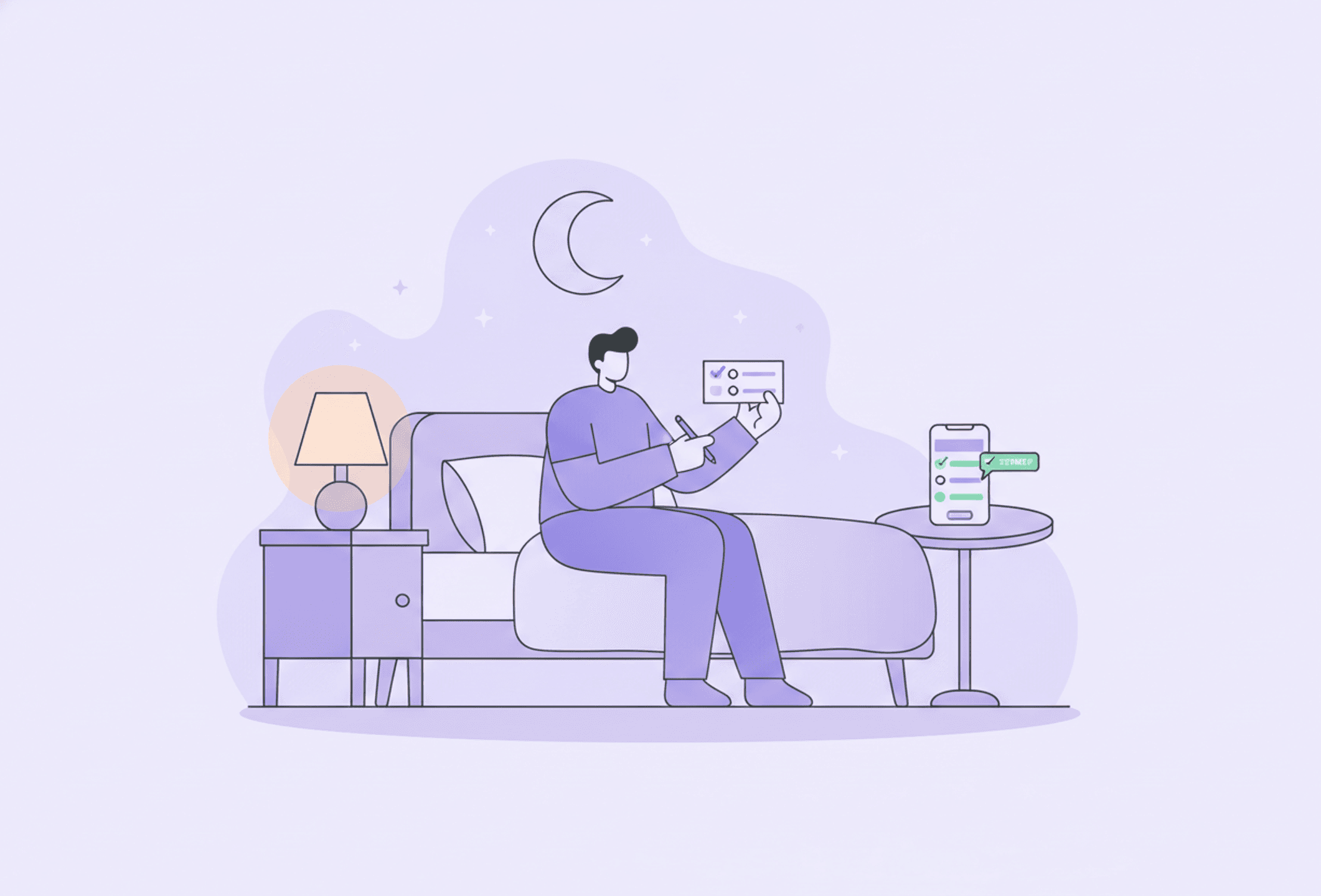
Wind down in the evening
An evening routine that ends the day gently – and makes tomorrow easier already tonight.
Comes back on its own
Choose the weekdays once – then the routine shows up when it should, without you having to remember it.
Friendly nudges
Reminders at the right moment, worded as support – never as nagging.
Why mornings and evenings are the hardest
Mornings and evenings have one thing in common: they happen when your energy is at its lowest. In the morning the brain hasn't woken up; in the evening the day's decision-making power is spent. Yet that's exactly when everyday life demands a long string of small decisions – what should I wear, did I pack everything, should I go to bed now? Each decision is small, but on low energy the total gets heavy. That's why mornings turn stressful and evenings turn into three hours on the phone on the sofa when you actually wanted to sleep.
The solution is for the decisions to already be made. A routine is exactly that: a sequence of steps you decided in advance, so you can follow instead of think. Research on habits shows that behaviors become automatic through repetition in a stable context – in one well-known study it took on average about two months before a new behavior started to feel automatic (Lally et al., 2010). Two things matter most on the way there: that the routine is small enough to manage even on bad days, and that consistency beats perfection – a routine you follow most days beats a perfect schedule you abandon after a week.
A good starting point:
- Morning routine, 5 steps: drink a glass of water, take your medication, shower, eat something, look at the day's timeline.
- Evening routine, 4 steps: lay out tomorrow's clothes, put your bag by the door, phone on to charge outside the bedroom, lights out.

How to build the routines in Stedo
In Stedo you create your morning routine and evening routine as a sequence of small steps, choose which weekdays they recur, and which reminders you want. Then the app handles the rest: the right routine shows up on the right day, and you check off one step at a time instead of holding it all in your head.
A few things that make a difference in practice:
- Start ridiculously small. Three steps is enough for a first morning routine. It's easier to build up a routine that holds than to trim down one that has collapsed – and getting started is half the work.
- Give the routine a fixed time. Then it shows up in the right place on the day's timeline and you don't get overtaken by the clock. Especially important with time blindness.
- Let the evening prepare the morning. Every decision you make tonight is a decision tomorrow-you gets to skip.
- Missed days are data, not failures. In Stedo a missed day never turns red and no guilt is placed on you – the routine stands ready again the next morning. If you stumble on the same step every day, the step is too big – split it.
Every completed routine also gives you points, so it gives something back right away – not just in two months when it's become a habit. If you want the whole setup for a calmer everyday life, see our guide on organizing everyday life.
Common questions about morning and evening routines
Make tomorrow easier tonight
Download Stedo for free and build your first three-step morning routine.


Available for iPhone and Android.