


Out of Sight, Out of Mind: ADHD & Object Permanence
The leftovers rot because you forgot the fridge had a back. The friend drifts because they left your feed. This out of sight, out of mind pattern has a name in the ADHD world, and a set of fixes.
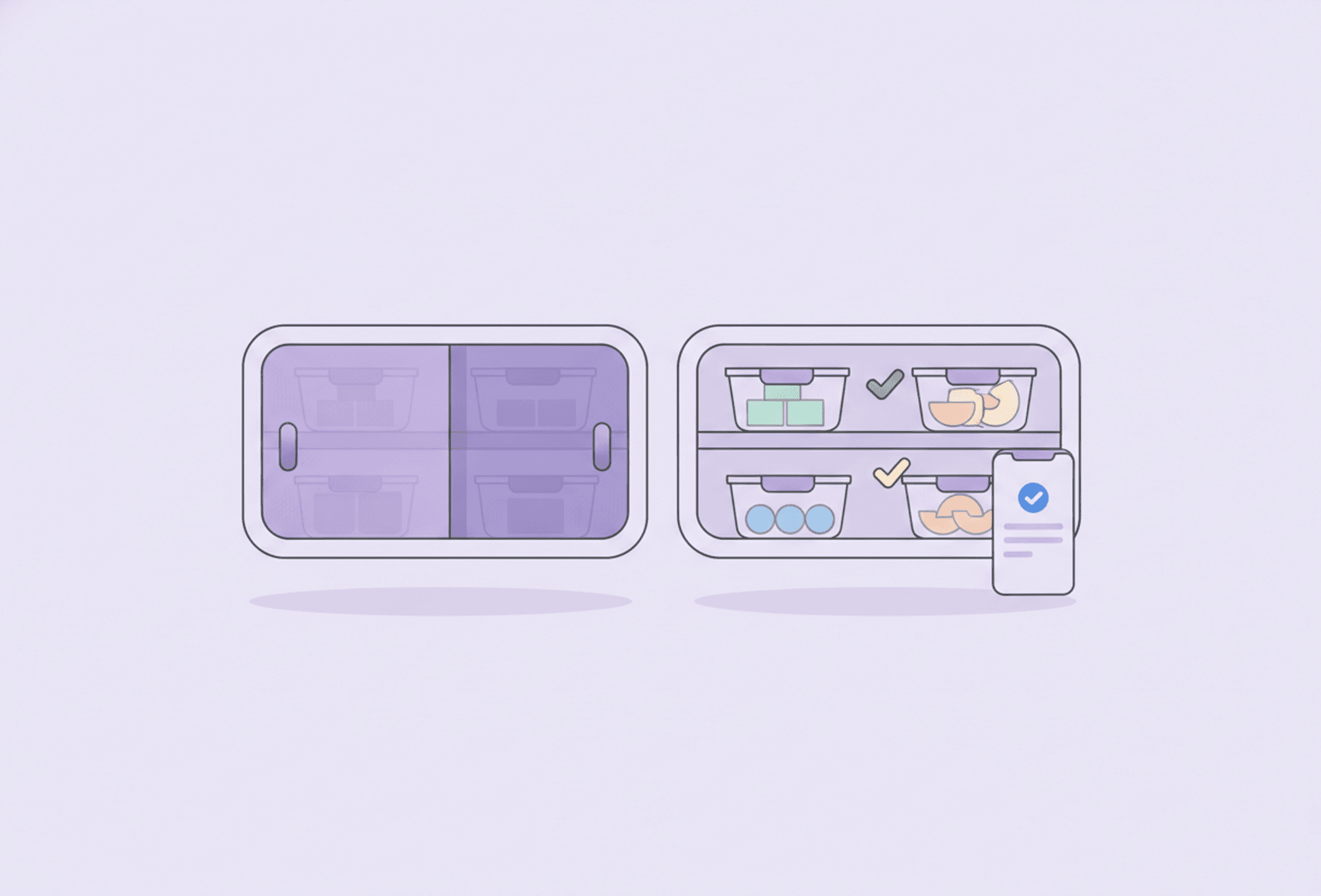
You buy fresh vegetables with good intentions, push them into the crisper drawer, and find them liquefied two weeks later. You own clothes you love but never wear because they live folded in a drawer. A close friend goes quiet and you only realise months later that you stopped reaching out. If this sounds familiar, you've met what the ADHD community calls object permanence, and it's one of the most quietly disruptive parts of an ADHD brain.
What object permanence means here
In child psychology, object permanence is knowing a toy still exists when it's hidden under a blanket. Adults obviously have that. But the ADHD version is different: it's that things you can't see tend to fall out of your awareness entirely. You know, intellectually, that the vegetables are in the drawer, but they're not on your mental radar, so for all practical purposes they don't exist until you open the drawer and there they are again.
This isn't about memory or intelligence. It's about how ADHD affects working memory and attention: if something isn't in view or actively cued, the brain struggles to keep it active in the background. Out of sight really does become out of mind.
How it shows up
Object permanence quietly shapes a lot of daily life:
- Food that rots in the fridge or pantry because the closed door hides it.
- Clothes you never wear because they're in a drawer instead of on a visible rail.
- Tasks you forget the moment you close the app, the tab, or the list.
- Things you buy twice because you forgot you already owned one.
- Friendships that fade when someone isn't physically around or popping up in your messages, not from lack of caring, but lack of cue.
- The doom pile or doom box, where things get put away out of sight and then forgotten completely.
The common thread: when the cue disappears, so does the thing.
How to design around it
You can't force your brain to track invisible things, so stop trying. Instead, make the things you care about visible, and let your environment do the remembering:
- Make storage transparent. Clear containers, open shelving, glass jars. If you can see it, you'll use it before it spoils.
- Keep important things in sight. A fruit bowl on the counter, this week's clothes on a hook, the one book you're reading on the pillow. Visibility is a to-do list your brain can't ignore.
- Externalise your tasks. Don't trust your head to hold what needs doing, get it out where you can see it. A brain dump and a visible task list mean a task doesn't vanish when you look away. This is the whole point of building external structure for ADHD.
- Use cues and reminders for people and time. Set a recurring nudge to message a friend, or a reminder to use the thing before it expires. Pair this with making time visible too, the same fix that helps with time blindness.
- Beware the closed container. Drawers, cupboards and doom boxes are where things go to be forgotten. For things you actually use, favour open and visible over tidy and hidden.
A gentler way to see it
Object permanence can come with guilt: the wasted food, the friend you let drift, the clothes with tags still on. But none of that means you're careless or that you don't care. It means your brain is wired to track what it can see, and you've been fighting that instead of working with it. Build a life that's visible, and a lot of the guilt quietly disappears along with the rotting vegetables.
The takeaway
ADHD object permanence is the out of sight, out of mind pattern that hides food, clothes, tasks and even people the moment they leave your view. The fix isn't to remember harder, it's to make what matters visible. Clear storage, things kept in sight, externalised tasks and deliberate cues turn your environment into the memory your brain doesn't have to be.
Read more
Frequently asked questions
What is ADHD object permanence?
It's the out of sight, out of mind pattern many people with ADHD experience: things you can't see tend to fall out of your awareness entirely. You know the food is in the fridge, but it's off your mental radar until you open the door. It's not about memory or caring, it's how ADHD affects working memory and attention.
Is object permanence a real ADHD symptom?
Object permanence as a clinical term comes from child development, and adults have it. The ADHD version is informal but widely recognised in the community: it describes how things and even people drop out of mind when they're not visible or cued, which is linked to working-memory and attention differences in ADHD.
How do I deal with object permanence issues?
Make what matters visible and let your environment remember for you: clear containers and open shelving so food and clothes don't get forgotten, important items kept in sight, tasks externalised onto a visible list, and reminders for people and deadlines. Favour open and visible over tidy and hidden.
Why do I forget about friends with ADHD?
When a friend isn't physically around or popping up in your messages, the cue that keeps them on your radar disappears, so the friendship can quietly fade, not from lack of caring but lack of reminder. A recurring nudge to reach out can bridge the gap.