

Grocery Shopping With ADHD (Without the Overwhelm)
You went in for four things. You came out with nine, none of which make a meal, and not the thing you actually went for.
You went in for four things.
You came out with nine. None of them combine into a meal, two are duplicates of things already in the cupboard, and the thing you actually went for is still not in the house. It is Wednesday and there is nothing for dinner again.
Grocery shopping with ADHD is hard for a specific reason: a supermarket is one of the worst possible environments for executive function. Thousands of options, bright light, noise, and every decision taken at the end of a working day. The fix is not more discipline in the aisle - it is moving the deciding to before you arrive, so the shop is execution rather than planning.
What the shop is actually asking of you
Look at the load, item by item. Forty kinds of yoghurt, each a small comparison. A sensory environment of strip lighting, tannoys and trolleys that would test anyone and lands harder if you are prone to overstimulation. A list held in working memory, which evaporates somewhere around the third aisle. And nothing in the building is interesting.
Then the timing: most people shop at six in the evening, when the day has already spent whatever decision-making capacity they had. This is not a willpower failure. It is a badly designed task attempted at the worst possible hour.
Decide before you arrive
Everything else in this article follows from one principle: a decision made at the kitchen table costs a fraction of the same decision made in aisle seven.
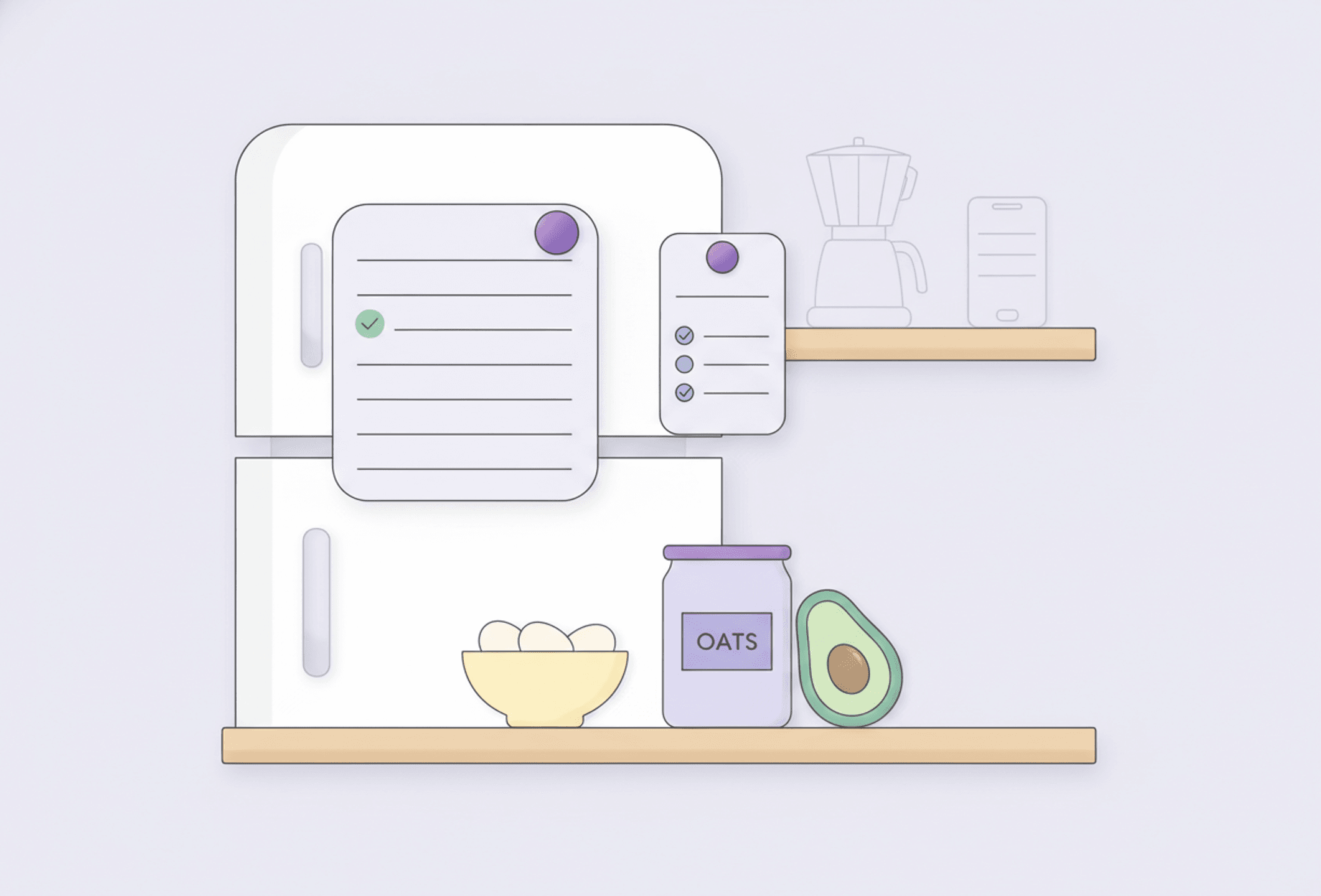
Meals for the week, or at least a rough shape of them, decided at home - that is what meal planning buys you. Not a spreadsheet, and not seven distinct recipes. Just enough that the shop becomes a fetching exercise, which is a task you can do while depleted.
Keep one standing list, not a new one each week
Rebuilding the list from scratch every week is the hidden tax, and it is why you end up shopping without one.
So keep a permanent core: the fifteen or so items you buy nearly every week, saved in a note or your app, ready to be reused. Each week you tick that core and add the five things that vary. Ninety per cent of the thinking is now done in advance, permanently, and the list lives outside your head where it cannot evaporate.
Order the list by the shop, not by food type
Most lists are grouped by category, which is a lovely idea that makes you walk the shop three times.
Order it by the route instead: whatever you pass first at the top. Fewer backtracks, less time in the building, and far fewer chances to be diverted by something on an end display. When trips fall apart, it is usually in the fourth lap.
Shop the same shop
Familiarity does a lot of quiet work. You know the route, you know where things live, and none of your attention is spent on orientation.
A new supermarket looks appealing for exactly the reasons a new system does - it is novel - and it costs you a full trip's worth of extra searching. Save it for a day when you have the capacity to enjoy it.
Go at a better hour, or don't go at all
If you can shop mid-morning, or on the way in rather than the way home, do it: same task, half the load. Never shop hungry, which is advice everyone repeats because it keeps being true.
And a full-strength option: online delivery or click-and-collect removes the aisles, the noise, the impulse displays and the mental list all at once. It saves the basket for next time, which is the standing list doing its job automatically. Using it is not defeat, it is picking a version of the task that matches how your attention works - and if it also cuts your food waste, it may be cheaper than the trips it replaces.
Cap the trip
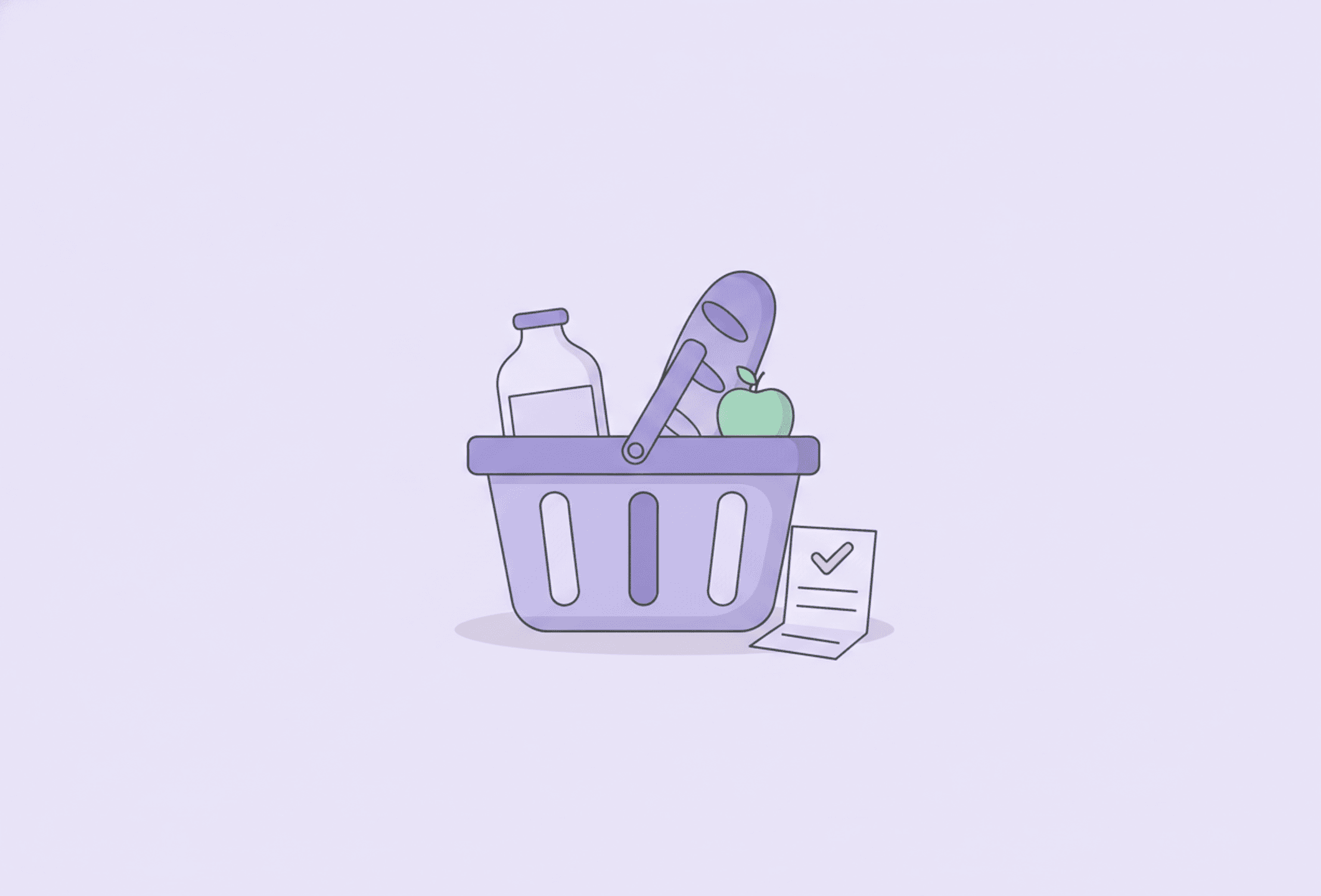
A basket instead of a trolley when the shop is small. A timer set for twenty minutes. Any constraint that ends the browsing works, because browsing is where the extra five items enter the basket.
If impulse buys are the main leak, leave the aisles you don't need entirely. Not passing something is far more reliable than passing it and deciding.
Let most of it be boring
Five or six meals you can make without thinking, in permanent rotation, is not a failure of imagination. It is what keeps you fed on the days when nothing else is working, and eating regularly does more for your week than variety does.
Keep the novelty to one item per trip. The interesting new ingredient is fine; the basket built entirely of interesting new ingredients is the one that rots in the drawer.
The trip isn't over until it's put away
Bags on the kitchen floor are where the value leaks out - the frozen things thaw, the fresh things get forgotten, and the money you spent turns into an ADHD tax in the form of food waste.
One rule makes it survivable: freezer and fridge first, everything else can wait until later or tomorrow. Ten seconds of triage protects the whole shop, and the rest of the unpacking is genuinely not urgent.
The short version
The supermarket is a hostile environment for executive function, so stop trying to think in it. Decide at home, keep a standing list you reuse rather than rebuild, order it by the route through the shop, use the same shop, go at a better hour or have it delivered, cap the trip with a basket or a timer, keep most of the food boring on purpose - and put the cold things away the moment you get in.
Read more
Frequently asked questions
Why is grocery shopping so hard with ADHD?
Because a supermarket is close to the worst possible environment for executive function: hundreds of small comparisons, bright light and noise, a list held in working memory that evaporates by the third aisle, and nothing in the building that is interesting. Most people also shop at the end of the working day, when decision-making capacity is already spent. It is a badly designed task attempted at the worst hour, not a failure of discipline.
How do I stop forgetting things at the shop?
Get the list out of your head and keep the same one permanently. Save a core of the fifteen or so items you buy most weeks, then tick that core and add the few things that vary - rebuilding a list from scratch each week is the tax that stops it happening at all. Order the list by your route through the shop rather than by food type, so you are not walking the same aisles three times.
Is ordering groceries online cheating?
No - it removes the hardest parts of the task in one move: the aisles, the noise, the impulse displays and the list held in memory. It also saves the basket, which makes the standing list automatic. Choosing a version of a task that matches how your attention works is a strategy, not a defeat, and if it cuts your food waste it may cost less than the trips it replaces.
How do I stop buying things I do not need?
Cap the trip and reduce exposure. Take a basket rather than a trolley when the shop is small, set a twenty-minute timer, and skip the aisles that are not on the list entirely - not passing something is far more reliable than passing it and deciding. Never shop hungry, and keep the novelty to one item per trip rather than a basket full of interesting things that will rot.