


Simple Meal Planning When You Have ADHD
It's 6pm, you're hungry, and the question what's for dinner feels impossible. Meal planning solves it before it starts. Here's a low-effort, ADHD-friendly way to never face that blank again.
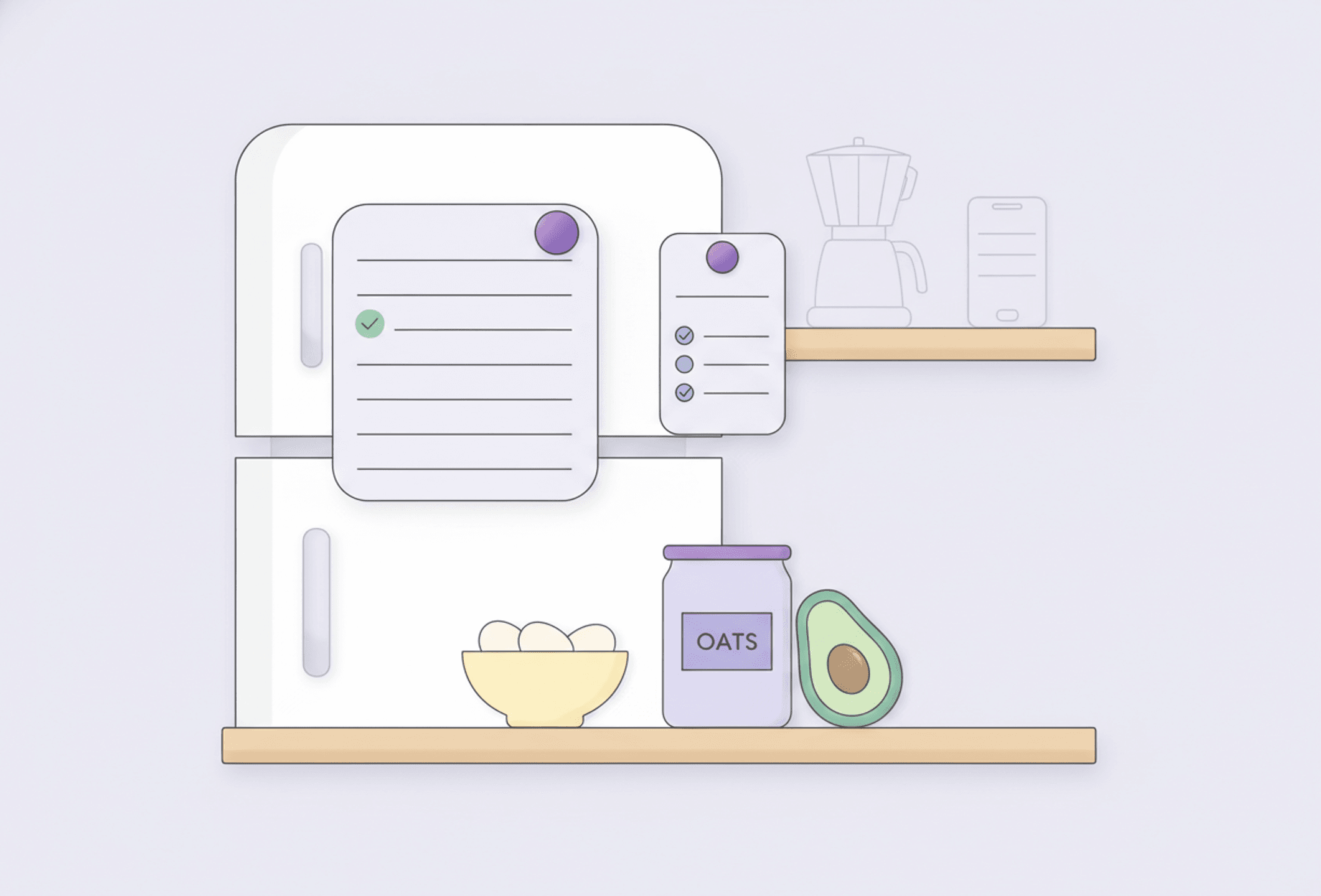
It's 6pm, you're tired and hungry, and the question lands: what's for dinner? You stare into the fridge, nothing clicks, and twenty minutes later you're ordering takeout again, slightly annoyed at yourself. The exhausting part was never the cooking. It was the deciding, on an empty tank, at the worst possible moment. Meal planning fixes that by making the decision once, in advance, so future-you just follows the plan.
Why meals are so hard with ADHD
Feeding yourself involves a surprising stack of executive-function tasks, deciding, planning, shopping, remembering ingredients, timing several things at once, and doing it every single day, when you're often least resourced. A few specific traps:
- Decision fatigue. Choosing a meal from infinite options, while hungry and depleted, is exactly when your brain has the least left to give.
- Too many steps. A meal isn't one task, it's decide, check stock, shop, prep, cook, all chances to stall.
- Out of sight, out of mind. Food you can't see gets forgotten and goes off, so you cook nothing and waste what you bought.
- Time blindness. Meals sneak up because you didn't track how the day was moving, and suddenly it's late and you're starving.
Meal planning doesn't ask you to become organised by nature, it just moves the hard decisions to a calmer moment.
Keep it stupidly simple
The biggest mistake is planning like a lifestyle magazine, seven elaborate different dinners. That's a system built to be abandoned. ADHD-friendly meal planning is the opposite: as little decision and effort as possible.
- Build a short list of go-to meals. Pick 5–10 easy meals you actually like and can make without thinking. This rotating roster is your whole system, you're choosing from a short menu, not the infinite void.
- Repeat without guilt. Eating the same few dinners on rotation is efficient, not boring-in-a-bad-way. Novelty is overrated when the alternative is takeout and stress.
- Theme your nights. Pasta Monday, taco Tuesday, stir-fry Wednesday. A loose theme removes the decision while leaving room to vary the details.
- Embrace easy mode. Frozen veg, pre-chopped ingredients, rotisserie chicken, three-ingredient meals. Convenience isn't cheating, it's the difference between a cooked meal and no meal.
A low-effort weekly routine
- Pick a planning moment. Once a week, spend ten minutes choosing a few meals for the days ahead. Pair it with something you already do, this is exactly the kind of anchor that makes a routine stick.
- Brain-dump, then choose. Can't think of anything? Do a quick brain dump of meals you like, then pick from the list instead of inventing on the spot.
- Make one shopping list. Turn the plan into a single list so you buy what you need and skip the daily what's-for-dinner shop. One trip, decision made.
- Keep ingredients visible. Store the week's food where you'll see it. If you can see it, you'll cook it before it spoils.
Plan for the bad days
Some days you won't cook the planned meal, and that's fine, a rigid plan that collapses the first hard day is no plan at all. Build in a couple of no-cook or near-zero-effort fallbacks, beans on toast, cereal, a freezer meal, so a rough day still ends in food, not despair. This is the same flexible-routine thinking that keeps any system alive: have a minimum version ready for when the full version isn't happening.
The takeaway
The hardest part of dinner is deciding what to make, and meal planning moves that decision to a calmer moment so hungry-you doesn't have to. Keep a short rotation of easy meals, shop once, keep the food visible, and stash a couple of no-cook fallbacks for bad days. It's not about gourmet cooking, it's about never facing the 6pm blank again.
Read more
Frequently asked questions
Why is meal planning so hard with ADHD?
Feeding yourself stacks up executive-function tasks, deciding, planning, shopping, remembering, timing, every day, often when you're most depleted. Decision fatigue, too many steps, out-of-sight food being forgotten, and time blindness all pile on. Meal planning helps by moving the hard decisions to a calmer moment in advance.
How do I meal plan with ADHD?
Keep it stupidly simple: build a short list of 5–10 easy go-to meals you like, repeat them on rotation without guilt, theme your nights, and lean on convenience options. Once a week, spend ten minutes picking meals and making one shopping list, then keep the ingredients visible so you actually use them.
Isn't eating the same meals boring?
Rotating a few reliable dinners is efficient, not boring-in-a-bad-way. Novelty is overrated when the alternative is staring into the fridge, ordering takeout, and feeling stressed. You can always vary the details, but a short menu beats the infinite-options void every time.
What if I don't cook the planned meal?
That's normal, and a good plan expects it. Keep a couple of no-cook or near-zero-effort fallbacks like beans on toast, cereal, or a freezer meal, so a rough day still ends in food. A flexible plan with a minimum version survives bad days; a rigid one collapses on the first.