

Flexible Routines That Survive Bad Days
Build the perfect routine, one bad day knocks it over, and it never recovers. The fix isn't more discipline. It's a routine built to bend instead of break.

You build the perfect routine, follow it for four days, then one bad day knocks it over and it never recovers. Sound familiar? For ADHD brains especially, rigid routines are fragile: they work until they do not, and then the all-or-nothing voice says ruined it, may as well quit. The fix is not more discipline; it is a routine built to bend instead of break. Here is how.
Why rigid routines fail
A routine that depends on everything going right has a single point of failure: any off day breaks it, and once broken, the perfectionist part of an ADHD brain often abandons it entirely. Life with ADHD is variable; energy, mood and focus swing day to day. So a routine that only works on a good day is not really a routine. It is a wish.
Build a minimum version
The single best fix is to decide, in advance, the smallest version of your routine that still counts.
- Full version: workout, healthy breakfast, journal, plan the day.
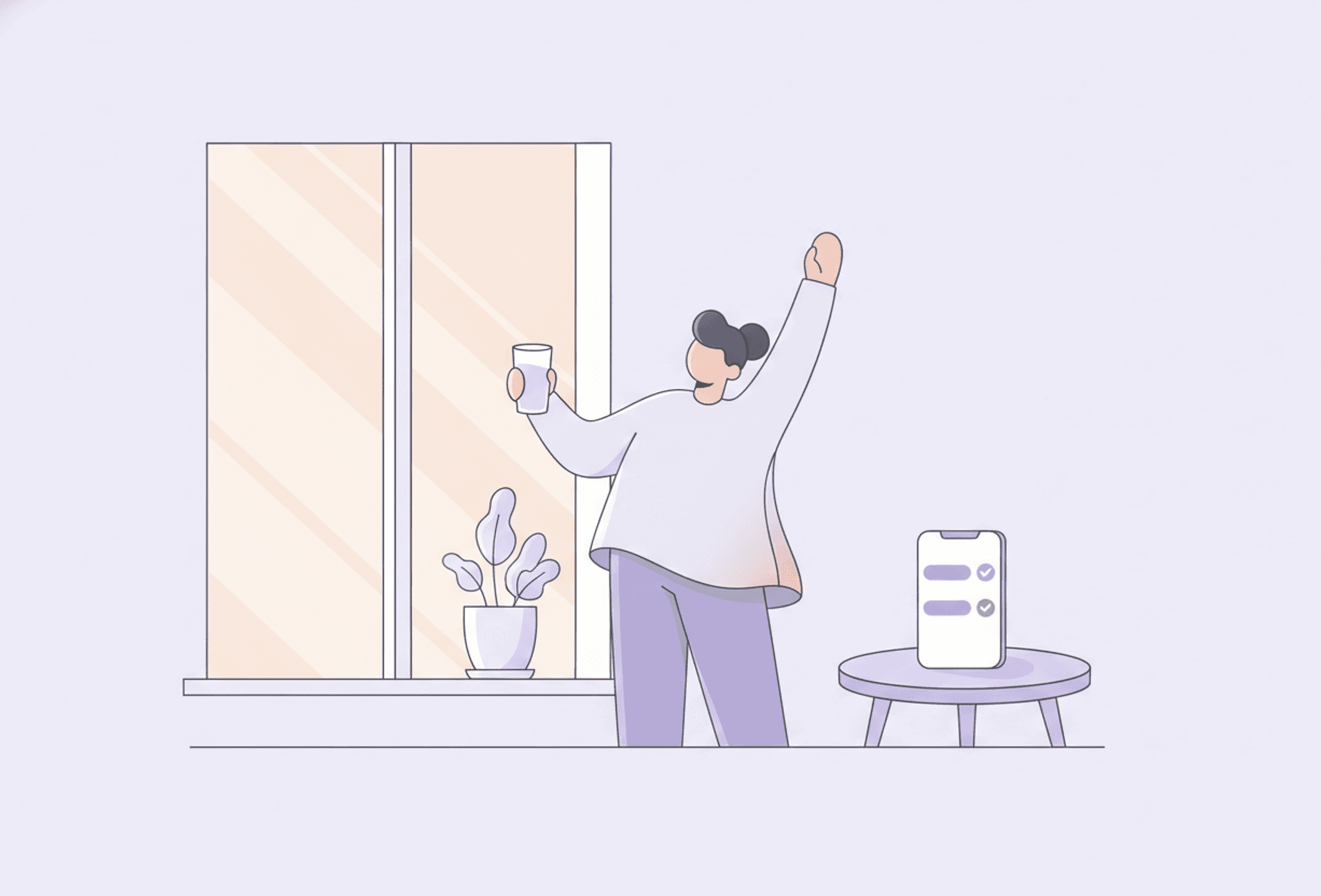
- Minimum version: drink a glass of water and get dressed.
On a hard day, you do the minimum. It keeps the streak and the identity alive, you are still someone who has a morning routine, without the all-or-nothing collapse.
Use anchors, not a strict timetable
Rigid clock times like 7:00 meditate, 7:15 shower shatter the moment you are late. Instead, anchor habits to events rather than the clock: after I wake, drink water; after coffee, plan the day; after dinner, tidy for ten minutes. Anchors flex with your day while keeping the order intact.
Plan for the bad day in advance
Do not wait for a rough day to decide what to do; decide now. Write down your minimum version and a simple if it all goes sideways plan. When you are depleted is the worst time to make decisions, so make them while you are calm and let your past self help.
Drop the all-or-nothing
The most damaging routine-killer is not missing a day; it is what you tell yourself about missing a day. One skipped day is a blip, not a failure. The goal is most days, not every day. Aim to never miss twice in a row, and treat getting back on track as part of the routine, not a sign it failed.
Let it evolve
A routine is not a contract; it is a draft. If a step keeps getting skipped, it is probably in the wrong place or too big, so shrink it, move it, or cut it. The routines that last are the ones you adjust, not the ones you white-knuckle.
The takeaway
A flexible routine bends on hard days so it is still standing on the good ones. Build a minimum version, anchor habits to events, plan for bad days, and forgive the misses. Pair it with a solid morning routine and evening routine and you have a structure that holds.
Read more
Frequently asked questions
Why do my routines keep falling apart?
Often because they are rigid: they depend on a good day and break the moment one goes wrong, and the all-or-nothing voice then abandons them. A flexible routine with a minimum version survives off days.
What is a minimum version of a routine?
The smallest version that still counts, for example water and get dressed instead of the full hour. On hard days you do the minimum, which keeps the habit and identity alive without an all-or-nothing collapse.
How do I make a routine flexible?
Decide a minimum version in advance, anchor habits to events instead of strict clock times, plan for bad days while you are calm, aim for most days not every day, and adjust steps that keep getting skipped.
How do I get back on track after missing days?
Treat getting back on track as part of the routine, not proof it failed. Do your minimum version, aim to never miss twice in a row, and skip the guilt; one missed day is a blip.