

How to Beat Decision Fatigue
Every decision spends from the same mental battery, and an ADHD day holds far more of them than most people's. Here's why evenings collapse into whatever's easiest, and how to save your best decisions for what actually matters.
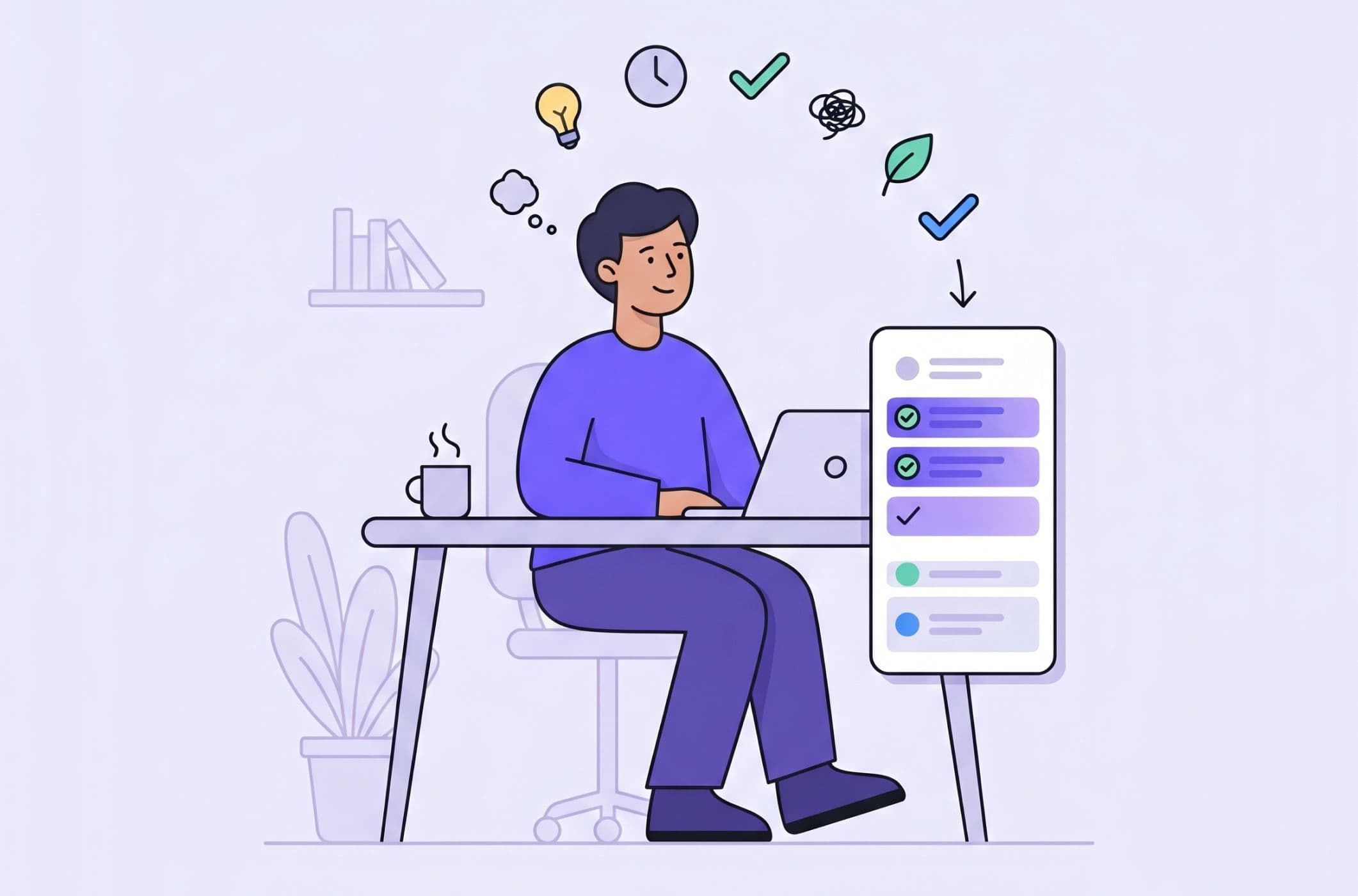
By the time you've opened your laptop this morning, you've already decided what to wear, what to eat, whether to answer that first message, and what to tackle before coffee. By four in the afternoon, deciding what's for dinner can feel like defusing something.
Decision fatigue is the drop in judgment and self-control that builds after too many decisions in a row — the more choices you've made, the worse the next one feels, and the more likely you are to default to whatever's easiest instead of what you'd actually choose. It isn't a character flaw. It's a battery, and it runs down.
Why an ADHD day holds more decisions than most
Most people's days run on a layer of autopilot they don't notice: the same breakfast, the same route, the same load-bearing habits that stopped feeling like choices years ago. That autopilot is exactly what tends to be missing with ADHD. Breakfast gets re-decided. When to leave gets re-decided. Where the keys are gets re-decided, because there's no fixed home for them yet. What's next gets re-decided, over and over, because the plan didn't survive contact with the morning.
None of these decisions are big on their own. But they draw from the same limited pool as the important ones, and an ADHD day asks for far more of them before lunch than most people spend in a week.
There's a second cost stacked on top: impulse control weakens as the battery drains, so a tired brain doesn't default to a considered choice, it defaults to whatever needs the least willpower right now — the phone, the takeaway app, the show that's already loaded. That's not a lack of discipline at nine at night. It's the same discipline you had all day, already spent.
The signs you're running on empty
- A choice that used to be easy — what to wear, what to eat — suddenly sits there, unmade, for far too long.
- You stop choosing and start defaulting: whatever's nearest, whatever avoids a conversation, whatever's already open on the screen.
- Tasks that were completely possible at nine in the morning feel impossible at nine at night, with nothing else having changed.
- The famous last straw: standing in front of the TV, unable to pick anything to watch, and just closing the laptop instead.
Decide once, make it a rule
The single most efficient move against decision fatigue is to stop re-deciding things that don't need a fresh decision every time. A rule, made once, replaces a hundred small choices with zero.
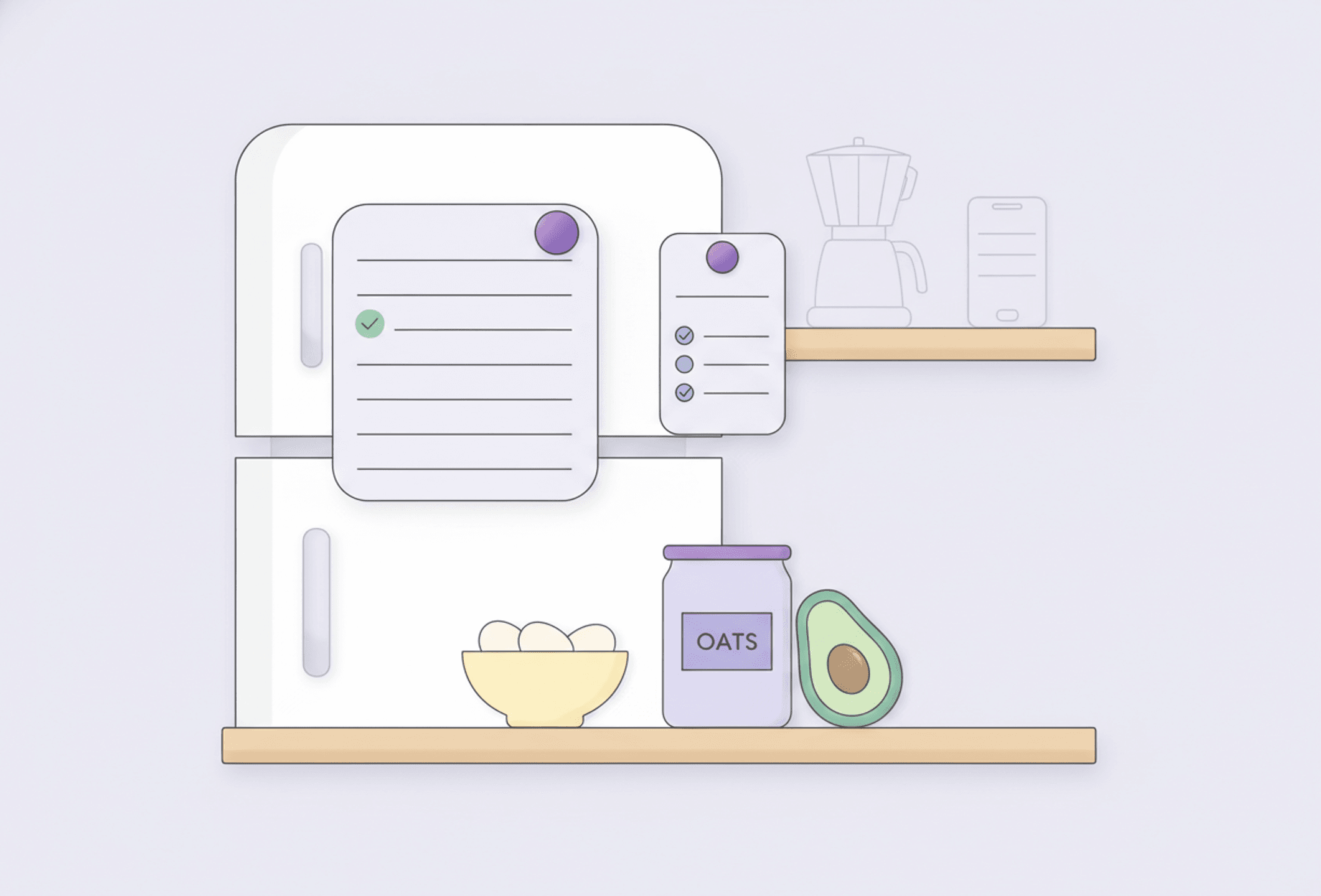
A default breakfast you don't debate. A small rotating meal roster instead of inventing dinner from nothing each evening. A go-to corner of the wardrobe that counts as "sorted" without a verdict on every item. Fixed gym days instead of "whenever I feel like it" — which quietly means "decided fresh every single time, usually against."
Decide ahead, while the battery's still full
Judgment is sharpest earlier in the day and dulls with use, so the smart move is deciding things ahead of when you'll need them, not in the moment you're already running low. Planning tomorrow the evening before — a short shutdown routine rather than opening a blank day cold at seven a.m. — moves the decision to when you can actually make it well.
The same logic sits behind if-then plans: deciding the trigger and the response together, in advance, so the moment itself needs no decision at all. Not "I should tidy the kitchen at some point" but "if it's seven, then I start the dishes." By the time seven arrives, there's nothing left to weigh.
Shrink the menu
More options isn't more freedom once the battery is low — it's more cost. Twenty choices don't feel like abundance to a tired brain, they feel like twenty small taxes. A short, curated shortlist beats an open buffet almost every time: two or three go-to meals, not an entire cookbook; a handful of trusted clothes, not a full wardrobe weighed daily.
The same applies to your task list. A prioritised short list of what actually matters today costs far less to look at than an undifferentiated backlog of forty things, all silently asking to be ranked.
Spend your best decisions on what matters
Since judgment is best earliest, spend it deliberately — on the thing that actually matters, before the inbox and the small stuff get first claim on it. Deciding your one meaningful thing for the day, before you decide anything else, means the choice that counts gets made while you still have something left to decide it with.
Everything that repeats deserves to stop being a decision altogether. A recurring routine, a standing reminder, a bill on autopay — each one you automate is one fewer thing competing for the same tired attention later. A routine with its reminder built in — the kind Stedo keeps running in the background — turns "should I do this now?" into nothing you have to decide at all.
Fewer decisions doesn't mean a smaller day. It means the battery you'd have spent on breakfast, what to wear, and what's for dinner is still there in the evening — for the choices you actually want to make.
Read more
Frequently asked questions
What is decision fatigue?
Decision fatigue is the decline in judgment and self-control that builds up after making many decisions in a row. Each choice draws on the same limited mental resource, so the more you've decided already, the worse the next decision tends to feel, and the more likely you are to default to whatever's easiest rather than what you'd actually pick with a fresh mind.
Why is decision fatigue worse with ADHD?
An ADHD day usually holds far more decisions than a neurotypical one, because less of it runs on invisible autopilot. Breakfast, timing, where things are, and what's next often get re-decided daily instead of running on habit, so the same limited battery gets spent much faster, often well before evening.
What's the fastest way to cut down on decision fatigue?
Turn repeat decisions into standing rules. A fixed breakfast, a small rotating meal list, a go-to outfit, and a plan made the evening before all remove choices you'd otherwise have to make fresh every day, leaving more energy for the decisions that actually matter.
Is decision fatigue the same as being lazy or indecisive?
No. It's a real, temporary decline in mental resources after sustained decision-making, not a character trait. The same person can decide confidently in the morning and struggle to choose a meal by evening, because the resource being spent is finite, not because their judgment or character has changed.