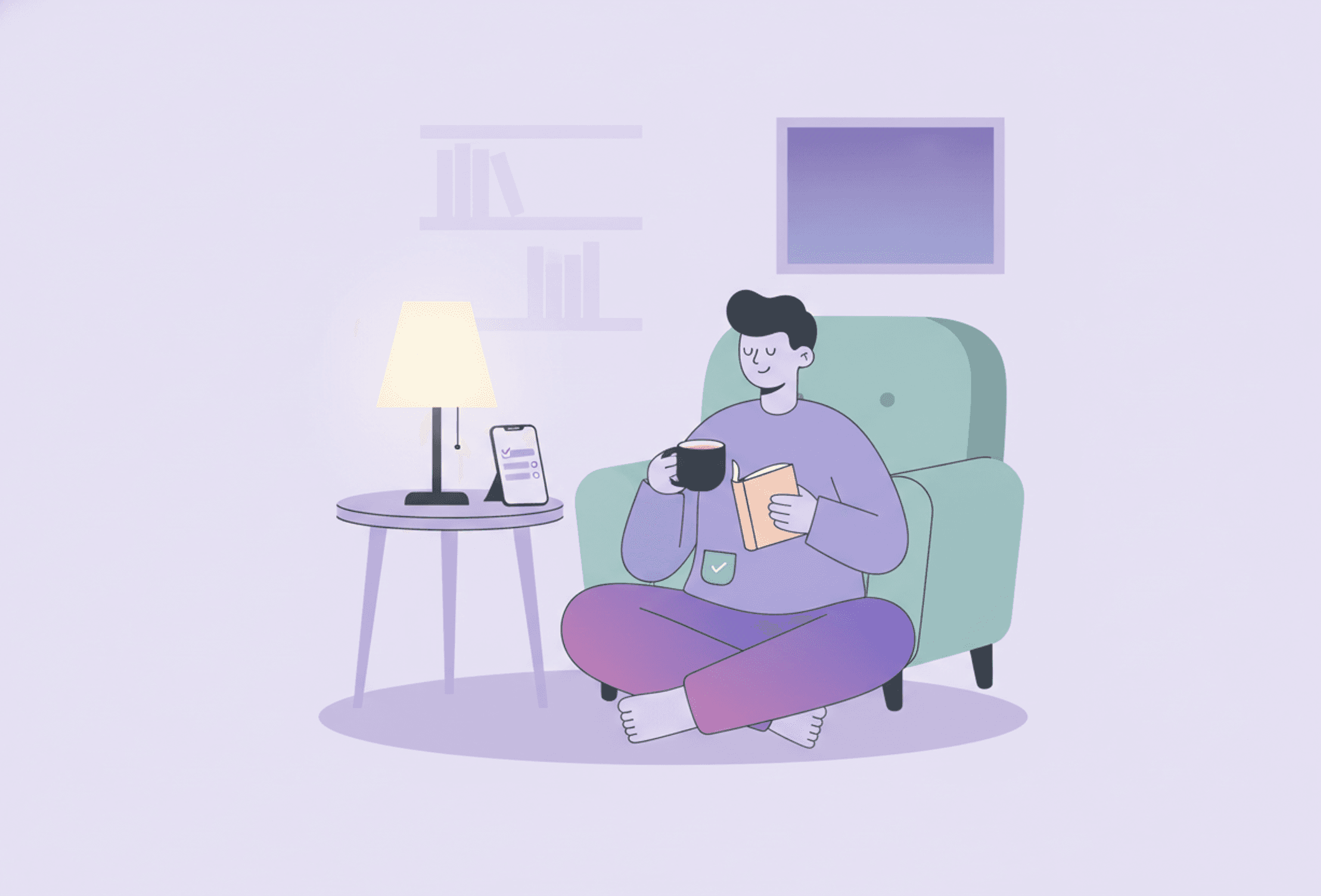


An Evening Wind-Down Routine
You're exhausted at nine and wide awake at eleven. The wind-down hour is a transition, and transitions are exactly the thing ADHD brains need help with.
At nine you could barely keep your eyes open. At eleven you're alert, interested in everything, and starting a documentary. At half past midnight you're annoyed with yourself, and tomorrow will be worse for it.
A wind-down routine is the last thirty to sixty minutes before bed, used deliberately to move from awake to asleep. It isn't the whole evening routine, which handles dinner, tidying and preparing tomorrow. This is only the transition at the end, and it matters more than the rest of the evening put together.
Why this hour is so hard with ADHD
- Going to bed is a transition. Stopping something and starting nothing is the hardest kind of switch, and transitions are already a weak point.
- The second wind. Many people get a burst of energy and interest in the late evening. It feels like the best part of the day, and it costs tomorrow.
- The evening is the only free time. After a day of demands, the hours after ten are the only ones nobody else claims. Delaying sleep to get them back is called revenge bedtime procrastination, and it's understandable rather than irrational.
- A brain that won't stop. Lie down and everything you didn't process all day arrives at once.
So the goal isn't discipline at 11pm, which never works. It's making the transition easier and moving the decision earlier.
Set an alarm for the start, not for bed
The most useful single change: put an alarm at the time your wind-down starts, not at bedtime.
Bedtime isn't an action, it's an outcome. What you actually need is a cue for the moment you stop what you're doing, which is the part that never happens on its own. Treat that alarm as an instruction, the same way you would a meeting reminder, and put the phone on charge somewhere else as the first step.
Empty your head onto paper
Spend two minutes writing down whatever is still circulating: tomorrow's worry, the thing you must not forget, the annoying thought. It doesn't need to be organised.
This works because the brain keeps rehearsing anything it's afraid of losing. Written down, it stops needing to be held, which is the same principle as a brain dump, just smaller and at the right time of day.
Pick three things and keep them the same
A wind-down works because it's repetitive and recognisable, not because it's sophisticated. Choose three small steps and do them in the same order every night, so the sequence itself becomes the signal that sleep comes next. This is a transition ritual at the largest transition of the day.
Something like: dim the lights, brush your teeth, read a few pages. Or: tidy one surface, shower, write tomorrow's one thing. Keep it under thirty minutes so it survives a bad evening.
Lower lights genuinely help, so dimming them at the start of the routine does real work rather than being atmosphere.
What to do about screens
The standard advice is no screens for an hour. If that works for you, good. For a lot of people it fails immediately, and then the whole routine is abandoned along with it.
A more achievable version: no scrolling and no new episodes, because those are engineered to hold you, but a boring podcast, an audiobook or the same familiar programme you've seen before is fine. What matters most is that whatever you choose ends by itself. Anything with autoplay or infinite scroll decides your bedtime for you.
Give the second wind somewhere to go
If the late-evening burst is where your best ideas arrive, don't try to suppress it, capture it. Keep a notebook by the bed and write the idea down instead of acting on it. It'll still be there tomorrow, and it will look considerably more manageable at 9am.
When you can't sleep anyway
Lying in bed frustrated for an hour teaches your brain that bed is a place for being awake. If it's been about twenty minutes and nothing's happening, get up, sit somewhere dim and do something boring until you feel sleepy, then go back.
And if this is a constant pattern, sleep problems are common with ADHD and worth raising with a doctor rather than solving alone with routines.
Make it easier to start than to skip
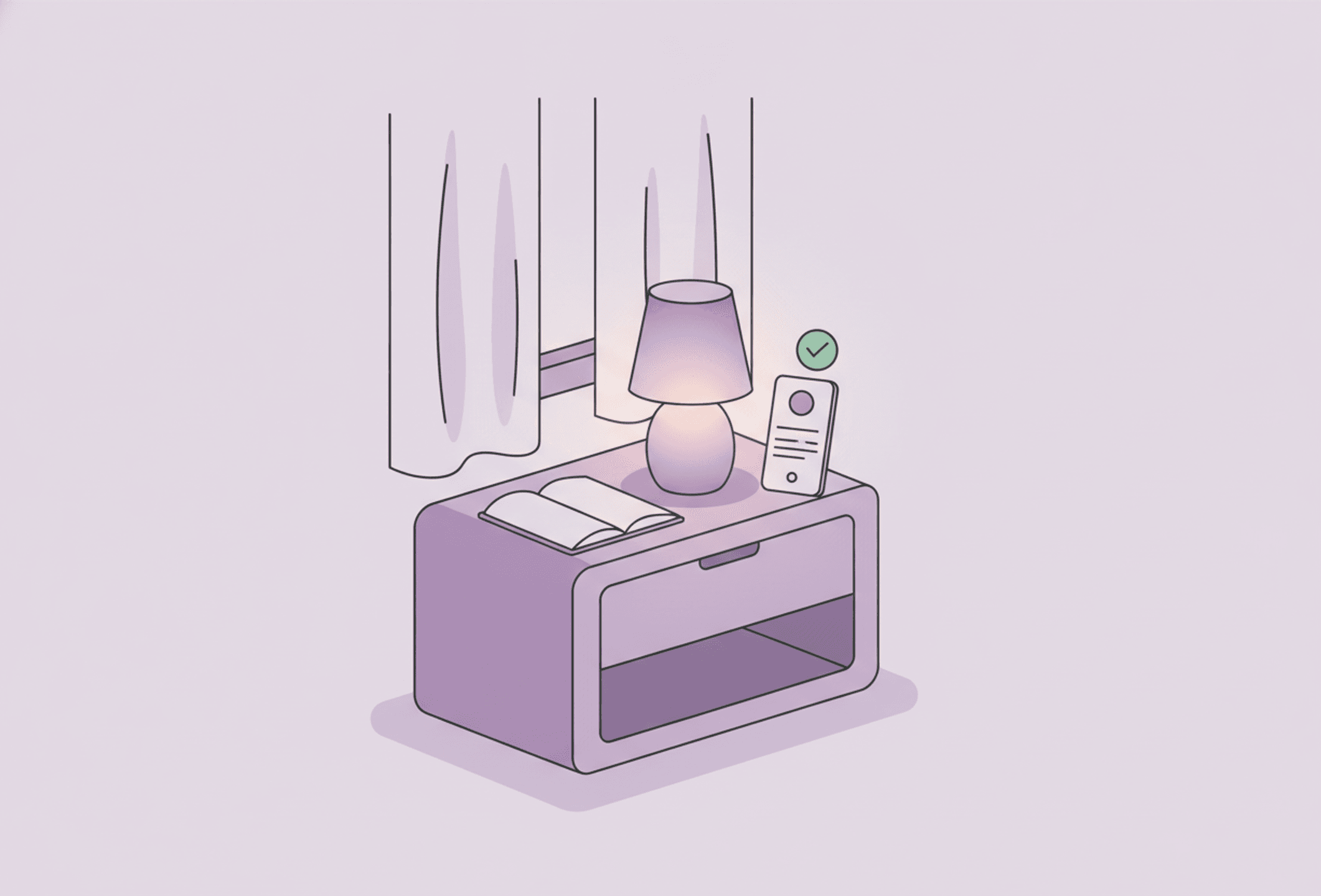
The last trick is environmental. Have the book out and the room ready, so wind-down means walking into a prepared space rather than assembling one. Whatever you have to set up at 10:45pm won't happen.
And on the nights it falls apart, do the one-step version: put the phone on charge in the other room, and get into bed. That single step, done consistently, beats the whole beautiful routine done twice a month.
Read more
Frequently asked questions
What is a wind-down routine?
A wind-down routine is the last thirty to sixty minutes before bed, used deliberately as a transition from awake to asleep. It's a small, repeated sequence, usually three steps in the same order, rather than the whole evening routine, and its job is to signal to your brain that sleep is what comes next.
Why do I get a second wind late at night?
Late-evening alertness is common, and with ADHD the quiet hours are often the first ones without demands, which makes them genuinely appealing. Delaying sleep to reclaim personal time is known as revenge bedtime procrastination. The fix isn't willpower at 11pm, it's an earlier cue to stop and somewhere to capture the ideas that arrive.
Do I really have to give up screens before bed?
A full ban works for some people and gets abandoned by most. A more realistic rule is to avoid anything designed to hold you, so no scrolling and no new episodes, and choose something that ends by itself: an audiobook, a boring podcast, a familiar programme. Autoplay and infinite scroll decide your bedtime for you.
What should I do if I can't fall asleep?
After about twenty minutes of lying there frustrated, get up, sit somewhere dimly lit and do something boring until you feel sleepy, then go back to bed. Staying in bed awake teaches your brain that bed is a place for being awake. If it happens most nights, it's worth talking to a doctor, since sleep problems are common with ADHD.