

An Evening Routine for Better Sleep
A simple evening routine makes the night calmer and the morning softer. Here is a flexible, shame-free routine you can actually keep — even on tired days.

An evening routine is a few small, repeatable steps that tell your brain the day is done. It does not have to be perfect or long. With a steady wind-down time, a short tidy, and a plan for tomorrow, both your sleep and your morning become noticeably easier to handle.
Why an evening routine matters
When the evening slips away without any shape, it is easy to end up in a tangle of screens, half-finished chores, and thoughts that keep spinning. Winding down gets hard — and the morning inherits the chaos. You wake up already behind, hunting for clean clothes and trying to remember what the day was supposed to hold.
A good evening routine solves two things at once:
- It gives your body calm signals that it is time to sleep.
- It moves the morning's decisions into the evening, when you have more room to breathe.
The goal is not discipline. The goal is to make the evening so easy that you do not have to fight it. For many people — especially if you have ADHD or a lot to juggle at once — the hardest part is the transitions between activities. A routine takes some of those decisions off your plate.
Build your routine step by step
Think of this as a menu, not a checklist you have to complete a hundred percent. Pick what fits you and let the routine grow slowly. It is better to start with two steps you do every night than seven you manage once and then abandon.
1. Set a consistent wind-down time
Choose a rough time each evening when winding down begins — say, 9:30 pm. A recurring start helps your body recognize the pattern, even if you do not fall asleep at exactly the same moment every night.
It does not need to be to the minute. A loose but regular start beats a perfect time you never keep. Treat the time as a signal to begin slowing down, not a demand to be in bed right away.
2. Add a screens-down buffer
Try to put the phone away and dim the screens a while before you want to sleep. A simple rule of thumb is to give yourself a small screen-free buffer so your brain has time to slow down.
- Dim the lights so the room signals evening.
- Swap the screen for something low-key: a book, quiet music, or just silence.
- Keep the charger outside the bedroom if you tend to get pulled back into your phone.
If a full screen break feels impossible, start small. Five phone-free minutes before you sleep is a solid start, and you can stretch the buffer over time.
3. Do a five-minute tidy
Walk a quick loop and put back what is lying around. Rinse the last cup, fold the blanket, clear today's small piles. Five minutes is plenty.
This is not about cleaning the whole home. It is about letting tomorrow's you meet a little less mess — and therefore a little less stress the moment you wake up. Set a five-minute timer so you know it ends; that makes the step far easier to start.
4. Prep for tomorrow
This is the step that makes the biggest difference to a calmer morning. When the decisions are already made, morning-you only has to follow the plan instead of making ten small choices before the coffee kicks in.
- Lay out the clothes you will wear.
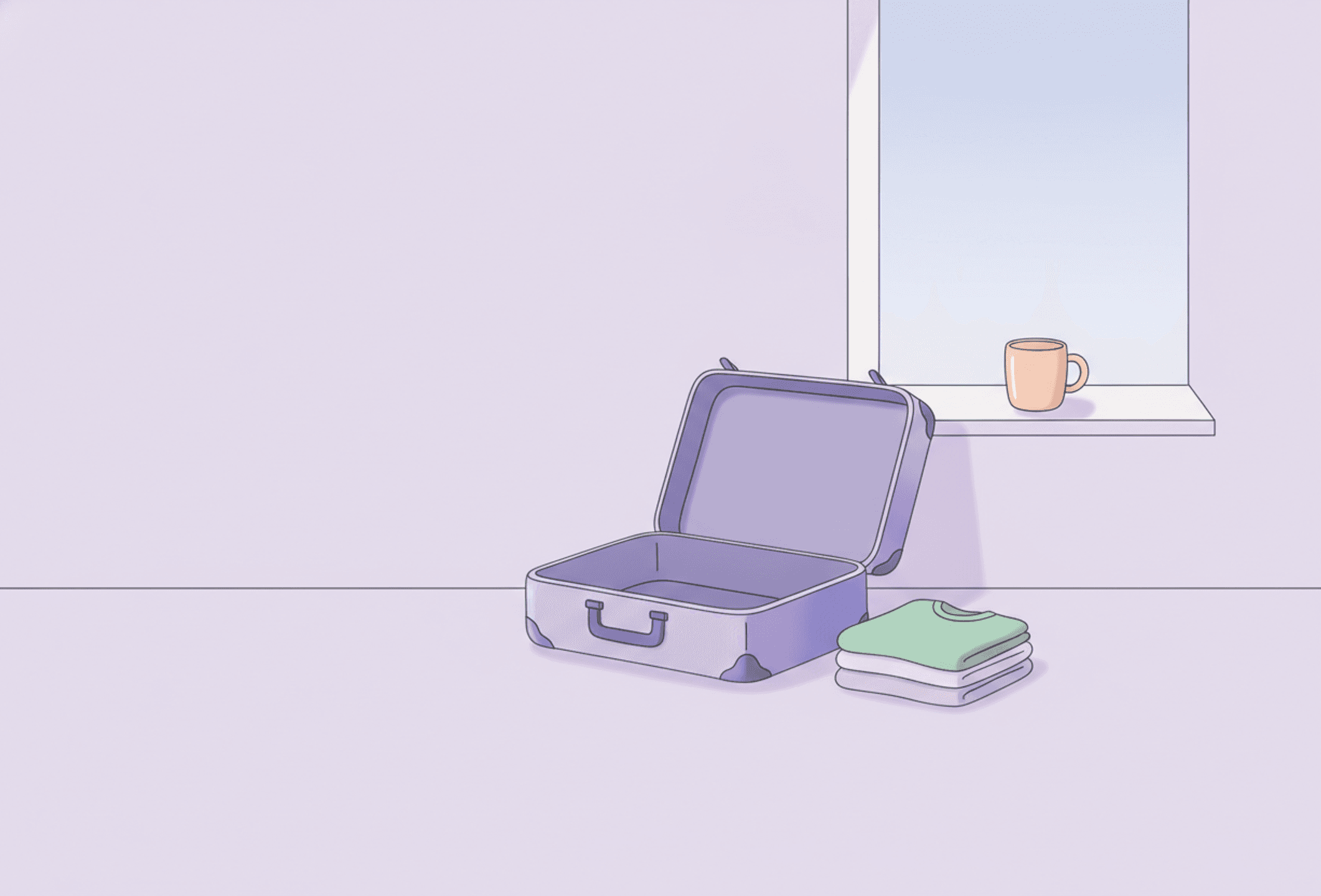
- Pack your bag or set out what you need to take.
- Write down your top three things for tomorrow — no more.
Three is deliberately few. A short list feels possible, while a long one only piles on pressure the night before. Whatever does not fit can live on tomorrow's list — not everything has to happen first thing in the morning.
5. Clear your head with a brain-dump
Worries and to-do thoughts keep a lot of people awake. The fix is to move them out of your head and onto paper or a screen.
Jot down everything spinning around, unsorted: things you must not forget, what you are stewing on, ideas that pop up. You do not have to solve anything now — just park it, so your brain can let go of the threads overnight. Knowing the thoughts are saved somewhere makes them far easier to release.
In Stedo, you can use Quick capture for exactly this: catch a worry or a task in a couple of taps and deal with it tomorrow instead.
6. Do a short check-in
Finish with a small reflection. How did the day feel? What actually went well? A single sentence or a feeling is enough.
A 9-point mood check-in, like the one in Stedo, does this in seconds and builds a trend over the weeks. You do not need to analyze — just notice how you are doing and let it be a soft full stop on the day. Over time, that trend can help you see which evenings and days actually leave you feeling better.
7. Use a wind-down cue
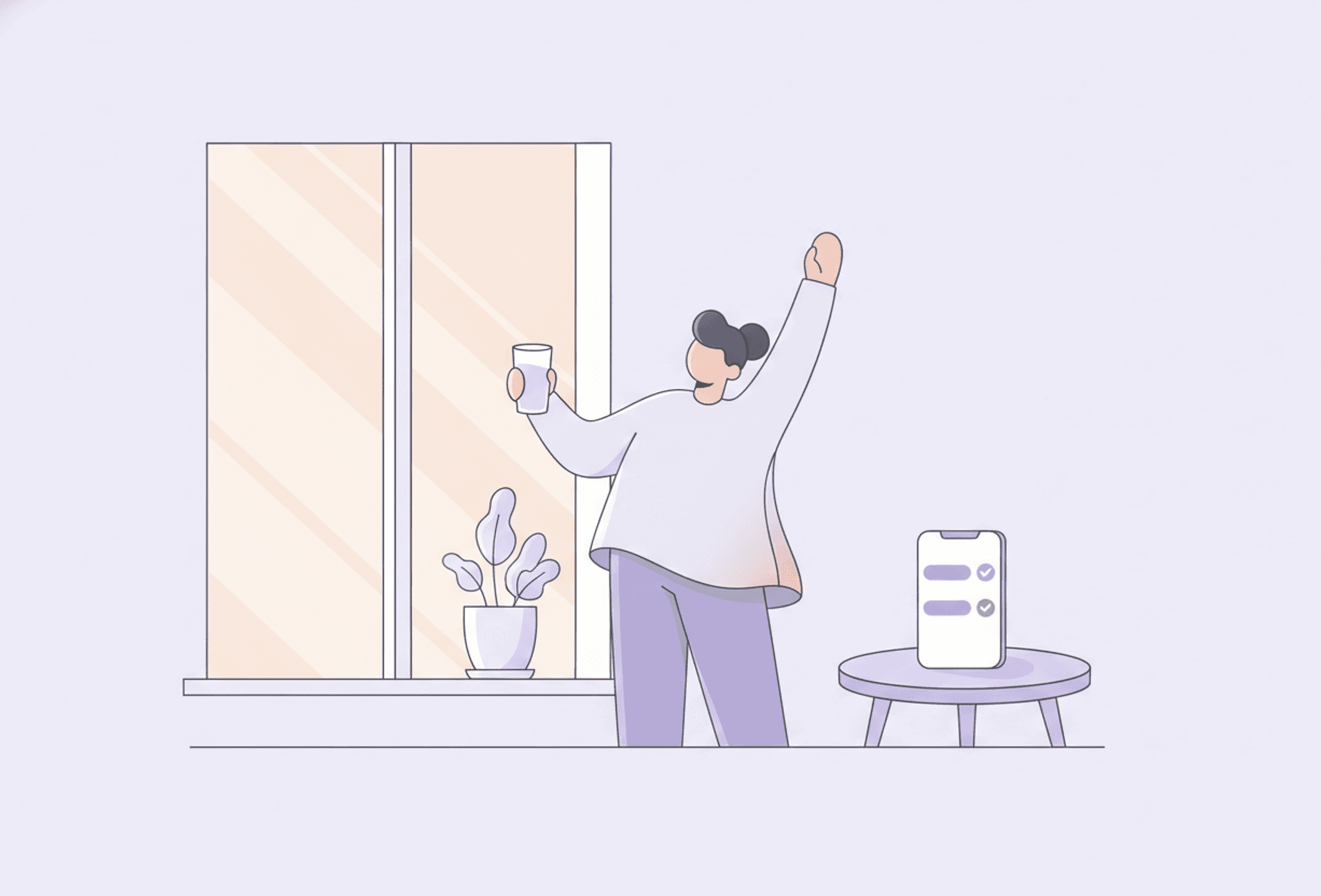
Always end the same way so your body learns: we are done now. It might be switching off the overhead light, taking three slow breaths, or drinking a glass of water.
Over time, the cue itself becomes a signal for your brain to relax. It is the habit, not the action, that does the work — so pick a cue simple enough that you will actually repeat it every night.
A 10-minute version for hard days
Some evenings there is neither energy nor time. On those nights the routine should shrink, not disappear. A tiny version on a hard day is infinitely better than none — and it keeps the habit alive so you can find your way back tomorrow.
Just do three things:
- Lay out your clothes for tomorrow.
- Write down your top three things so the morning has a direction.
- Clear your head quickly with a brain-dump or in Quick capture.
That is all. Ten minutes, done. You have still made tomorrow easier, and you skip the feeling of having broken the routine entirely.
Common pitfalls — and how to avoid them
Most evening routines do not fail on the steps themselves, but on unrealistic expectations. A few kind reminders:
- Do not make it too long. A routine you can keep daily beats a perfect one you do once.
- Do not punish slip-ups. A missed night is just a missed night. Start again tomorrow, no commentary.
- Do not rely on memory. Build in a reminder instead of hoping you remember to begin.
Turn the routine into a habit
The hardest part of an evening routine is not the steps — it is remembering to start. This is where it helps to build in support rather than rely on willpower.
- Save the steps as a reusable routine you can follow each night without thinking.
- Use a gentle reminder that nudges you to begin winding down on time.
- Be kind to yourself when it does not happen. A missed night is not a failure.
In Stedo you can set the evening up as its own reusable routine group and switch on a calm wind-down reminder, so the app remembers the start for you. If you want to get going, there is more to read at www.stedo.app.
In short
A good evening routine is not about doing everything right. It is about a few small, kind steps that take the thoughts out of your head and move tomorrow's decisions into tonight. Start small, keep it flexible, and let the 10-minute version be there on the days you need it. Over time the evening gets calmer — and the morning starts to take care of itself.
Frequently asked questions
How long should an evening routine be?
As long as you can actually keep. 20-30 minutes leaves plenty of room for every step, but a 10-minute version with clothes laid out, your top three things written down, and a quick brain-dump works perfectly on hard nights. What matters is that the routine is short enough to repeat.
When in the evening should I start?
Pick a rough, recurring time that fits your day — for example, a while before you want to sleep. A loose but regular start helps your body recognize the pattern far better than a perfect time you rarely keep.
What if my mind races when I try to sleep?
Try a brain-dump: write down everything spinning around, unsorted, so your brain can stop holding the threads. In Stedo you can catch the worry in Quick capture and deal with it tomorrow instead of in the middle of the night.
Does an evening routine really help the morning?
Yes, because most morning decisions are already made the night before. When your clothes, bag, and top three things are ready, morning-you only has to follow the plan, which makes the start of the day noticeably calmer.