

Transition Rituals: Bridging the Gaps Between Tasks
The hardest part of an ADHD day often isn't the tasks, it's the moments between them. Transition rituals bridge those gaps so the in-between stops swallowing your time.
For many ADHD brains, the hardest part of the day is not the tasks, it is the moments between them. Stopping one thing and starting the next can feel strangely impossible: you finish a meeting and lose forty minutes before the next task, or you cannot pull yourself out of something to move on. Transition rituals are small, deliberate actions that bridge those gaps. Here is how they work.
Why transitions are hard with ADHD
Switching tasks asks a lot of executive function: disengaging from one thing, holding what is next in mind, and getting yourself moving again. ADHD makes each of those harder, so the in-between becomes a danger zone, you drift to your phone, get stuck, or lose track of time entirely. The tasks are not the problem; the gaps are.
What a transition ritual is
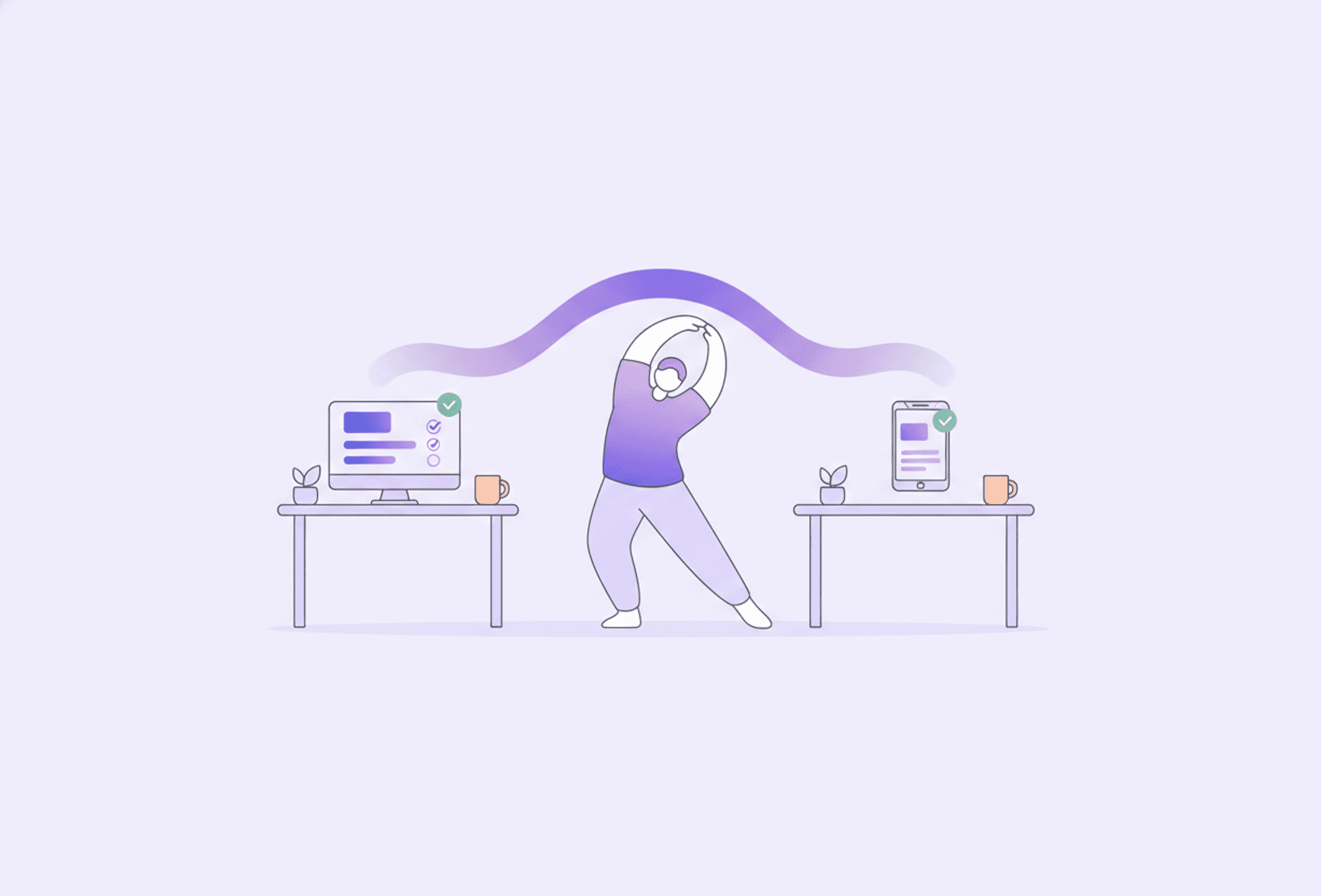
A transition ritual is a short, repeatable action that signals one thing is ending, another is beginning. It gives the in-between a shape instead of a void. It can be as simple as standing up and stretching, three slow breaths, or a quick tidy of your desk, anything that consistently marks the shift and nudges you toward what is next.
Examples that work
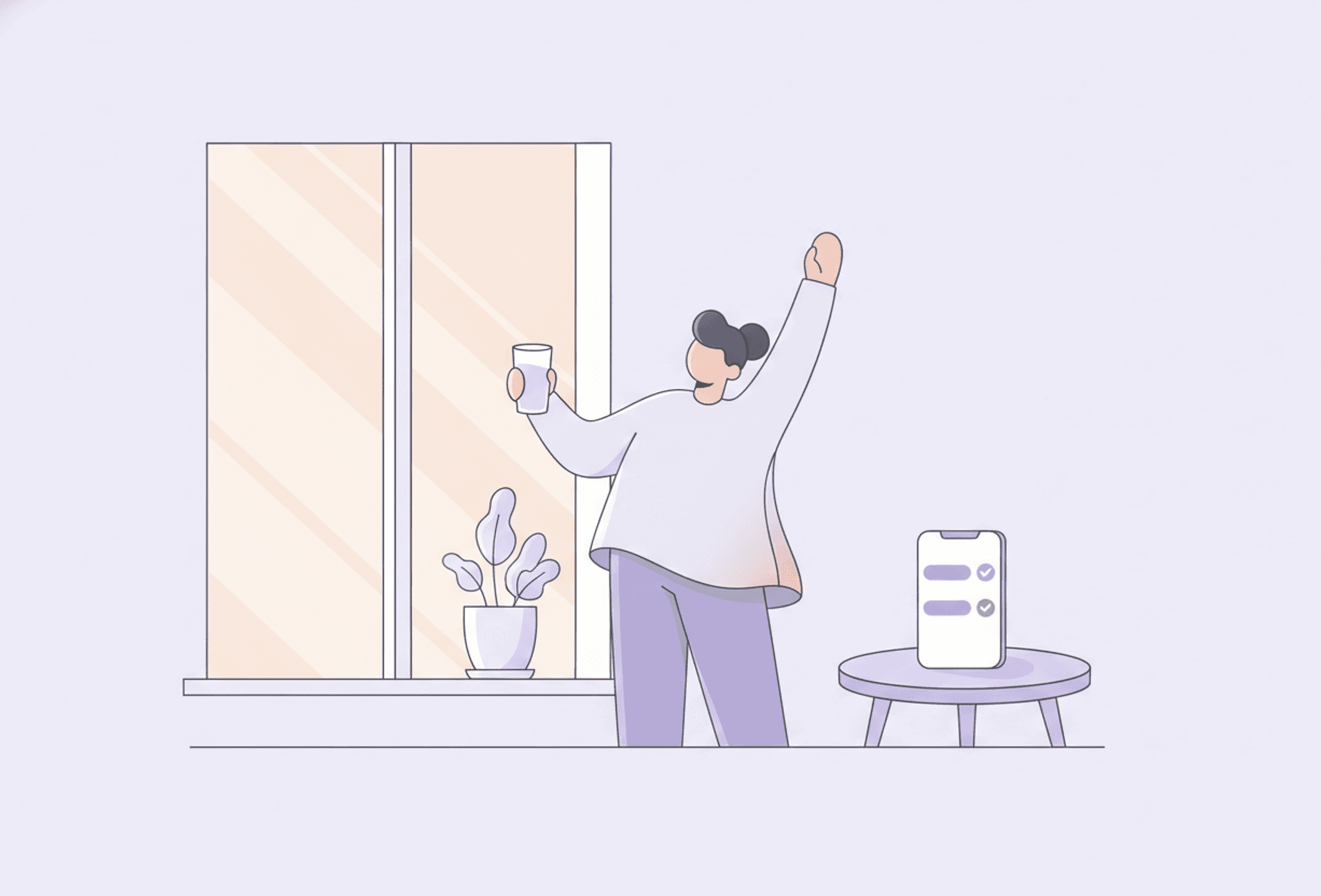
- Stand and move. Get up, stretch, walk to the window and back, a physical reset between sitting tasks.
- Close, then open. Verbally or on paper, close the task you finished (jot where you left it) and open the next (name its first step).
- A signature cue. The same song, a glass of water, washing your hands, a small repeated action your brain links to switching.
- A two-minute tidy. Clearing the space resets it for the next task and fills the gap with something useful.
Mind the in-between trap
The most dangerous moment is the unstructured gap right after finishing something, when just a quick look at my phone can swallow an hour. A transition ritual closes that gap on purpose. If you know you drift, decide your transition before you finish, and consider a timer or alarm to mark when the break ends and the next thing starts.
Make starting the next thing easy
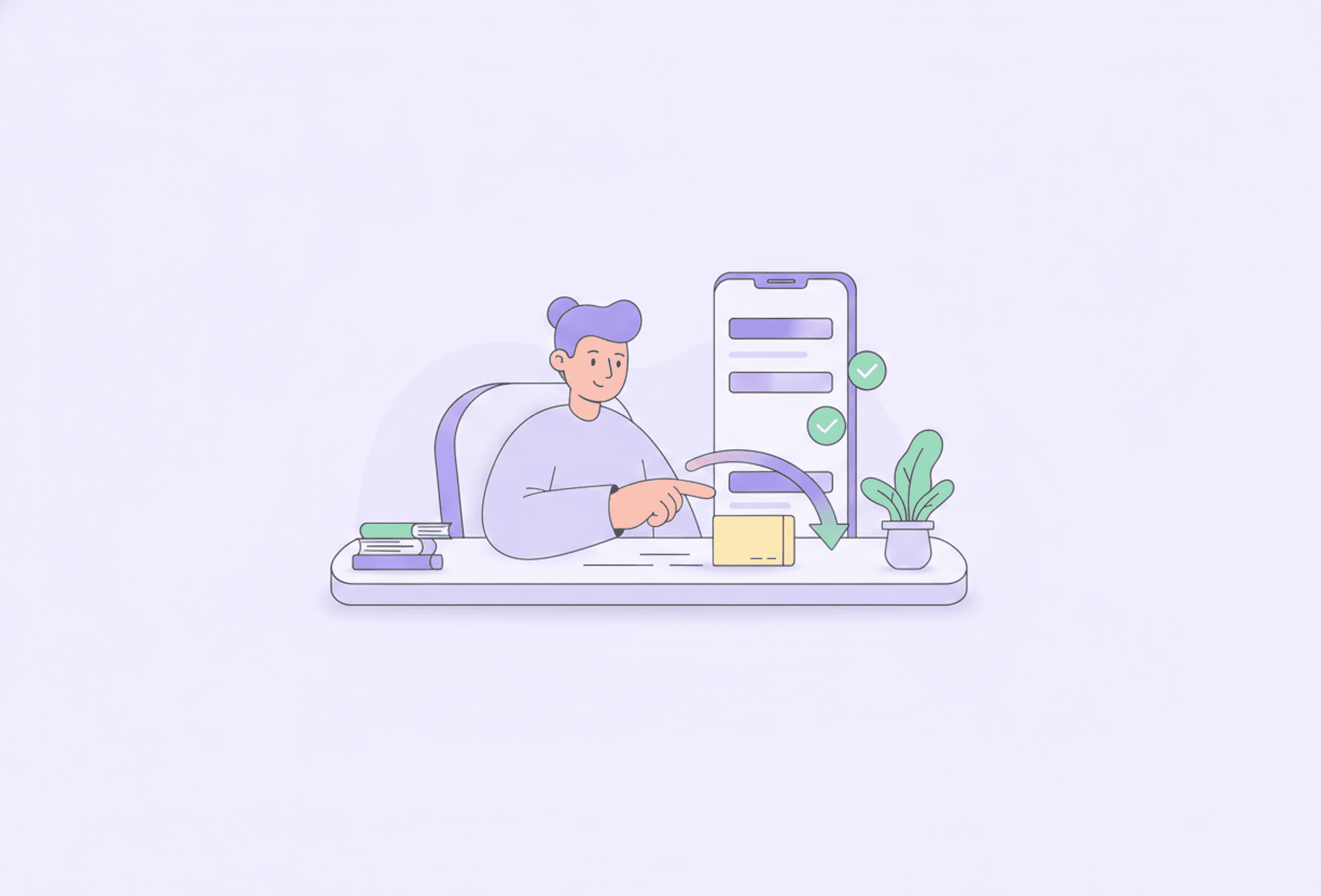
Half of a good transition is making the next task easy to begin. As you finish one thing, set up the next: open the document, lay out the tools, write down the first step. Then the transition leads straight into getting started instead of into a void.
Build them into your day
Transitions show up everywhere: waking to starting work, work to lunch, work to home, screen to sleep. A shutdown routine is a transition ritual for the end of the workday; a morning routine bridges sleep to the day. The big shifts deserve their own rituals; the small ones just need a consistent cue.
The takeaway
If you lose time and energy in the cracks between tasks, the fix is not trying harder to switch, it is giving the switch a ritual. A few seconds of deliberate transition turns the day's danger zones into smooth handoffs, and stops the gaps from swallowing your time.
Read more
Frequently asked questions
What is a transition ritual?
A short, repeatable action that marks the shift from one task or activity to the next, like standing and stretching, three breaths, or a quick tidy. It gives the in-between a shape so you do not drift or get stuck.
Why are transitions hard with ADHD?
Switching tasks leans heavily on executive function: disengaging, holding the next thing in mind, and getting moving again. ADHD makes each harder, so the gap between tasks becomes where time and focus get lost.
How do I stop losing time between tasks?
Use a transition ritual to give the gap a shape, decide your transition before you finish, set up the next task so it is easy to start, and consider a timer to mark when the break ends. The unstructured gap is the danger zone.
What are good transition rituals?
Standing up and moving, closing one task and opening the next on paper, a signature cue like a song or glass of water, or a two-minute tidy. Anything consistent that marks the shift and nudges you onward.