

Revenge Bedtime Procrastination
Staying up far too late scrolling, watching or gaming isn't always about not being tired — sometimes it's the only free time the day gave you. Here's why that trade backfires, and how to claim the time earlier instead.
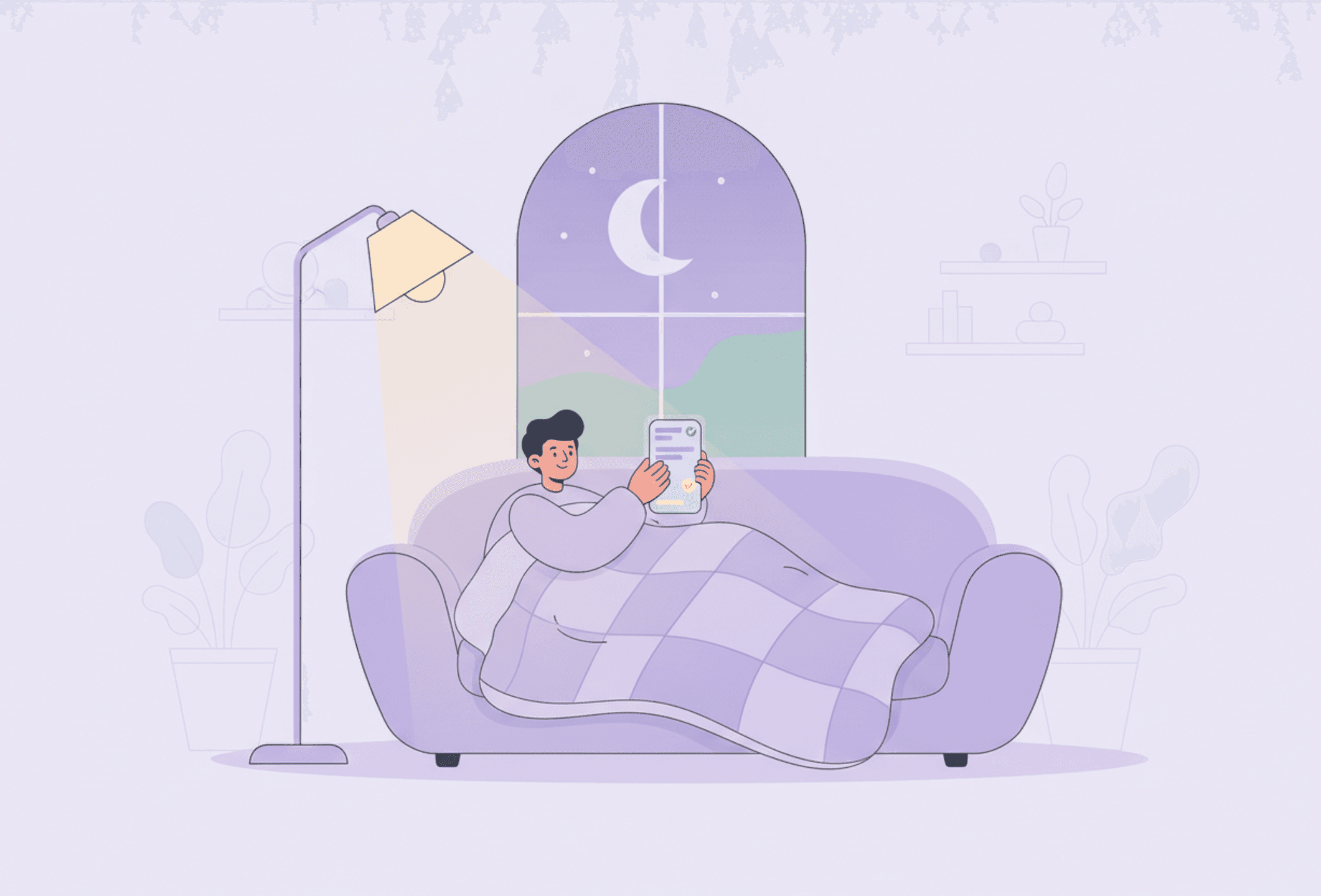
It's 11:47 p.m. You're exhausted. You have to be up in six hours. And you're still scrolling, watching one more episode, playing one more round — not because you're not tired, but because this is the first hour all day that felt like it belonged to you.
Revenge bedtime procrastination is delaying sleep to reclaim free time a demanding day never gave you, even though you know tomorrow will be harder for it. It isn't insomnia, and it isn't simply enjoying your phone too much. It's a trade you make on purpose, at a cost you already know.
Where the name comes from
The term traces back to 報復性熬夜, "retaliatory staying up late," which spread on Chinese social media around 2020 to describe workers whose days were so packed with demands that only midnight felt free. English-language writers picked it up soon after, because the feeling translated perfectly: revenge against a schedule that never asked what you wanted.
The "revenge" isn't aimed at another person. It's aimed at the day itself, and at a routine that took everything and offered nothing back.
Why ADHD makes it worse
Everyone loses an evening to their phone occasionally. A few things make the pattern stickier with ADHD.
- The whole day went to demands and masking. Work, admin, social effort, holding yourself together in rooms that weren't built for how your brain runs — by the time the day is technically "over," the evening is the first stretch that isn't owed to anyone. Giving it up feels like giving up the only thing you got.
- Going to bed is a transition, and transitions are hard. Stopping an enjoyable activity and starting nothing is one of the hardest switches there is, and bedtime asks for exactly that, every single night.
- **Evening hyperfocus locks the door behind you.** One more episode turns into a season. A game "until this level" turns into 2 a.m. The absorption that can make focused work so productive during the day works just as well on a show at night — it just picks the target, not you.
- **Time blindness hides how late it's actually getting.** Without a strong internal sense of elapsed time, forty-five minutes of scrolling and three hours of scrolling can feel like roughly the same amount of "a while," until the clock says otherwise.
The need is real — it's the timing that backfires
Here's the part worth saying plainly: wanting unstructured time, autonomy and something enjoyable at the end of a demanding day is not a character flaw. That need is completely legitimate. The problem is never that you wanted rest or fun — it's that you're paying for it with tomorrow instead of with today.
Sleep debt doesn't stay contained to feeling tired. It worsens ADHD symptoms directly — focus, mood regulation and impulse control all get harder on too little sleep — which makes tomorrow's demands feel heavier, which makes tomorrow's evening feel even more owed to you. The trade looks fair at midnight and turns out to be a loan with interest.
Claim the time earlier, on purpose
If the only unclaimed hours are the ones you steal at midnight, the fix isn't willpower at 11 p.m. — it's making sure you don't need to steal anything. Put real, guilt-free downtime earlier in the evening and protect it the way you'd protect a plan with a friend. Time that's already scheduled doesn't need to be stolen later, because it already happened.
Even twenty minutes of something you actually chose, right after dinner instead of right before bed, changes what midnight is being asked to make up for.
Give evening fun a container, not a ban
Trying to cut the enjoyable part out of your evening is exactly the kind of rule that gets broken at 11:45. A more honest approach is to give it a shape: start earlier, and decide the end point in advance rather than discovering it. An alarm that means "stop" is far more useful here than one that means "start" — set it for when the fun should end, not just for when the wind-down begins.
Your wind-down routine doesn't have to mean banning anything you enjoy. It works better when it contains something good — music, a chapter of a book, a warm drink — so putting the phone down doesn't feel like the evening is over, just changing shape.
Make stopping the easy option
A surprising amount of "one more" is just autoplay doing its job. Turn it off. Decide your episode or level limit before you start, not in the moment when you're already absorbed and the worst possible judge of "just one more." And if you can, charge your phone outside the bedroom — the version of you at 11:50 p.m. is not going to overrule a phone that isn't within reach.
Aim for a stop you'll actually keep
Perfectionist bedtime rules collapse fast, and a broken rule stops feeling like a rule at all. A 00:30 stop time you actually hold is worth far more than a 22:30 rule you break by 23:00 anyway. Start from where you really are, move it earlier in honest steps, and count each night you stop on time as the win it is — even if the number is later than you'd like it to be.
Read more
Frequently asked questions
What is revenge bedtime procrastination?
It's delaying sleep — by scrolling, watching or gaming — to reclaim free time that a demanding day never gave you, even though you know it costs you tomorrow. The term comes from a Chinese phrase, 報復性熬夜 ("retaliatory staying up late"), that spread online around 2020.
Why is it more common with ADHD?
A day spent on demands and masking leaves the evening as the first unclaimed time, and going to bed means giving it up. Evening hyperfocus can lock you into 'one more', and time blindness hides how late it's actually getting, so the pattern is easy to fall into and hard to notice in the moment.
Is it the same thing as insomnia?
No. Insomnia is trouble sleeping when you try to. Revenge bedtime procrastination is choosing not to try yet, on purpose, because the evening still feels like the only time that belongs to you.
How do I stop it without giving up my evening?
Move real, protected downtime earlier instead of waiting for midnight to claim it, give evening fun a planned end point rather than banning it, and make stopping mechanically easier — autoplay off, phone charging outside the bedroom. Aim for a stop time you'll actually keep rather than an earlier one you'll break.