

ADHD and Sleep: Why It's Hard, What Helps
Not tired at midnight, impossible at seven. Sleep problems are common with ADHD for real reasons, and a few of them respond well to changes you can make this week.
You're not remotely tired at midnight. At seven the alarm feels like an assault. And the day that follows makes every ADHD trait louder: worse focus, shorter fuse, more forgetting.
Sleep problems are very common in adults with ADHD, and they have real mechanisms behind them rather than being a matter of discipline. The good news is that a few of those mechanisms respond well to changes you can start this week.
This is general information, not medical advice. Persistent sleep problems are worth discussing with a doctor.
Why sleep is harder with ADHD
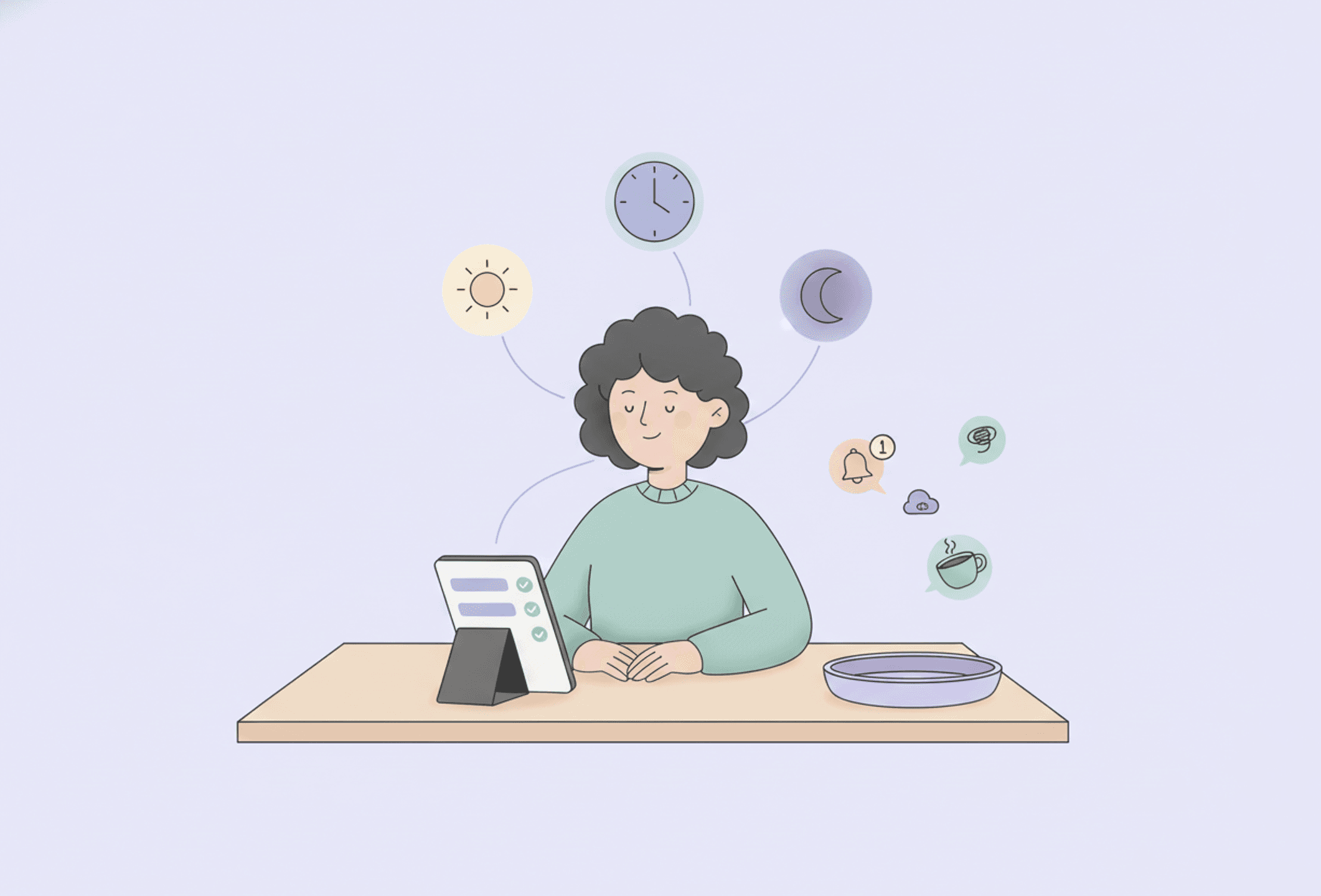
- A later body clock. Many people with ADHD have a delayed sleep phase: the internal signal to sleep arrives later than the world's schedule wants. You're not choosing to be a night owl, and forcing an early bedtime mostly produces lying awake.
- A mind that starts talking at lights-out. The day's unprocessed thoughts arrive the moment there's nothing else to attend to.
- Going to bed is a transition. Stopping an activity and starting nothing is the hardest kind of switch, and it's the point where most late nights are actually decided.
- The evening is the only unclaimed time. After a day of demands, the quiet hours feel like the only ones that are yours. Delaying sleep to keep them is called revenge bedtime procrastination.
- Sleep debt worsens ADHD symptoms, which makes routines harder to run, which costs more sleep. It's a loop that's easier to interrupt than to reason with.
Anchor the wake time, not the bedtime
If you change one thing, change this: get up at roughly the same time every day, including weekends, within about an hour.
Your body clock is set much more strongly by when light hits your eyes in the morning than by when you go to bed. A consistent wake time gradually pulls the whole cycle earlier, whereas trying to fall asleep earlier on command usually just adds frustrated hours in bed.
Sleeping in until noon on Saturday resets your clock later again, which is why Sunday nights are so often the worst.
Get light early, and dim it late
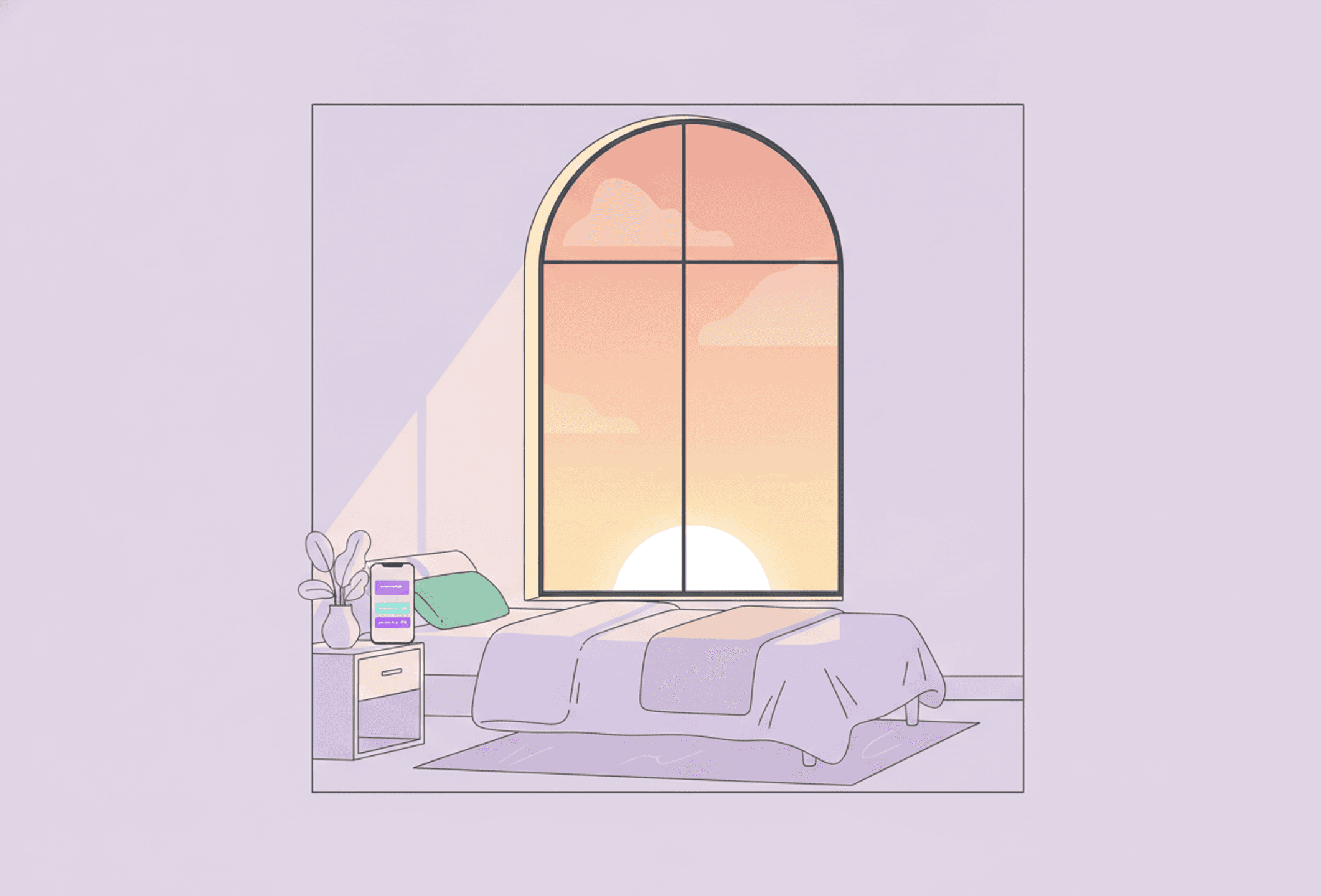
Daylight in the first hour after waking is the strongest available signal that the day has started. Ten to twenty minutes outside beats any lamp, even on a grey day, and it's more effective than most of the advice about evening habits.
The reverse matters too: dim the lights in the last hour before bed. Not as atmosphere, but because bright light in the evening tells your body it's still daytime.
Watch the caffeine window
Caffeine stays active for a long time, so a mid-afternoon coffee can still be measurably present at bedtime. If sleep is a problem, try a cut-off around eight hours before you want to be asleep, for two weeks, and see what changes.
This matters more than people expect if you're using caffeine to compensate for poor sleep, since that's precisely the loop keeping you awake.
Give the evening a landing
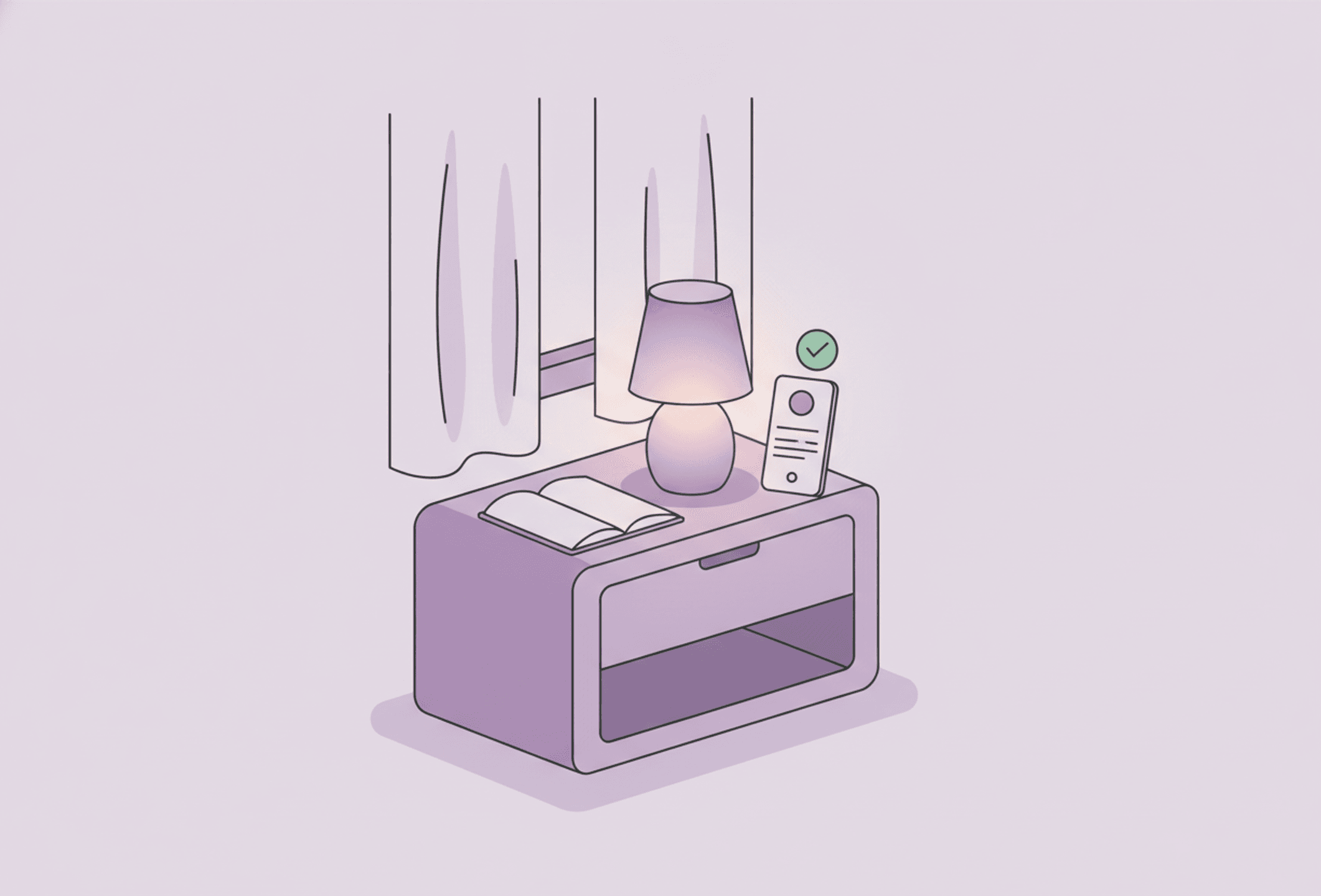
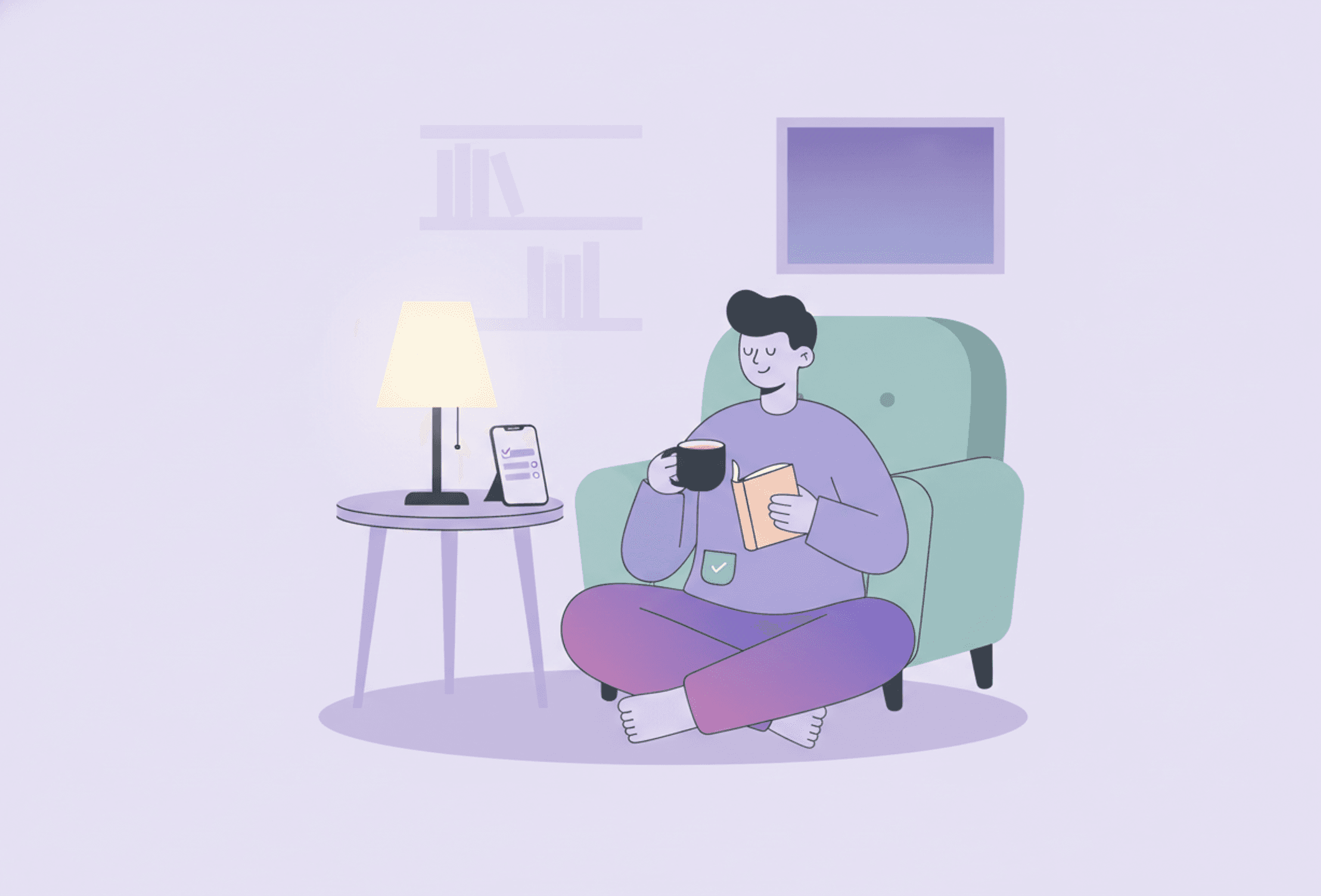
Most late nights are decided at the moment you don't stop, so the useful intervention is a cue to stop rather than a rule about bedtime. Set an alarm for when your wind-down begins, put the phone on charge in another room, and keep the last half hour repetitive and boring.
If thoughts arrive as soon as you lie down, write them somewhere first. Two minutes of putting worries and reminders on paper works better than trying to reason with them at midnight, for the same reason a brain dump works in the daytime: what's written down doesn't need to be held.
Medication and sleep
Stimulant medication can affect sleep, sometimes by delaying it, sometimes by improving it when the alternative is a racing evening brain. Timing and dose both matter, and both are worth raising with your prescriber rather than adjusting yourself.
If you've recently started or changed medication and your sleep changed with it, that's specific, useful information for the person who prescribed it.
When to see a doctor
Some sleep problems are conditions in their own right, and they're more common in people with ADHD.
- Loud snoring, gasping, or waking unrefreshed after enough hours can indicate sleep apnoea, which is treatable and important not to leave.
- An urge to move your legs in the evening may be restless legs syndrome.
- A body clock that's several hours later than your life allows, consistently, may be a delayed sleep-wake phase disorder rather than a habit.
- Long-standing insomnia responds well to CBT-I, a structured treatment with good evidence, which is worth asking about specifically.
Routines are worth doing, but they don't fix apnoea, and months of trying to fix that with a better evening habit is time better spent on a referral.
Be realistic about the goal
You may never become a person who falls asleep at ten and bounces up at six. A more achievable target is a consistent wake time, a stopping cue in the evening, light in the morning, and thirty to sixty minutes more sleep than you're getting now.
That's enough to noticeably improve focus, mood and everything that runs on them, and it's a far better bet than an overhaul you'll abandon by Wednesday.
Read more
Frequently asked questions
Why do people with ADHD have trouble sleeping?
Several reasons overlap: a body clock that runs later than the schedule around you, a mind that starts processing the day as soon as you lie down, difficulty with the transition of stopping an activity, and the pull of the evening as the only unclaimed time. Sleep debt then worsens ADHD symptoms, which makes the whole pattern harder to break.
What's the single most useful change for ADHD sleep?
Anchor your wake time rather than your bedtime, and get daylight in the first hour after waking. Your body clock responds much more strongly to morning light than to when you get into bed, so a consistent wake time gradually pulls sleep earlier, while trying to fall asleep on command mostly produces lying awake.
Does ADHD medication affect sleep?
It can, in both directions: stimulants may delay sleep, but for some people they improve it by quietening a racing evening brain. Timing and dose both matter, so if your sleep changed after starting or adjusting medication, that's worth raising with your prescriber rather than changing anything yourself.
When should I see a doctor about sleep?
If you snore loudly, gasp in your sleep or wake unrefreshed despite enough hours, if your legs feel restless in the evening, if your body clock is consistently hours later than your life allows, or if insomnia has lasted months. These are treatable conditions, and CBT-I in particular has good evidence for long-standing insomnia.