

How to Rest With ADHD (When Doing Nothing Feels Wrong)
You sat down at eight to do nothing. By ten past you were reorganising a cupboard, and by eleven you were tired but not rested.
You sat down at eight o'clock to do nothing.
By ten past you were reorganising a cupboard. By half past you were on your phone, and at eleven you went to bed tired but not rested, with the vague sense that the evening had been used up rather than spent.
How to rest with ADHD starts with a correction: rest fails not because you do not want it, but because most rest advice removes stimulation - and a brain that is already short on it doesn't settle in an empty room, it gets restless. Real rest asks little of you; it doesn't give you little.
Why "just relax" doesn't work
Sit still in a quiet room with nothing to do and watch what happens. Within a minute the thoughts arrive: the email you didn't send, the thing you said in 2014, the tab you left open. Silence is not neutral. It is an invitation for everything unresolved to step forward.
Most relaxation advice is written for a nervous system that is over-stimulated and needs less. Plenty of ADHD brains are the other way round - under-stimulated, reaching for something, anything, to fill the gap. Take away all the input and the search only intensifies. That is why the evening you cleared for rest so often ends in scrolling, snacking, or a spontaneous ten o'clock reorganisation of the kitchen drawer.
The guilt tax on rest
There is a second problem, and it weighs more than the first.
If the day is scored on output, rest has to be earned - and on the days you get least done you feel least entitled to it, which is exactly backwards. So you sit down with the unfinished list humming in the background, and an hour spent feeling you should be doing something else is not an hour of rest. It is just work done badly, in an armchair.
Years of missed deadlines and half-finished projects teach the same lesson: slowing down is where things go wrong. Motion feels safer than stillness, so you keep moving. Shame does a lot of the work here, and it is worth naming rather than obeying.
How to rest with ADHD: low demand, not low input
Here is the rule that makes the rest of it work: rest should ask very little of you and still give your attention somewhere to sit.
That looks like:
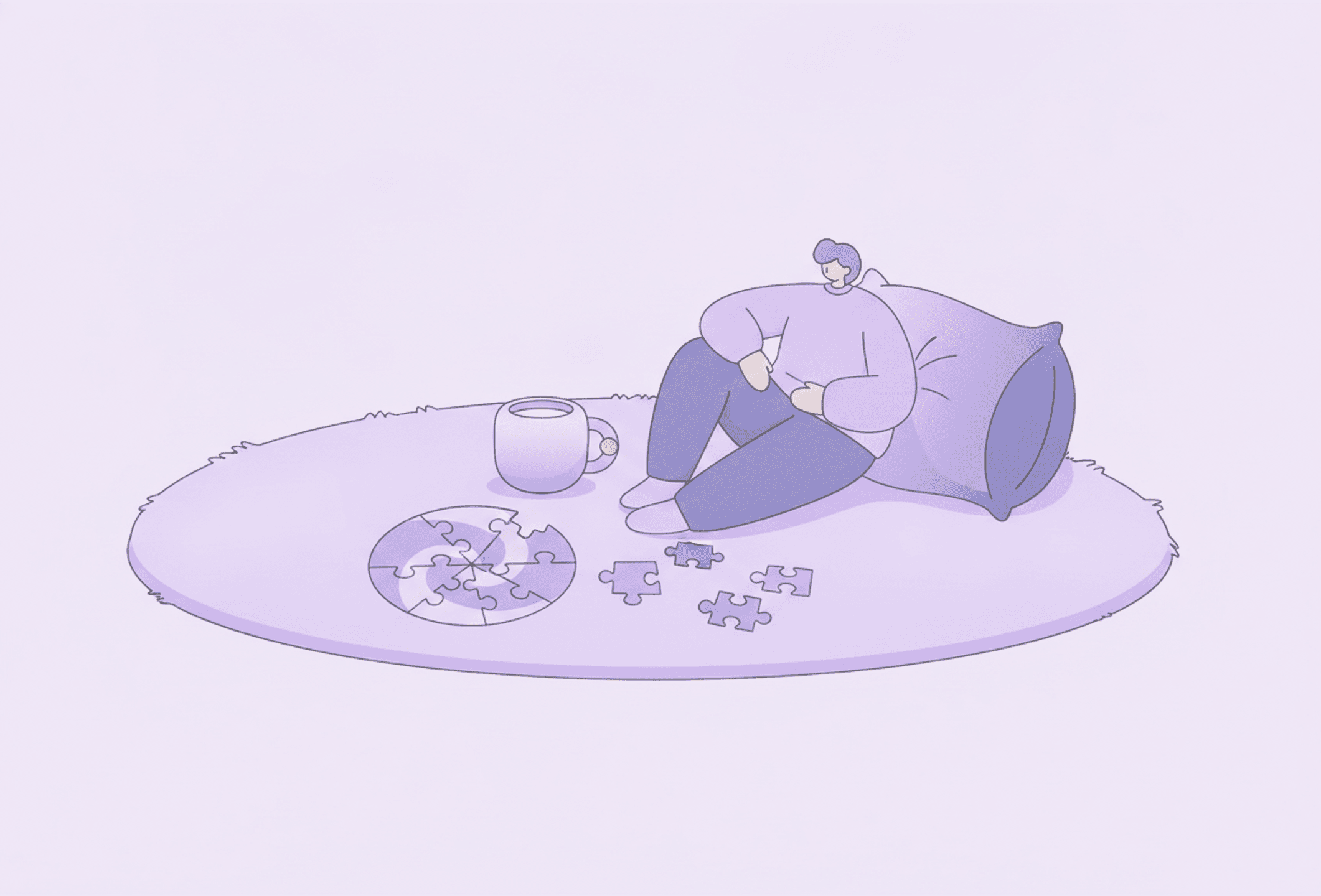
- something with your hands - a puzzle, cooking a meal you have made a hundred times, knitting, watering plants, a bath with an audiobook
- a walk, especially one where you are not trying to get anywhere
- a film you have already seen, so nothing is at stake
- a game with a clear end - a level, a round, a chapter
- driving, showering, washing up: the tasks people describe as accidentally restful
They share a shape. There is enough input to keep the search satisfied, and almost no decisions to make. Novel, demanding or open-ended activities are not rest, however much you enjoy them.
Scrolling is the counterfeit
Scrolling meets the input requirement perfectly, which is why it wins every time, and it restores nothing.
The test is simple: how do you feel after forty minutes of it? Usually flatter than before, faintly agitated, and surprised by the clock. Compare that with forty minutes of a puzzle or a walk. Both were easy; only one gave something back.
You don't have to ban it. Just stop counting it as the rest, because while it counts, the real thing never gets a slot in the day.
Rest that isn't scheduled doesn't happen
Rest has no deadline, nobody is waiting for it, and it will lose to every task that does have one. What it gets instead is the leftovers - whatever is still awake at half past eleven, which is how revenge bedtime procrastination starts. The day contained no rest, so you take it out of the night.
So put it in the plan like anything else. Not "relax this weekend" but an actual slot: Sunday, two o'clock, an hour. A block with a beginning is one you can start, and one that is written down is one you are allowed to take.
Give it a start and an end
The block needs edges, or it either doesn't begin or doesn't stop.
A start cue: make the tea, put the phone in another room, turn on the lamp instead of the ceiling light. An end cue: a timer, or whatever you have planned afterwards. And a timer works in both directions - twenty minutes of doing nothing is far easier to enter when you know exactly when it finishes.
An evening wind-down is the same idea applied to the last hour of the day.
Write your rest menu before you need it
When you are empty you will not think of a single good option. You will reach for the phone, because it is the only one that requires no decision.
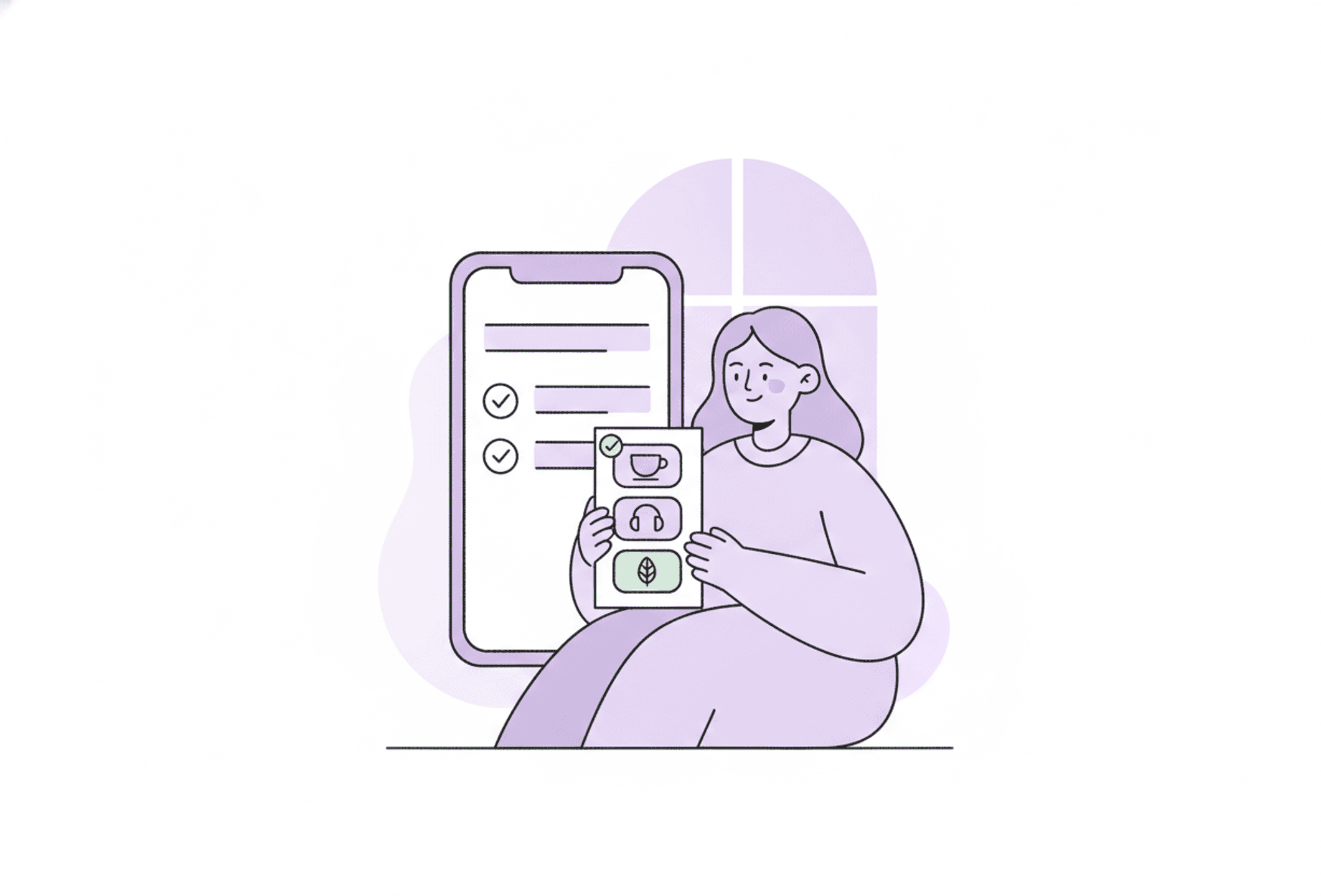
So write the list now, while you can think: eight things that genuinely restore you, sorted by effort. Two minutes, twenty minutes, a whole afternoon. It is the same trick as a dopamine menu, pointed at recovery rather than motivation, and it works for the same reason - the choosing is already done.
Rest before you are empty
Most people with ADHD rest reactively: keep going until the wheels come off, collapse for a weekend, call it recovery. It isn't. It is damage control, and it is how burnout builds.
Small and regular beats large and desperate. Fifteen minutes on an ordinary Tuesday is worth more than a lost Saturday, and it is the only version that prevents anything.
The short version
You are not bad at relaxing. You were handed rest instructions written for a different nervous system, and charged a guilt tax on top.
Aim for low demand rather than low input, stop counting scrolling as rest, put a real block in the plan with a beginning and an end, keep a written menu for the moments you are too tired to choose - and take it before you are empty, not after.
Read more
Frequently asked questions
Why can't I relax when I have ADHD?
Because most rest advice removes stimulation, and many ADHD brains are already under-stimulated rather than over-stimulated. Sitting in a quiet room with nothing to do makes the search for input more intense, not less, so the evening ends in scrolling or a spontaneous tidying session. Rest works better when it asks little of you but still gives your attention something to hold.
What actually counts as rest for an ADHD brain?
Low demand, not low input. A puzzle, a familiar meal, knitting, a walk with no destination, a film you have already seen, a game with a clear end, driving or washing up. There is enough going on to satisfy the search for stimulation, and almost no decisions to make. Novel or open-ended activities can be enjoyable without being restful.
Why does scrolling leave me more tired than before?
Scrolling meets the need for input perfectly, which is why it wins, but it gives nothing back. Forty minutes usually leaves you flatter, slightly agitated and surprised by the time. You do not have to ban it - just stop counting it as your rest, because while it counts, real rest never gets a place in the day.
How do I stop feeling guilty about resting?
Notice the rule you are using: if the day is scored on output, then rest has to be earned, and on the days you achieve least you feel least entitled to it. That is backwards. Booking rest into the plan helps more than arguing with the feeling - a block that is written down is one you are allowed to take, and taking it before you are empty is what actually prevents burnout.