

How to Build a Dopamine Menu for Motivation
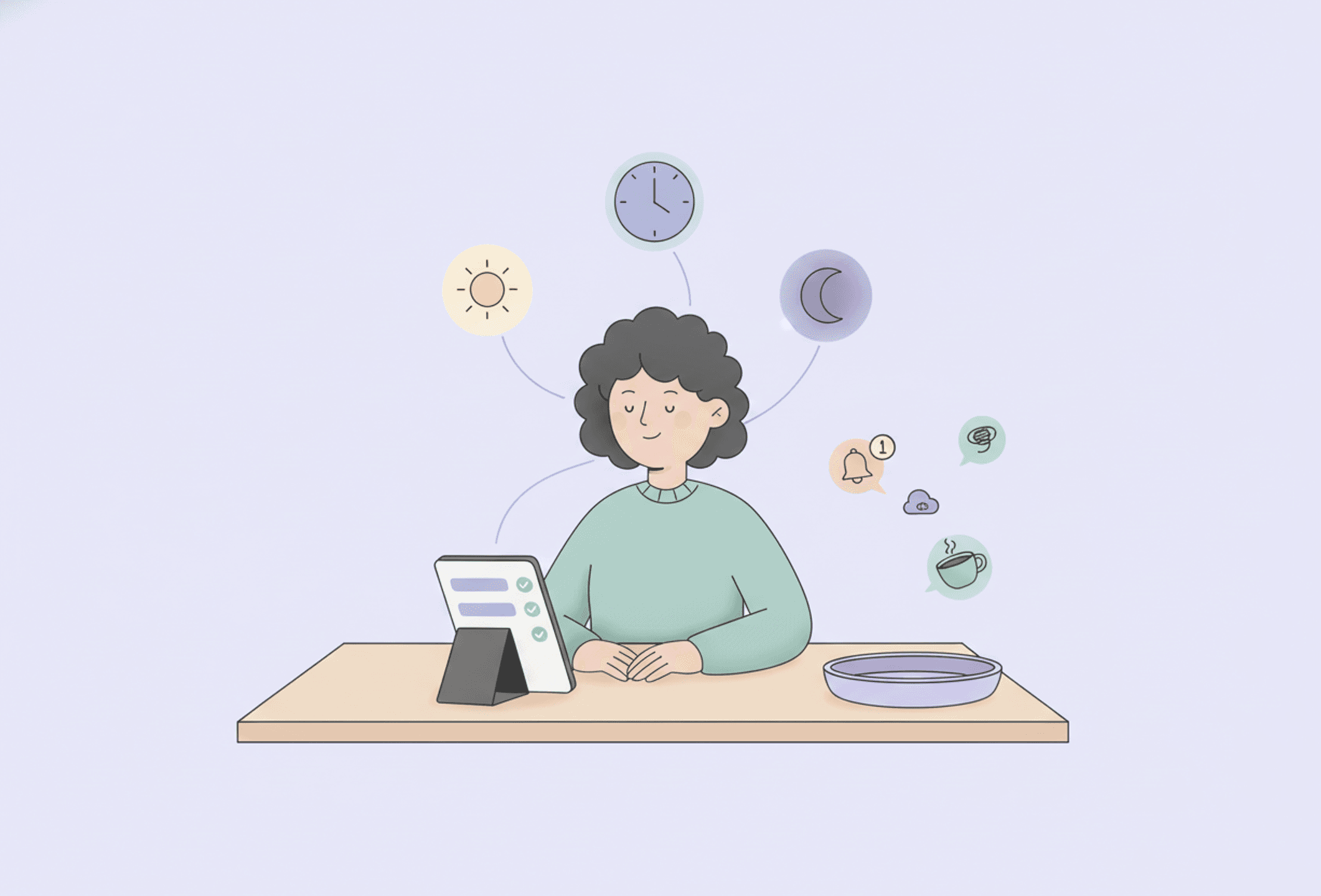
A dopamine menu is a ready-made list of feel-good, kind activities you can pick from when motivation runs low. Instead of defaulting to your phone, you've already decided what actually lifts you. Here's how to build your own, course by course.
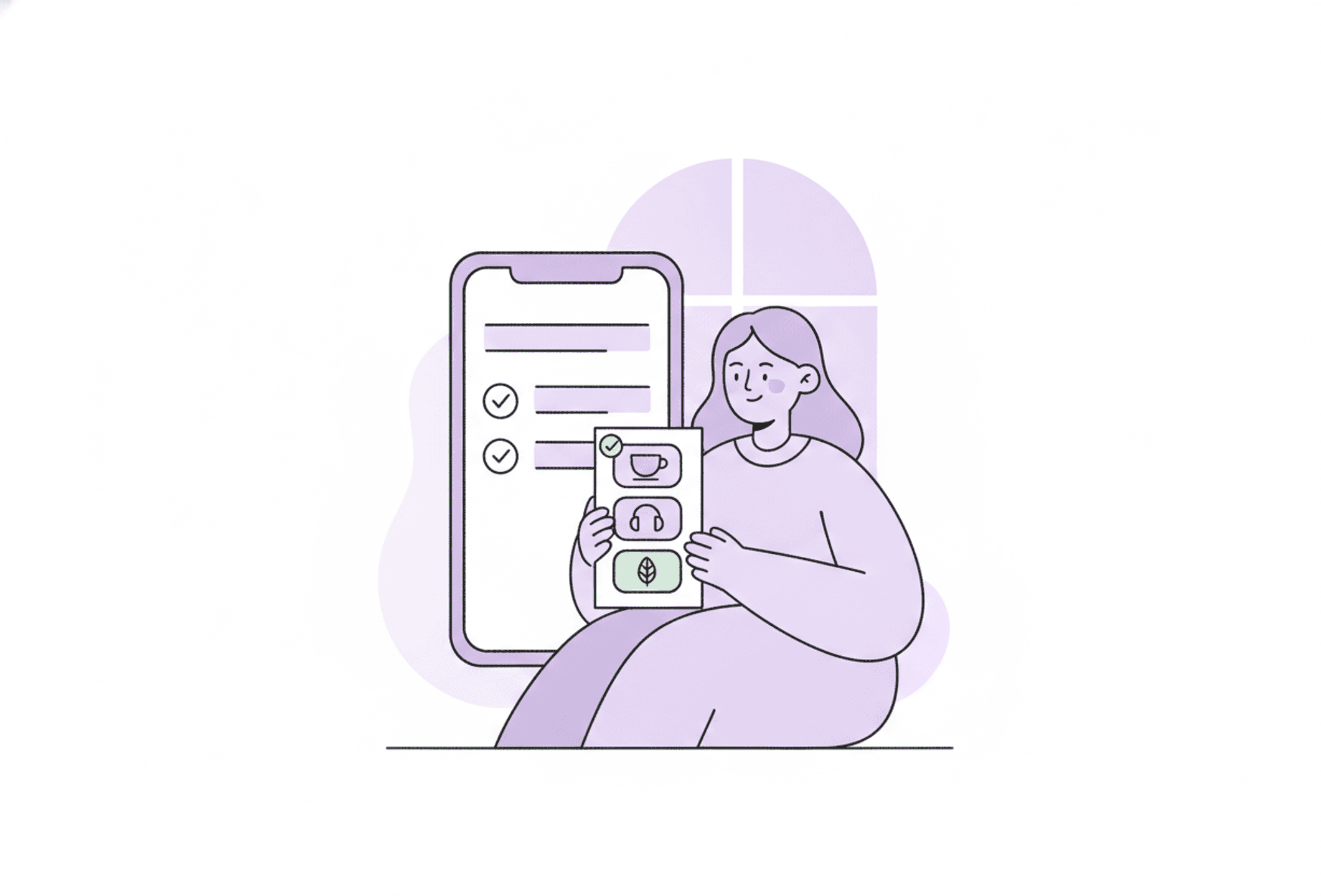
A dopamine menu is a ready-made list of feel-good, kind activities you can choose from when you feel understimulated, restless, or unmotivated. Instead of automatically reaching for your phone, you've decided in advance what actually perks you up. Think of a restaurant menu — only with small dishes for your brain.
What is a dopamine menu?
A dopamine menu is a simple trick for meeting those moments when you stall out. You know the feeling: you should do something, but the energy isn't there, so you open your phone and half an hour disappears without leaving you any better off. The menu gives you a better option that's already laid out and waiting.
The name is pop psychology rather than hard science, and that's fine. The point isn't to hack your brain — it's to make it a little easier to choose something that genuinely gives you energy. When you're tired, nobody wants to sit and brainstorm fun activities, so you build the list ahead of time, while you've got some to spare.
Why a ready-made list helps
- In a slump, it's hard to think of what would help. The menu already has the answer.
- It cuts the number of decisions you make when your energy is lowest.
- It separates things that feel good in the moment from things that actually leave you brighter.
- It turns rewarding yourself into something you choose on purpose, not something you stumble into out of habit.
Why a dopamine menu helps with motivation slumps
Most low-stimulation slumps aren't about laziness. You're understimulated, a little bored, or drained, and your brain goes looking for the quickest route to a small lift. Doom-scrolling wins because it's always there and asks nothing of you.
The trouble is that those quick hits rarely refill the tank. You often get up flatter than you sat down. A dopamine menu sets a deliberate choice right next to the automatic one — something that gives a similar little boost but actually leaves you better off.
This isn't about never scrolling again. It's about having options ready, so your phone becomes one choice among several rather than the only thing that pops up.
How to build your dopamine menu: the courses
The fun part is thinking like a menu. Sort your activities into courses by how much time and energy they take. That way you always have something that fits the moment — whether you've got two minutes or a whole evening.
Starters: quick 2-5 minute boosts
Small things you can do almost anywhere to break a slump. Perfect when you just need to get unstuck.
- Stretch, or shake your body loose to one song.
- Step outside or onto the balcony and take a few deep breaths.
- Drink a big glass of water or put the kettle on.
- Pet a cat or a dog.
- Send a kind message to someone you like.
- Splash cold water on your face.
- Pick out a tune on an instrument, or hum a favourite.
Mains: longer, satisfying activities
Things that take a bit more time but leave you refilled. For when you've got 30 minutes or more and want to do something that actually counts.
- Take a walk, ideally somewhere green.
- Cook something you genuinely enjoy eating.
- Tinker with a project — a puzzle, painting, sewing, code.
- Move your body in a way that feels fun, not dutiful.
- Read a chapter of a book you're hooked on.
- Call a friend instead of texting.
- Repot, water, or fuss over your plants.
Sides: pair them with a chore
These don't change what you do — they make the dull stuff nicer by setting something pleasant alongside it. Perfect to attach to a must-do.
- Put on an upbeat playlist or a podcast while you do the dishes.
- Listen to an audiobook while you fold laundry.
- Light a scented candle before you tidy.
- Call a friend while you walk to the shop.
- Give yourself a small reward the moment a tough chore is done.
Desserts and specials: every now and then
The richer stuff — things you save for less often, because they feel less special if they're everyday. This is also where the traps live.
- One episode of a show you love (one, not seven).
- Ordering your favourite takeaway.
- A long hot bath or shower.
- A little shopping for something you've been eyeing.
This is where you flag your doom-scroll traps. Social media, endless video feeds, and games belong on the dessert side, not as something you graze on all day. They aren't banned — but they taste best as a deliberate treat, not as your default setting. Writing them down as dessert reminds you they're a special, not your main course.
Use rewards on purpose
A dopamine menu is strongest when you tie it to things you actually want to do. Instead of rewards just happening (you drift into scrolling without noticing), you choose one deliberately: I did the hard thing, now I get my starter.
This is where Stedo can become a natural part of the menu. When you finish a routine, you earn points — ten per routine, up to 300 a day — and you redeem them for rewards you've made up yourself. And what better rewards than the courses from your own dopamine menu? A long walk, a bath, a favourite episode. You set the price, so you decide what should feel like a treat.
If a new menu idea strikes you mid-day, you can grab it on the spot with Quick capture, so it doesn't slip away. Achievements and streaks add a little extra sense of momentum, too — small wins that stack up. The goal isn't to chase points, but to make rewarding yourself something you do with intention rather than on autopilot.
Common mistakes with a dopamine menu
The idea is simple, but a couple of traps leave the menu gathering dust instead of helping. Here are the usual ones — and how to step around them.
You make the list too long
A menu with thirty courses becomes a new kind of overwhelm. Standing in a slump, you don't have the energy to read a novel of options. Keep the list short enough to scan in a few seconds, so choosing feels easy rather than like one more task.
Everything ends up as dessert
If every course is a big treat, none of them stays special, and the most draining things sneak into your everyday. Make sure starters and sides — the small, kind, ordinary things — fill most of the menu. Those are the ones you'll actually reach for most often.
You confuse soothing with numbing
Some things feel good in the moment but leave you flatter afterwards. There's a difference between resting and escaping. Be honest as you add to the list: does this activity give real energy, or does it mostly help you avoid feeling anything at all?
Keep your menu alive
A dopamine menu isn't set in stone. What lifts you in January might fall flat in June. Treat it as a living document.
- Add new courses when you discover something that works.
- Cross off whatever no longer does anything for you.
- Mark which courses truly recharge you and which mostly pass the time.
- Keep it easy to reach — a menu you never open helps no one.
Wrapping up
A dopamine menu is a small, kind tool: a ready-made list of feel-good activities to reach for when your energy dips, so doom-scrolling becomes a choice rather than a reflex. Start with three courses — one starter, one main, and one side — and build from there. You don't need more discipline, just a better menu to choose from.
Frequently asked questions
What's the difference between a dopamine menu and a regular to-do list?
A to-do list is about things you have to do; a dopamine menu is about feel-good things you get to do. The list is for duties and deadlines, while the menu exists to give you energy and break a slump. They work nicely side by side — the menu can even become the reward you reach for once an item on the list is done.
Do phones and social media belong on a dopamine menu?
They can be on it, but they belong among the desserts — something you choose on purpose now and then, not your default all day. Writing them down as a special reminds you they're a treat. The aim isn't to ban them, but to make sure you have feel-good alternatives ready so your phone becomes one option among several.
How many activities do I need on my dopamine menu?
Start small — three or four is plenty. A quick starter, a longer main, and a side to pair with a chore already gives you something to pick no matter how much time or energy you have. You can always add to the list over time as you discover new things that work for you.
How do I remember to actually use the menu?
Keep it somewhere you'll see it, ideally on your phone so it's close at hand exactly when you stall. Many people tie it to their rewards, so a course from the menu becomes what you treat yourself to after finishing a routine. When the menu is as easy to reach as scrolling, it becomes a real alternative.