

Design Your Environment: Make the Good Thing Easy
You are not going to out-discipline a bowl of sweets on the counter. Move the bowl.
Every evening you decide that tomorrow you will read instead of scrolling. Every evening the phone is on the arm of the sofa and the book is in the bedroom. You already know how this ends.
Behaviour follows friction far more reliably than it follows intention, so the highest-leverage habit work is not deciding harder - it is rearranging your surroundings so the thing you want takes fewer steps than the thing you don't. This is not a motivational trick. It is the observation that you will nearly always do whatever is nearest, and that what is nearest is something you control.
With ADHD it matters more than usual, for two reasons. Out of sight really is out of mind, so anything not visible effectively does not exist. And the gap between impulse and action is short, which means the thing within arm's reach gets picked up before the deciding part of your brain has been consulted at all.
The two moves
There are only two, and everything else is a variation.
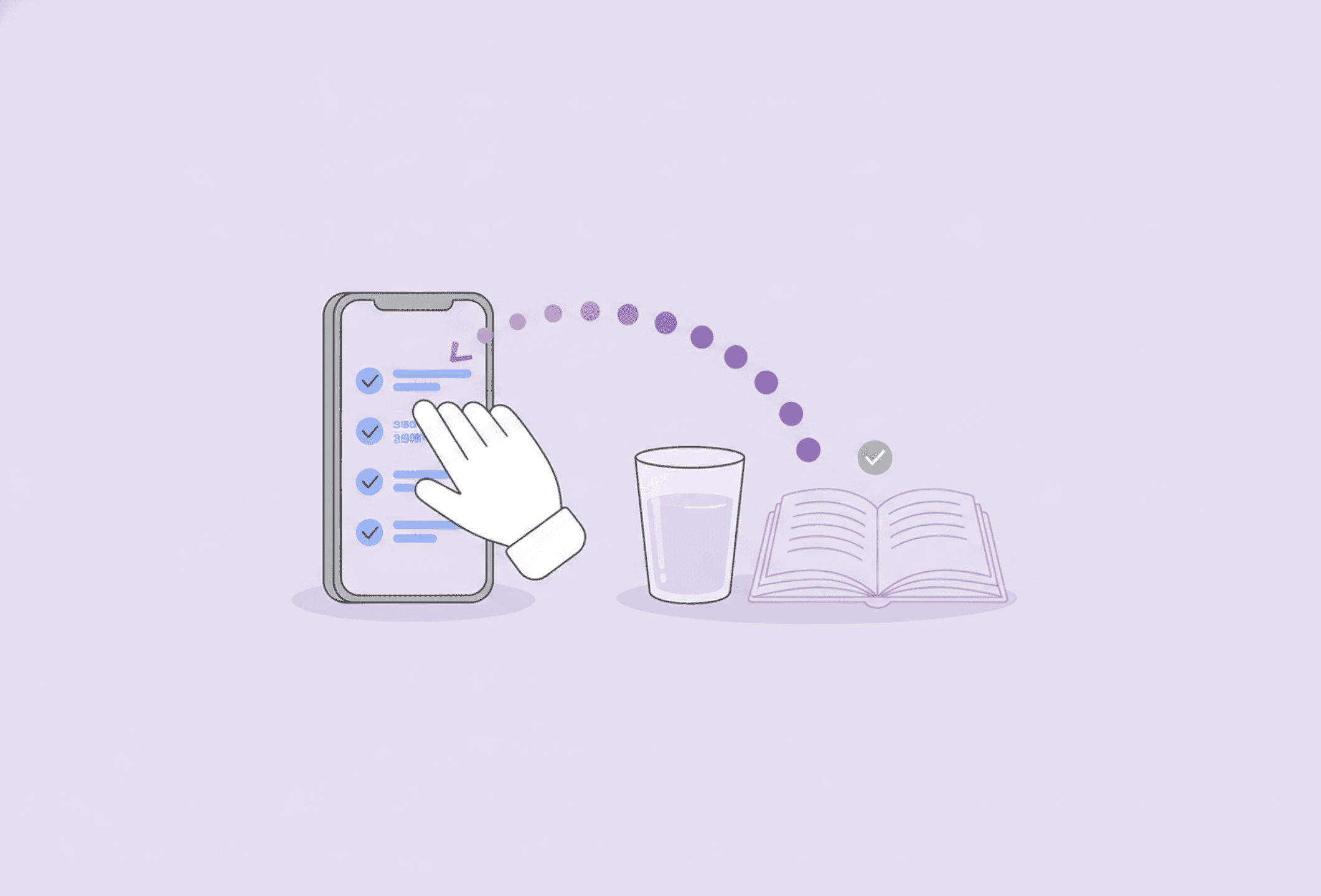
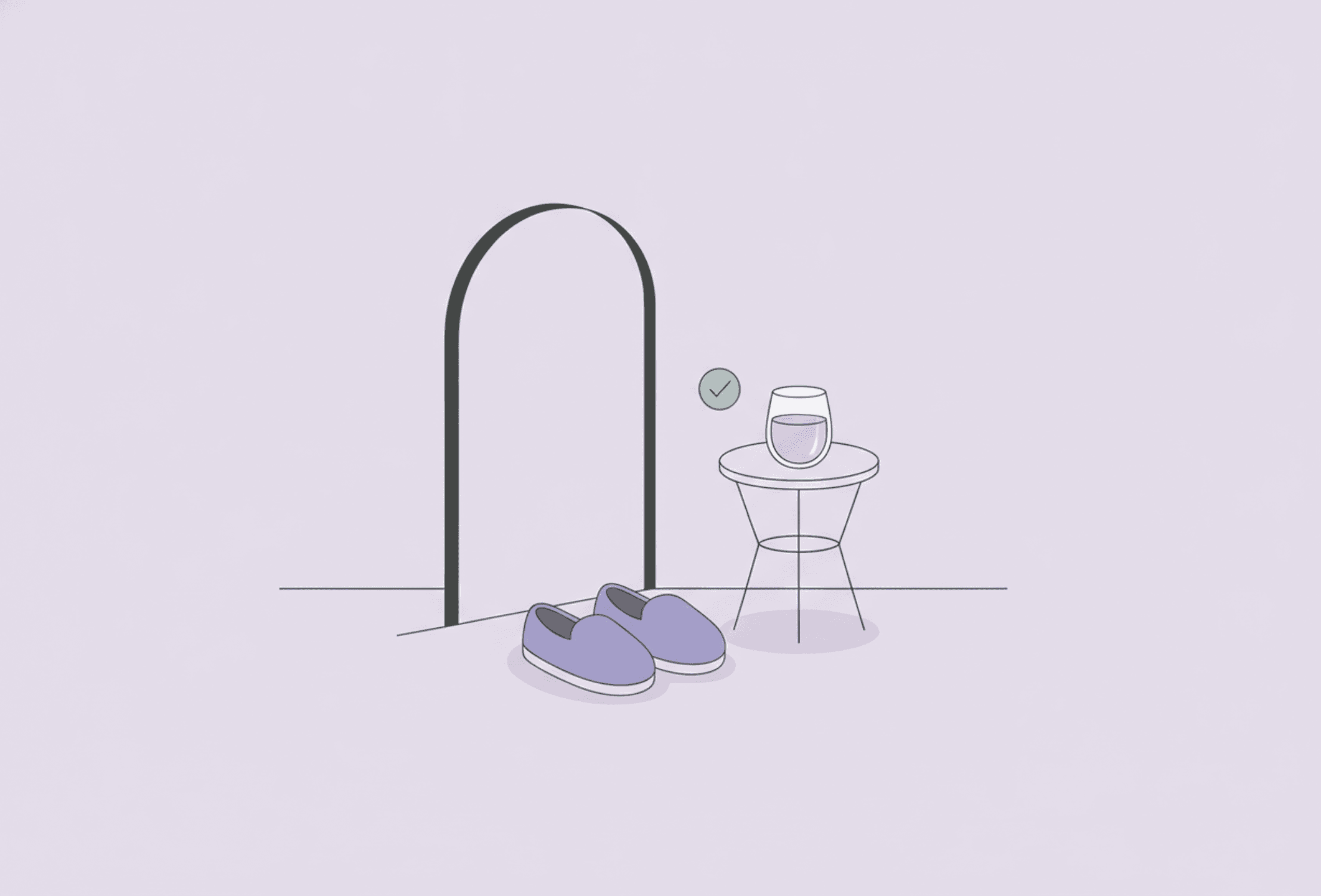
Remove friction from what you want more of. Every step you delete makes the behaviour more likely. Gym clothes laid out the night before. The book on the pillow. The guitar on a stand rather than in a case in a cupboard. Water on the desk. The task app already open on the home screen.
Add friction to what you want less of. Every step you insert makes it less likely, and the steps can be almost comically small. The phone charging in another room. Social apps logged out. Sweets on a high shelf instead of the counter. The TV remote in a drawer.
Twenty seconds is roughly the threshold. Make the good thing twenty seconds faster and the bad thing twenty seconds slower, and a surprising amount of behaviour changes without any willpower being spent at all.
Visible means existing
If you have ever bought a second bottle of something because you could not see the first one, you already know how object permanence works in practice: things that are not visible stop being real.
So use visibility deliberately rather than fighting it.
- Put the object of the habit in your physical path. Not tidied away - in the way. The vitamins next to the kettle. The floss next to the toothbrush.
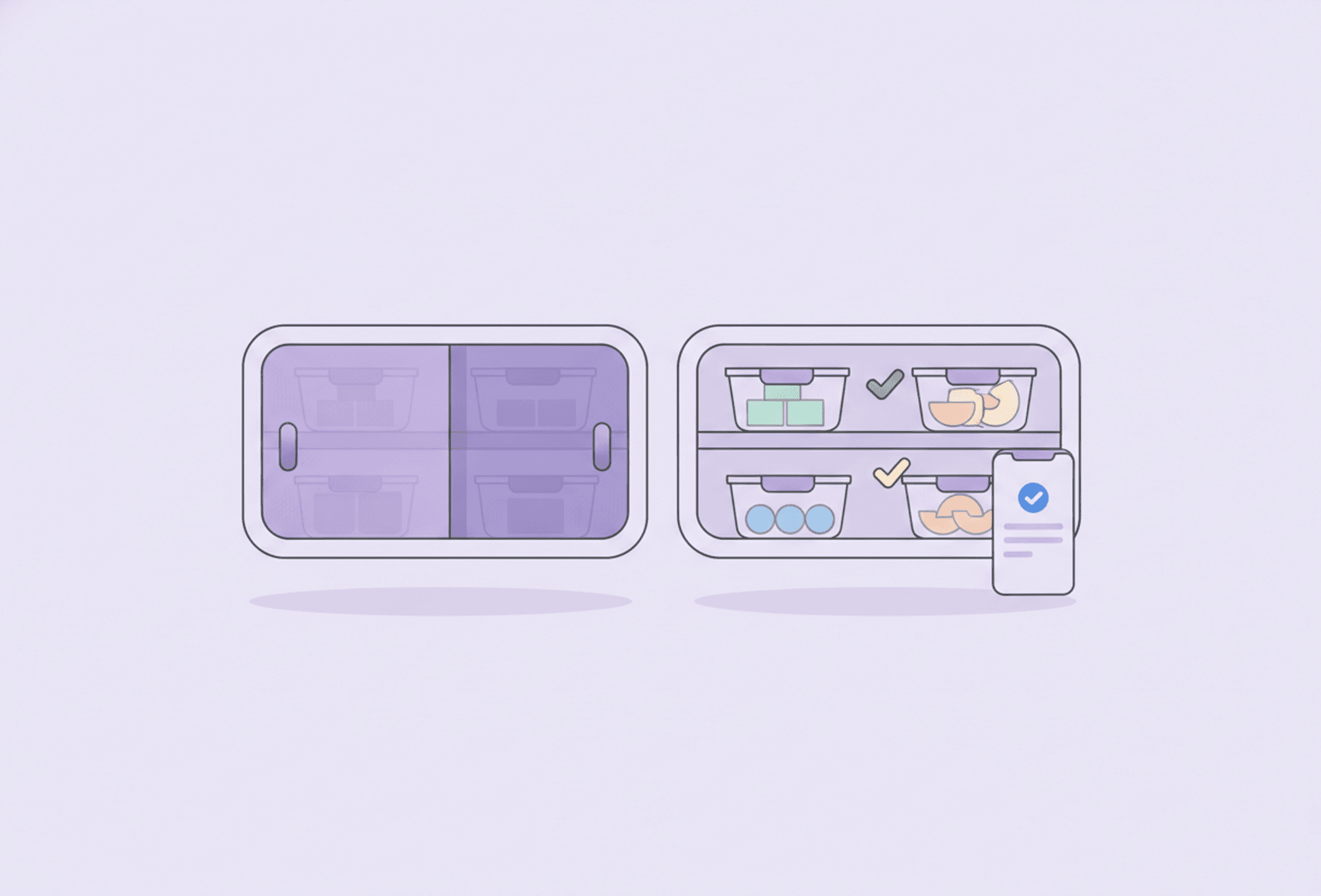
- Use open storage for things you use daily. Clear boxes, open shelves, hooks instead of hangers. A cupboard is where things go to be forgotten.
- Keep one visible surface for what matters now, and let the rest be closed away. Everything visible competes for attention, so visibility only works as a signal if it is scarce.
This is the same mechanism as habit cues, just in physical form: the cue is an object you cannot avoid seeing, rather than a time of day you have to remember.
Make one place mean one thing
Spaces pick up associations, and you can use that.
Work at the same desk and the desk starts to mean work. Read in the same chair and sitting in it makes reading easier. The reverse is also true, which is why working from bed damages sleep and why the sofa where you do everything eventually feels restful for nothing.
You do not need separate rooms. One end of a table, one particular chair, or even a specific placemat is enough to build the association - what matters is consistency, not square metres.
Make relapse expensive, not shameful
When a habit you are trying to drop keeps winning, the answer is almost never more resolve. It is to look at how few steps that behaviour currently takes, and add some.
If you scroll in bed, the charger goes in the hall. If you buy snacks at the petrol station, take a different route home. If you open the same site the moment you sit down, log out every time so the password stands between you and it. This is the practical half of breaking a bad habit: you are not trying to want it less, you are making it slightly more annoying to get.
And design for your worst day, not your best. A system that only works when you are rested is a system that fails exactly when you needed it.
Reset the surroundings, not just yourself
A useful weekly habit: instead of asking what you should try harder at, ask what got in the way this week - and then move something.
Did the running shoes stay in the wardrobe? Put them by the door. Did the evening dissolve into the phone every night? Charge it in the kitchen. Did you forget the medication again? Move it next to something you touch every morning without fail.
Each change is tiny and permanent, and permanence is the point. Motivation has to be regenerated daily. A shelf stays moved. That is the whole argument for building habits this way, and the deeper mechanics are in how to build a habit that sticks.
Start with one
Do not redesign the flat tonight. Pick the single habit that matters most this week and ask one question: what would make this two steps shorter?
Then do that, and leave it done.
Read more
Frequently asked questions
What is environment design for habits?
Changing your surroundings so the behaviour you want requires fewer steps than the behaviour you don't. Instead of relying on daily motivation, you make the good thing nearer and easier - shoes by the door, book on the pillow - and the unwanted thing further away and slower - phone charging in another room, apps logged out. Behaviour follows friction far more reliably than it follows intention.
Why does this work better than willpower with ADHD?
Because two ADHD traits make surroundings unusually powerful. Out of sight is genuinely out of mind, so anything not visible effectively stops existing, and the gap between impulse and action is short, meaning whatever is within reach gets picked up before the deciding part of your brain is consulted. Moving an object changes both of those conditions permanently, while motivation has to be regenerated every day.
How much friction is enough?
Around twenty seconds is the useful threshold. Making the wanted behaviour roughly twenty seconds faster and the unwanted one twenty seconds slower shifts a surprising amount of behaviour without spending any willpower. The steps can be almost comically small - a charger in another room, a password you have to type - because you are not trying to make something impossible, only slightly annoying.
Where should I start?
With one habit, not a whole redesign. Pick the thing that matters most this week and ask what would make it two steps shorter, then make that change and leave it in place. Each change is tiny and permanent, which is the advantage over motivation: a shelf stays moved, while resolve has to be rebuilt daily.