

Build Habit Cues Your Brain Actually Notices
You know exactly what you want to do. You just never remember at the moment it matters. That's a cue problem, not a discipline problem, and cues are fixable.

You decided to stretch every evening. You meant it. Two weeks later you notice you've done it twice, and both times by accident. The problem almost certainly isn't willpower, because you never actually got to the point of deciding whether to do it. The moment came and went and nothing in your day pointed at it.
A habit cue is the trigger that tells your brain a behaviour starts now. It's the first link in the habit loop, cue, routine, reward, and it's where most habits quietly break. Getting the cue right does more for consistency than any amount of resolve.
Why cues matter more than motivation
With ADHD, the failure is rarely about wanting to. It's about remembering in the right second, and starting once you remember. Both of those are cue jobs.
A good cue means you don't have to hold the intention in your head all day. It waits in the environment and fires when you walk past it. That's the whole trick: you offload remembering onto the world instead of on to working memory, which is already full.
Motivation is also a terrible cue, because it isn't there when you need it. A habit tied to "when I feel like it" is not a habit, it's a hope.
The four kinds of cue that work
- An existing action. The strongest option by far: attach the new habit to something you already do without fail. After I pour my coffee, I write my three tasks. This is habit stacking, and it works because the anchor habit is already reliable.
- A place. Walking into a specific room or sitting in a specific chair can trigger a behaviour. Keep one spot for one thing where you can, so the place carries the meaning.
- A time. Weakest on its own, unless it's tied to something that already happens at that time. "8pm" works far better as "when the evening news starts" or "when I put the kettle on".
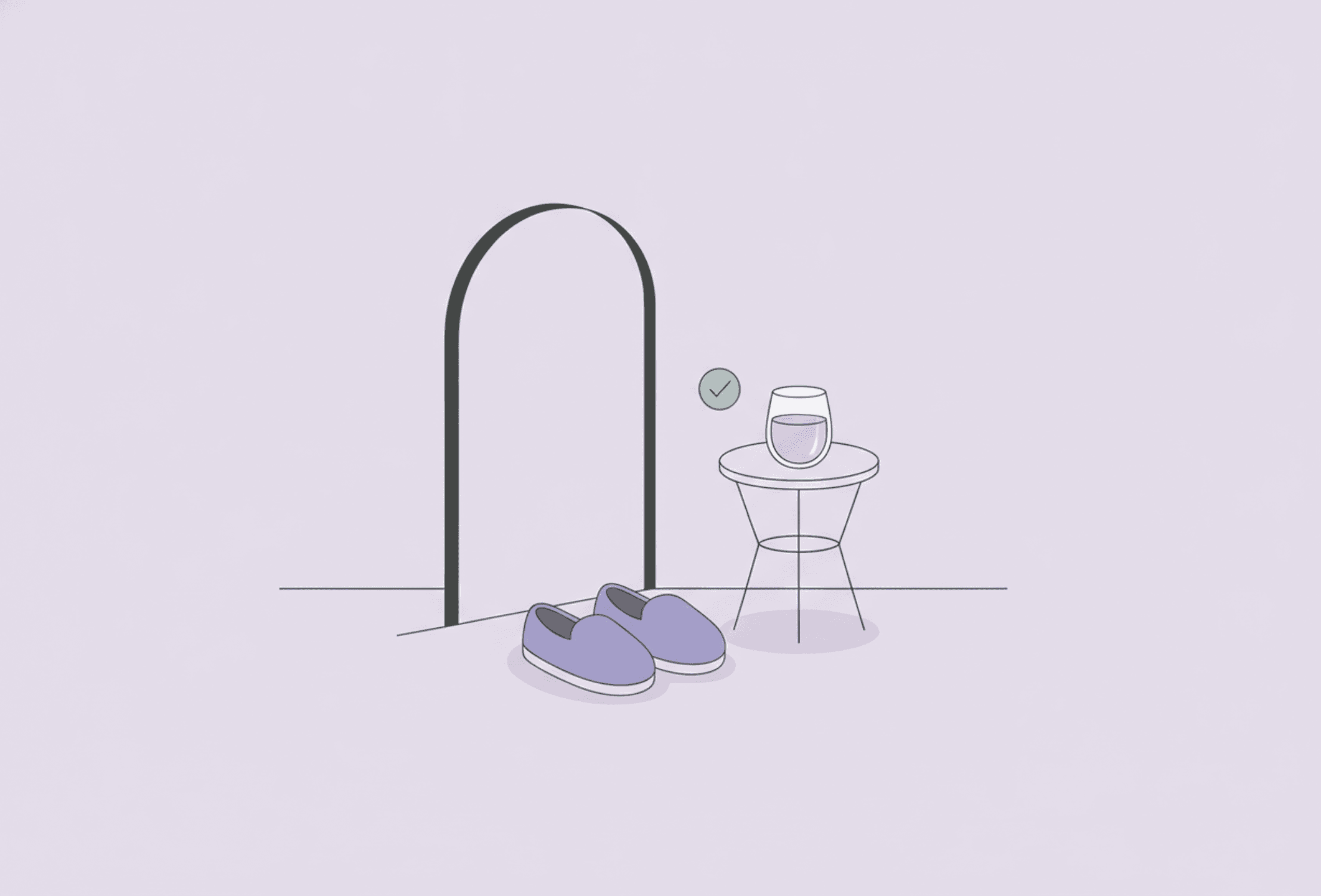
- An object in your path. The shoes by the door, the water glass on the desk, the book on the pillow. For ADHD brains, this is often the winner, because you never have to remember anything at all, you just have to see it.
What makes a cue strong
- Specific. "In the evening" is not a cue, it's a window, and windows close silently. "When I load the dishwasher" is a cue, because there's a precise moment where it either happens or it doesn't.
- Already reliable. Anchor to something that happens every single day whether or not you're on form. Brushing your teeth is reliable. "After my morning run" is not, if the run is also a new habit.
- Impossible to miss. If the cue can be walked past, put it in the way. Physically, if you can.
- Close to the action. The gap between noticing the cue and being able to start should be seconds, not a trip to the basement. Every extra step in between is a place to fall off.
Why your reminders get swiped away
Phone reminders are a legitimate cue, but they fail in a specific way: they arrive at a moment when you can't act, you dismiss them to deal with later, and later never comes with a cue of its own. If you use notifications, aim them at moments you'll actually be free, and treat the alarm as the action itself, not an invitation to think about it.
The same applies to the classic mistake of relying on noticing. If the basket is full, if the plant is drooping, if the folder is due, you will not notice, and that isn't carelessness. Things that aren't in sight stop existing, a very familiar out of sight, out of mind pattern. Design around it rather than promising to be more observant.
Make the cue physical
The most reliable cues are objects placed in your way, not thoughts you're supposed to have.
- Put the thing where the habit happens: vitamins next to the kettle, floss next to the toothbrush, notebook on the pillow.
- Make it visible: open shelves, clear containers, nothing important stored behind a closed door.
- Remove the counter-cues: if the phone is nearer than the book, the phone wins, so move the phone.
This is environment design, and for ADHD it does more work than any tracker or app streak.
Write the cue down, once
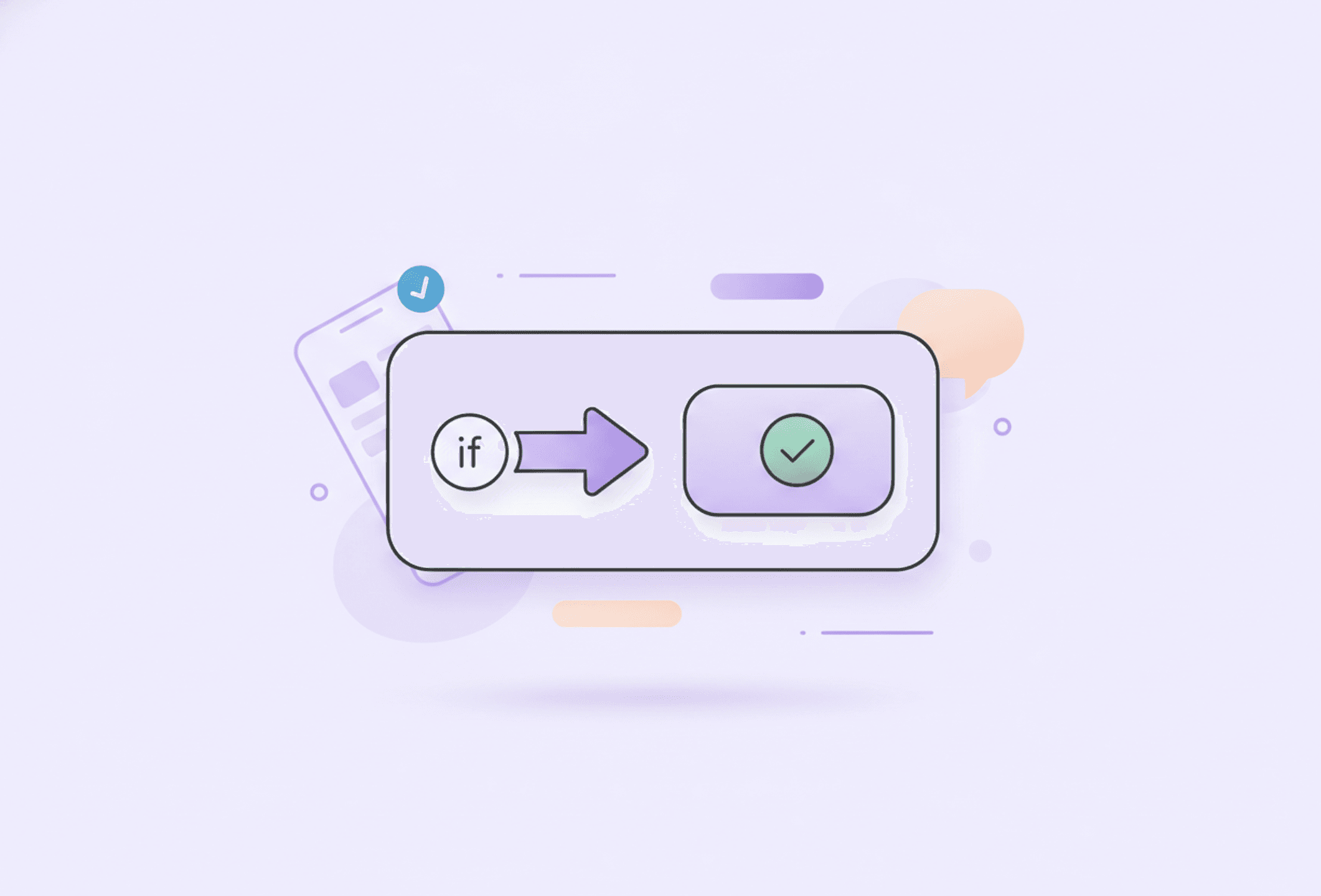
Once you've picked the cue, phrase it as one concrete sentence: if [cue], then I will [tiny action]. That's an implementation intention, and writing it once makes it far more likely to fire than carrying a vague plan around all week.
If a cue isn't working, change the cue
When a habit keeps failing, most people conclude they're not disciplined enough. Nearly always, the cue is just weak: too vague, too easy to walk past, attached to something that doesn't happen reliably, or too far from the action.
Before you try harder, ask what specifically was supposed to remind you, and whether that thing actually happened. Then move the cue earlier, make it visible, or hang it on a sturdier anchor. A habit that has failed four times can succeed on the fifth purely because you moved the trigger from "in the evening" to "when I plug in my phone". Cues are cheap to change, and that's what makes them the best place to start when building a habit.
Read more
- How to build a habit that sticks
- Habit stacking
- If-then planning
Frequently asked questions
What is a habit cue?
A habit cue is the trigger that tells your brain a specific behaviour starts now. It can be an existing action, a place, a time or an object you see. It's the first part of the habit loop, cue, routine, reward, and it's the part that decides whether the habit ever actually starts.
What is the best type of cue for an ADHD brain?
Usually a visible object placed in your path, or an action you already do reliably every day. Both remove the need to remember at the right second, which is the hardest part with ADHD. Pure time-based cues are the weakest unless they're attached to something that already happens at that time.
Why do I keep ignoring my reminders?
Usually because they arrive when you can't act on them, so you dismiss them intending to do it later, and later has no cue of its own. Aim reminders at moments you're actually free, treat the alarm as the instruction rather than a suggestion, and back it up with a physical cue where you can.
How do I fix a habit that keeps failing?
Change the cue before you change anything else. Ask what exactly was supposed to remind you and whether that thing reliably happened. Then make it more specific, more visible, or anchor it to something sturdier, like an existing daily habit. It's the cheapest fix and it works surprisingly often.