

Why You Can't Watch a Film Without Your Phone
You chose the film. Eleven minutes in you were scrolling, and by the end you could not have said what happened in the middle.
You chose it. You were looking forward to it.
Eleven minutes in, your phone was in your hand. You rewound twice, gave up on rewinding, and by the credits you could not have described the middle third of it. Then came the quiet, slightly bleak thought: I can't even enjoy things properly any more.
Watching a film with ADHD is hard for a boring, mechanical reason: a film delivers stimulation at a fixed rate, and it is often slower than the rate your attention wants. Reaching for the phone is not a failure of appreciation. It is topping up the gap - and once you understand that, the fix is to change the input rather than to try harder.
A film sets the pace, and you don't
Reading has a pace you control. Scrolling delivers a fresh hit every two seconds. A film sits in between and is entirely fixed: it will spend ninety seconds on a landscape whether you want it to or not.
If understimulation is uncomfortable for you, those ninety seconds are not restful, they are a gap - and the phone is right there, offering to fill it. That is the whole mechanism. It is not that the film is bad or that you have no attention span.
Two hands are allowed
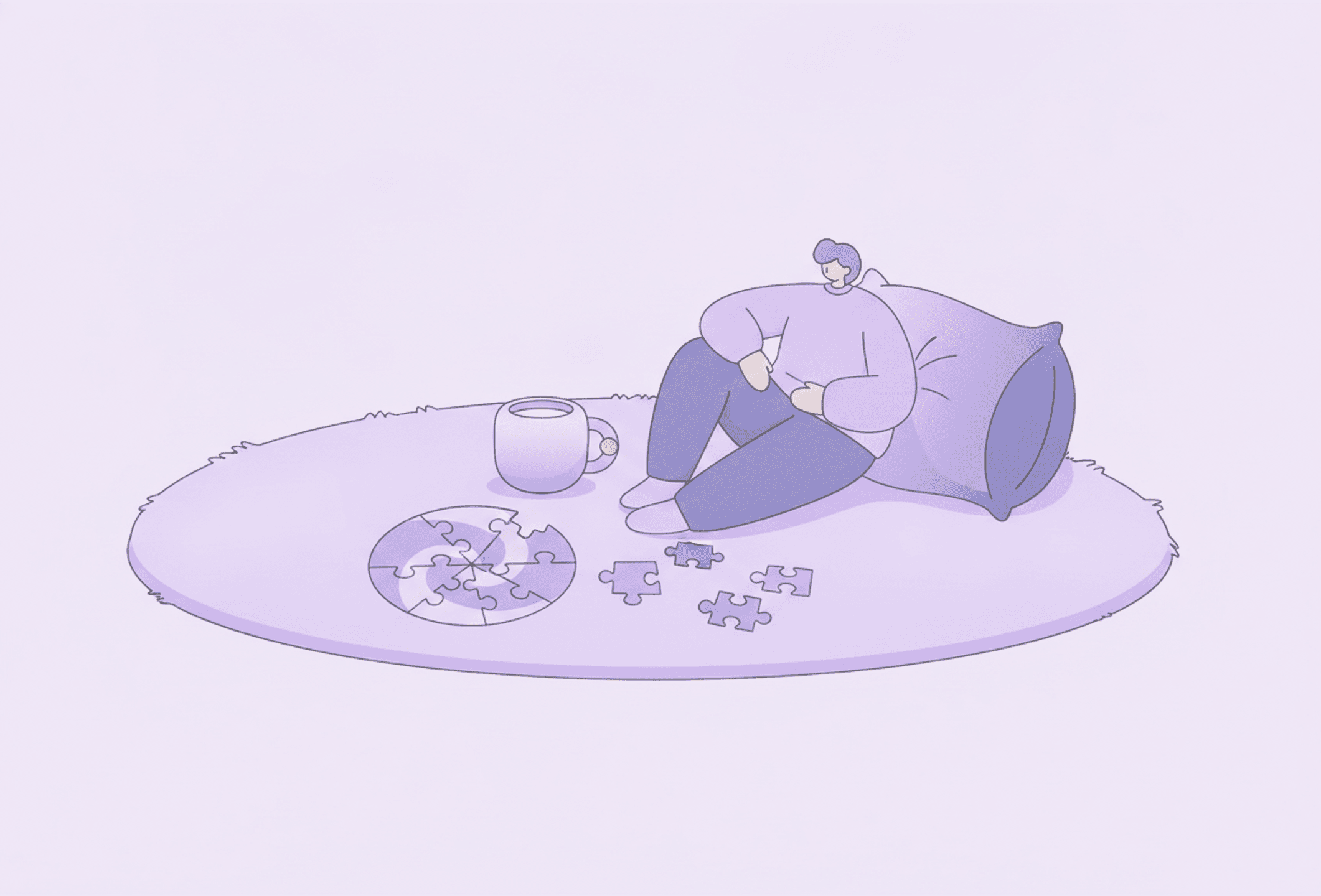
The strongest fix is also the simplest: give your hands something to do while you watch.
Knitting, a puzzle, folding laundry, doodling, a jigsaw, whittling, tidying a drawer. Occupying the leftover capacity means the phone is not needed to fill it, and most people find they follow the plot better rather than worse - the divided attention was happening anyway, so choose what it gets divided with.
Doing something with your hands during a film is not rudeness or disinterest. It is what makes watching possible.
Subtitles do more than you think
Turn them on even in your own language. It adds a second input channel, keeps your eyes anchored when the sound alone is not enough, and makes the ten seconds you missed recoverable without rewinding.
Plenty of people find this single setting is what turned television back into something they can follow.
Match the format to your actual attention
Not everything has to be a two-hour film. A forty-minute episode, a documentary with a strong narrative pull, something with subtitles you already have to read, or a series you know well enough that missing a bit costs nothing - all of these are legitimate.
And the honest note: some highly regarded films are slow, and slow is precisely the thing you find hardest. Choosing something pacier is not a failure of taste.
Put the phone across the room
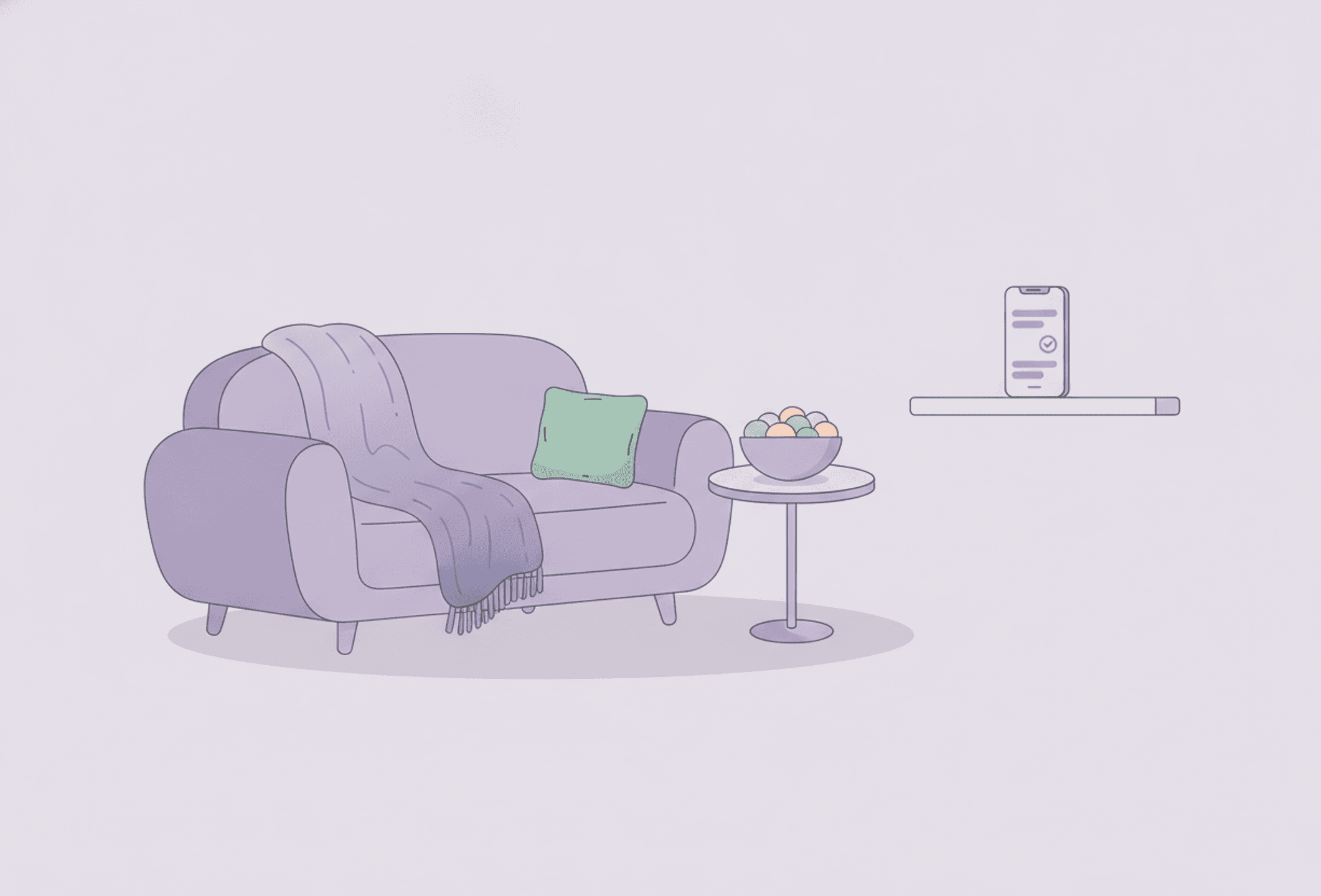
The phone will win any contest of willpower during a slow scene, so remove the contest. Another room, a shelf you would have to stand up to reach, face down in a drawer.
Distance is the only reliable version of this, because it converts an automatic reach into a decision - which is environment design doing the work instead of you.
Plan it like a thing, not a leftover
Films tend to be attempted at the exhausted end of an evening, in the ten o'clock gap where nothing else has been decided. That is the hardest possible conditions.
Try earlier - a Saturday afternoon film is much easier than a Wednesday night one - and treat it as a planned rest block rather than the space left over after everything else. Watching something at three in the afternoon with the curtains open is a completely different experience from trying to stay awake for it at eleven.
Watch with someone, or with the internet
Company changes the maths, in the same way body doubling does for work. Someone else in the room gives the activity a small social weight, so leaving it feels different from abandoning something you were doing alone.
A group watch, a friend messaging along, or simply agreeing to talk about it afterwards all do a version of the same job.
Pausing is fine, actually
You are allowed to pause it. You are allowed to watch a film across two evenings, or in three chunks with a walk in between.
Somewhere there is a rule that a film must be consumed in one uninterrupted sitting, and it is worth ignoring. A film watched in two halves is a film watched. A film abandoned at minute forty because you could not do the whole thing is not.
When you drift, rewind once and move on
Rewinding fifteen seconds three times to catch a line is how an enjoyable evening turns into an admin task. Let it go, keep watching, and accept that you will miss things.
You will still follow it. Most plots are considerably more redundant than they feel, and the subtitles will pick up the rest.
If nothing is enjoyable, that is different
One honest caveat. Everything above is about attention and pacing. If the problem is not that you cannot follow things but that nothing feels enjoyable at all - films, music, people, food, things you used to love - that is a different signal, and it is worth mentioning to a doctor rather than solving with a blanket and a jigsaw.
The short version
You are not broken and the film is not too demanding: it is too slow for the rate your attention wants, and the phone is filling the gap. So fill it deliberately instead - hands busy, subtitles on, phone in another room, a format and a time of day that suit you, someone to watch with, and permission to pause. Enjoyment comes back once the conditions stop working against you.
Read more
Frequently asked questions
Why can't I watch a film without picking up my phone?
Because a film delivers stimulation at a fixed rate, and it is often slower than the rate your attention wants. A ninety-second shot of a landscape is not restful if understimulation is uncomfortable for you - it is a gap, and the phone is right there offering to fill it. That is a mechanical mismatch rather than a failure of appreciation, which is why changing the input works better than trying harder.
Is it bad to do something else while watching?
No - it is usually the single best fix. Knitting, a jigsaw, folding laundry or doodling occupies the leftover capacity, so the phone is not needed to fill it, and most people find they follow the plot better rather than worse. The attention was going to be divided anyway; you are simply choosing what it gets divided with.
Do subtitles really help with ADHD?
Often a lot. They add a second input channel, keep your eyes anchored when sound alone is not enough, and make a missed ten seconds recoverable without rewinding. Turning them on in your own language is one of those single settings that turns television back into something followable.
Is it okay to pause a film or watch it in parts?
Yes. There is no rule that a film has to be consumed in one uninterrupted sitting, and watching one across two evenings or in three chunks is still watching it - certainly more than abandoning it at minute forty. Also worth trying an earlier slot: a Saturday afternoon film is far easier than an eleven-o-clock one at the end of an exhausting day.