

ADHD and Boredom: Why It Feels Unbearable, Not Just Dull
Other people find boring things boring. You find them almost physically intolerable - and that difference explains a lot of your week.

The form takes eleven minutes. You have been avoiding it for three weeks. It is not hard, it is not frightening, and you have genuinely tried to sit down and do it - and something in you slides away every single time, like trying to hold two magnets together the wrong way round.
Boredom with ADHD is not a mild absence of interest. It is closer to an aversive physical state - a restless, skin-crawling discomfort that the brain will do almost anything to escape - which is why understimulating tasks can be harder to face than difficult ones. People without ADHD find boring things boring. You find them intolerable, and that gap explains far more of your week than most productivity advice accounts for.
This is general information, not medical advice.
Why understimulation hurts
ADHD attention is driven by interest, novelty, challenge and urgency rather than by importance. A task that offers none of those four gives the brain almost nothing to work with, and a chronically under-aroused system experiences that emptiness as unpleasant rather than neutral. More on that engine in ADHD motivation.
That is also why the escape is so automatic. Picking up the phone is not a decision you lost; it is a system topping itself up. It explains a set of behaviours that otherwise look irrational:
- Leaving something easy undone for weeks while completing something hard the same day.
- Starting an argument, or a huge new project, when things get too quiet.
- Doing everything at the last minute - deadline pressure supplies the missing urgency, and suddenly the task is possible.
- Getting fidgety, snacky or restless within minutes of nothing happening.
None of that is laziness or drama-seeking. It is a system looking for input.
Add stimulation instead of demanding tolerance
Since the boring task is not going to become interesting, supply the missing ingredient from outside.
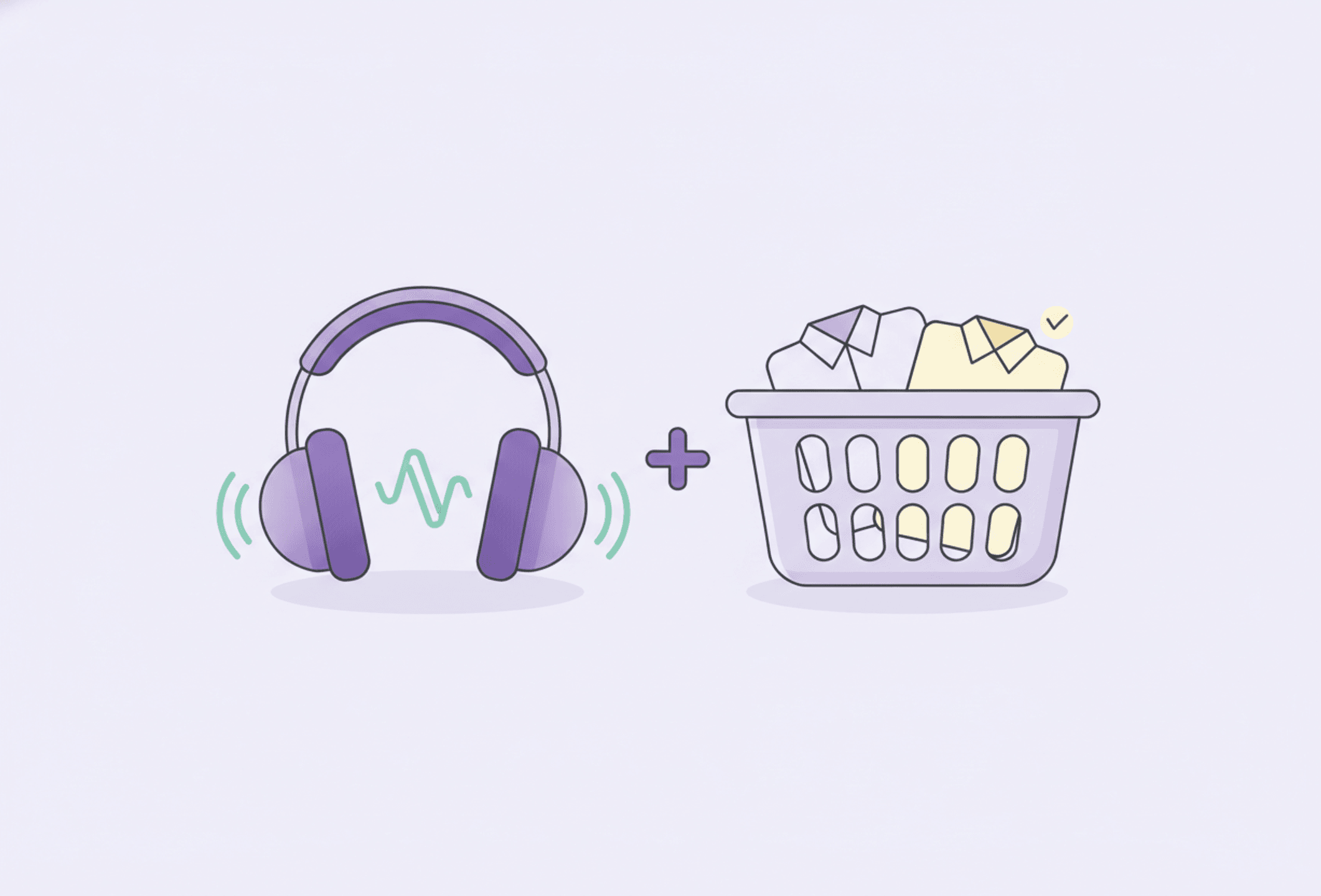
Pair it with something enjoyable. Music, a podcast, the good coffee, a walk while you take the call. Temptation bundling exists precisely for this: attach the thing you want to the thing you avoid, and the pairing does what discipline could not.
Add artificial urgency. Race a visible timer. Give yourself fifteen minutes and see how far you get. Manufactured deadlines work because it was never really about the deadline - it was about the arousal the deadline produced.
Add another person. Working alongside someone, even silently on a video call, supplies enough stimulation to make dull work possible. This is body doubling, and for admin it is close to a cheat code.
Add movement. Stand up, pace during phone calls, walk while thinking. Many people with ADHD think substantially better in motion, and stillness itself is part of what makes a task unbearable.
Make it a game. How many can I clear before the song ends? Can I beat yesterday's number? It sounds childish and works anyway, because your brain does not care whether the challenge is dignified.
Batch the boring things. One dull hour with music, doing all the admin at once, beats seven separate confrontations with the same discomfort spread across the week.
Plan for the flat spaces
Boredom is most dangerous in the gaps: Sunday afternoon, the evening after a busy stretch, the quiet week after a big project. That is when people start unnecessary conflicts, spend money impulsively, or take on something enormous that they will regret by Wednesday.
So have a plan for low-stimulation time before you are in it. A dopamine menu - a written list of things that genuinely give you something, ready in advance - works far better than trying to think of one while restless, because deciding what to do is exactly what you cannot do in that state.
Do not solve boredom with chaos
The expensive version of this problem is using crisis as stimulation: leaving everything to the last minute, picking fights, quitting things impulsively, saying yes to a new project because the current one has gone quiet.
It works. That is the trouble. Adrenaline is genuinely an effective stimulant, and it is why some people only function in emergencies - and why they burn out.
Worth asking, in the moment: am I doing this because it matters, or because I am understimulated? You will not always like the answer, but noticing the pattern is most of the fix.
Some boredom is information
One caveat worth holding: if everything in your work has been boring for months, that may not be an ADHD problem to be managed. It may be a job that has no interest, challenge or novelty left in it, and the honest response is to change something structural rather than to keep manufacturing stimulation around it.
Relentless boredom that is new, heavy, and paired with flatness in things you used to enjoy is also worth mentioning to a doctor, since low mood and burnout can look very similar from the inside.
The short version
Boring is not neutral for you - it costs something to endure, and pretending otherwise is why willpower keeps failing on the eleven-minute form.
So stop demanding tolerance and start supplying input. Music, a timer, another person, movement, a game. Then keep a plan for the quiet hours, so your brain does not go looking for stimulation somewhere expensive.
Read more
Frequently asked questions
Why is boredom so painful with ADHD?
Because ADHD attention runs on interest, novelty, challenge and urgency rather than importance, so a task offering none of those leaves an under-aroused system with nothing to work with - and that emptiness registers as an aversive, restless discomfort rather than as neutral dullness. It is why an easy but boring task can be harder to face than a genuinely difficult one.
How do I get boring tasks done with ADHD?
Supply the stimulation the task lacks instead of demanding you tolerate its absence. Pair it with music or a podcast, race a visible timer, work alongside another person, move while you do it, or turn it into a small game. Batching all the dull admin into one hour with music also beats facing the same discomfort seven separate times across a week.
Why do I create drama when things are calm?
Because conflict and crisis are effective stimulants, and an understimulated brain will reach for whatever supplies arousal. That is also behind last-minute working, impulsive spending and suddenly taking on something enormous. The useful question in the moment is whether you are doing this because it matters or because you are understimulated - noticing the pattern is most of the fix.
When is boredom worth taking seriously?
When it is constant rather than situational. If everything at work has been boring for months, that may be a job with no challenge or novelty left rather than something to manage around. And if the boredom is new, heavy and paired with flatness in things you used to enjoy, it is worth mentioning to a doctor, since low mood and burnout can feel very similar from the inside.