

Dopamine Detox: What It Actually Does
One empty Saturday is supposed to make your tax return feel interesting again. The name is biologically wrong, but there is a small real effect underneath it - and a version that works better for an ADHD brain.

The pitch is seductive. Spend one day with no phone, no music, no games, no snacks, no anything enjoyable - and by Monday your tax return will feel interesting again.
A dopamine detox is the popular practice of deliberately avoiding highly stimulating activities - short-form video, gaming, scrolling, junk food - for a set period, usually a day or a weekend. The name is wrong in a way worth knowing: you cannot flush dopamine out of your brain, and you would be in serious trouble if you could. Dopamine drives movement, motivation and learning. It is not a toxin and it does not accumulate.
Underneath the bad label, though, there is a smaller and genuinely real effect - and for an ADHD brain, the standard advice needs adjusting before it helps.
This is general information, not medical advice.
Where the name came from
The idea was popularised as "dopamine fasting" by Cameron Sepah, a clinical psychologist, who framed it as a stimulus-control exercise borrowed from cognitive behavioural therapy: take a planned break from a small set of impulsive behaviours so they lose their grip. He has since said repeatedly that the dopamine framing was a metaphor and that the point was never to lower a brain chemical.
The internet kept the drama and dropped the nuance. What was "take a break from four specific compulsions" became "sit in a grey room and stare at a wall".
What actually happens
The real mechanism is contrast, not depletion.
Short-form video, games and infinite feeds deliver frequent, unpredictable rewards. Spend an hour there and, for a while, everything else feels flat by comparison. Your brain is not broken or "fried". Its reference point has simply moved, the way daylight looks blinding after a dark cinema.
Give that reference point a rest and ordinary tasks stop feeling quite so unbearable by comparison. That is a modest, real effect - and it is also why the benefit fades within hours of going back, which no one mentions in the videos.
Why a strict dopamine detox often backfires with ADHD
An ADHD brain is usually under-stimulated, not over-stimulated. Removing all stimulation is not a neutral rest, it is genuinely aversive. Interest, novelty and urgency are what an interest-based nervous system runs on. Take all three away for a day and you do not get a calm, focused person - you get someone climbing the walls by hour three.
It is an all-or-nothing rule, and those break. One slip at 14:00 ends the whole day, and the failure gets attached to the idea rather than to the rule that was unrealistic.
It quietly becomes moral. A day of deprivation starts to feel like penance for having enjoyed things too much. Shame has never once made a hard task easier to start.
Boredom does not create motivation. Sitting in an empty room does not make the tax return interesting. It makes it the least boring thing available for about ten minutes, which is not the same as a system.
What to do instead
Target one input, not everything. Name the specific thing that eats your evenings. One input, fenced off, for a defined window. Vague abstinence from "stimulation" is unenforceable.
Shrink the contrast right before hard work. This is the highest-value version of the whole idea: the twenty minutes before a difficult task matter far more than an entire heroic weekend. No short-form video in the hour before you need to start something demanding - and put the phone out of reach rather than trusting yourself to resist it.
Add friction rather than bans. Log out, delete the shortcut, leave the phone in another room, switch the screen to greyscale. Friction survives a bad day; a ban does not.
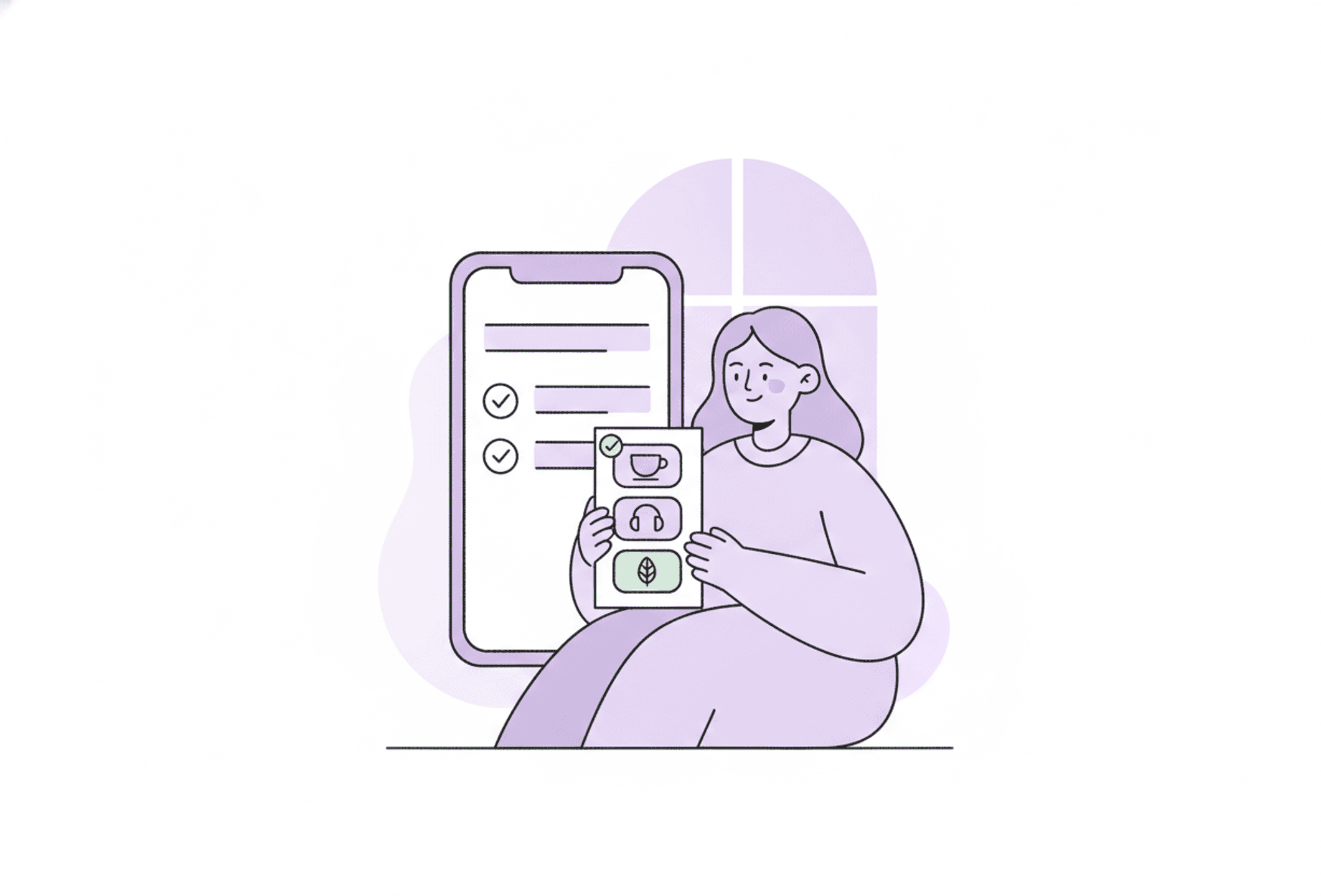
Replace, do not just remove. An emptied evening gets filled by whatever is nearest, which is the phone. Decide in advance what goes into the hole - that is exactly what a dopamine menu is for.
Keep the stimulation that helps you work. Music, movement, a timer, someone else in the room. Manufacturing interest is a legitimate ADHD strategy, not cheating, and stripping it out in the name of purity just makes work harder.
If you want to try a version anyway
A realistic twenty-four hours looks like this.
- Pick a window, not a lifestyle. A Saturday afternoon is plenty. Nobody has ever needed a week.
- Remove one to three named inputs, not "all pleasure". Food, daylight, people, books, music and walks stay.
- Plan what you will do instead, before it starts. Unplanned boredom ends with the phone by hour two, every time.
- Watch what you reach for. The urge log is the real output here: which moments, which feelings, which rooms. That tells you more than the abstinence does.
- End it deliberately. Decide when it stops and what you go back to, rather than drifting back mid-evening feeling like you failed.
The honest summary
Nothing is being detoxed and nothing is being reset. You are giving an over-contrasted reward system a quieter reference point for a while, and finding out which inputs you reach for on autopilot. That is a useful, unglamorous experiment - worth doing once for the information.
The durable gains come from what you do daily around hard tasks: the twenty quiet minutes before you start, a planned alternative to the feed, and a bit of friction between you and the thing you cannot put down. Not from one heroic empty Saturday.
Read more
Frequently asked questions
Does a dopamine detox actually lower dopamine?
No. Dopamine is not a toxin that builds up and it cannot be flushed out - it drives movement, motivation and learning, and you would be seriously unwell without it. The name is a metaphor that escaped its author. What a break actually changes is the contrast: after time away from very stimulating input, ordinary activities feel less flat by comparison.
Does a dopamine detox work for ADHD?
The strict version usually backfires. An ADHD brain tends to be under-stimulated rather than over-stimulated, so removing everything enjoyable is genuinely aversive rather than restful, and the all-or-nothing rule breaks at the first slip. Targeting one specific input, adding friction and planning a replacement works far better than a day of deprivation.
How long should it last?
Shorter than the internet suggests. An afternoon or a single evening is enough to notice what you reach for, and the most useful version is not a whole day at all - it is the twenty minutes before a hard task, kept free of very stimulating input so the task does not feel flat by comparison.
What should I do instead?
Pick one named input rather than banning everything, put friction between you and it, and decide in advance what fills the gap - a short list of enjoyable low-stimulation options you actually like. Keep the stimulation that helps you work, such as music, movement or a timer. That is a system, whereas an empty Saturday is a mood.