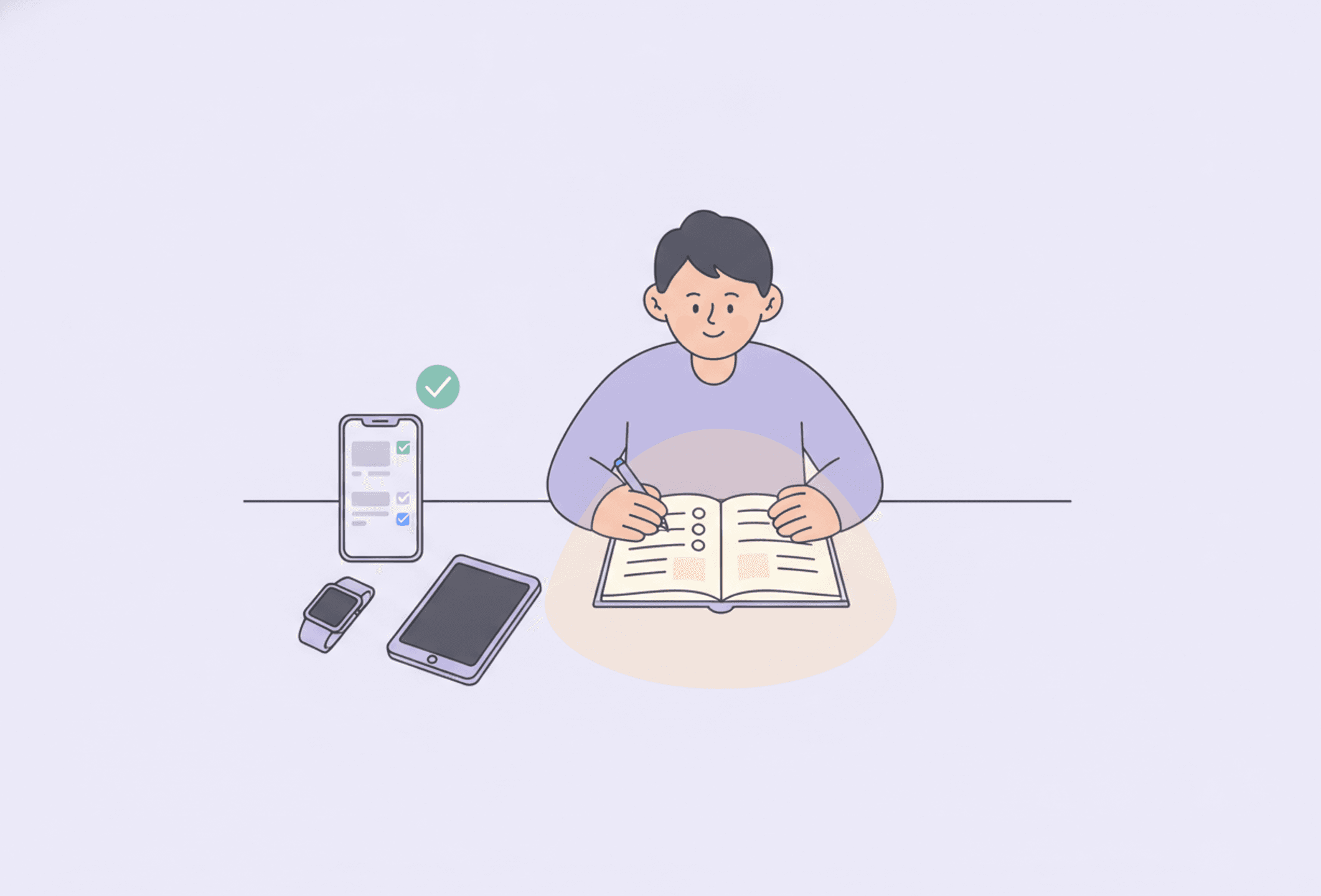


How to Reduce Phone Distraction
You pick up your phone to check one thing and resurface twenty minutes later. It's not weak willpower, the phone is built to do that. Here's how to reduce its pull without quitting it entirely.
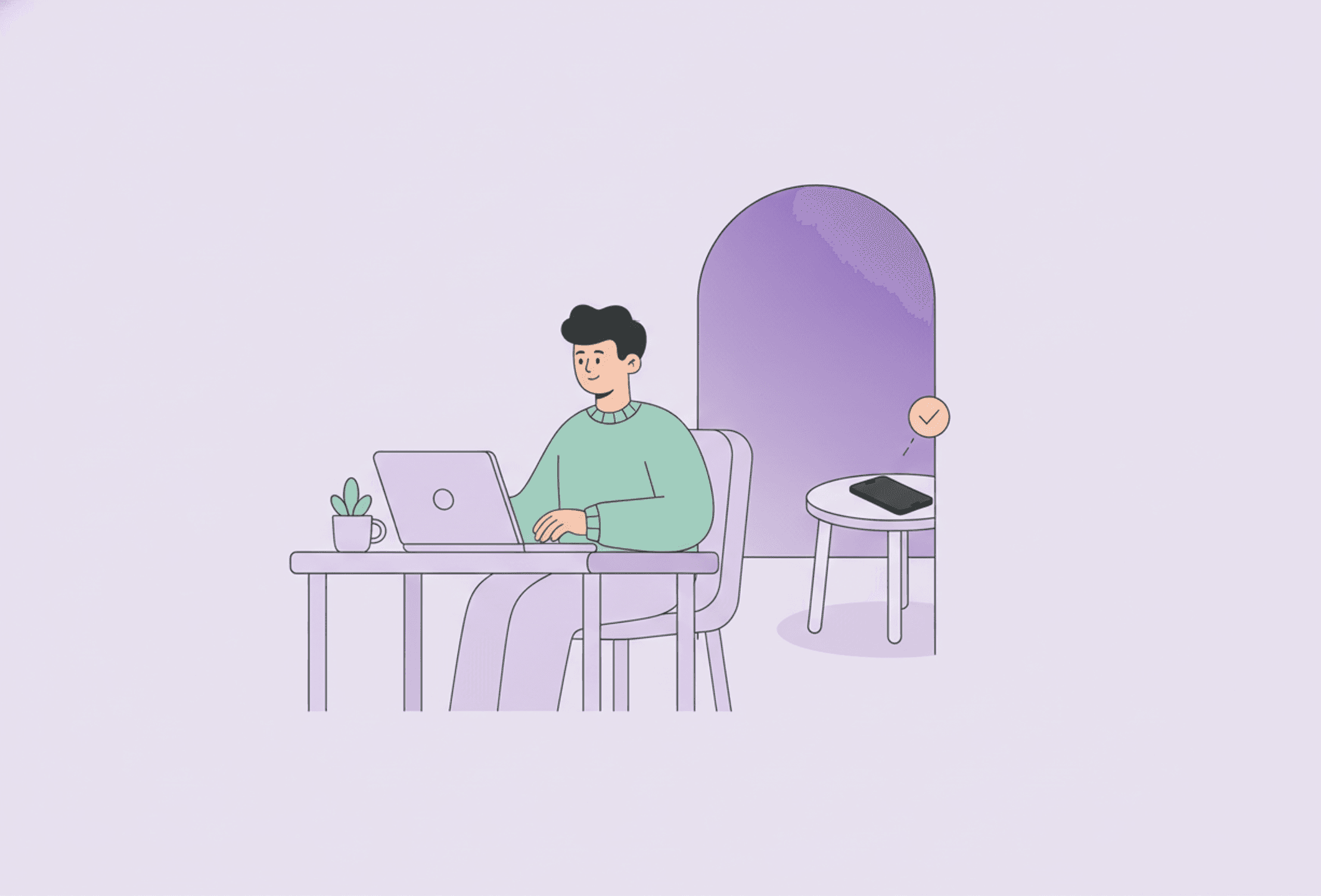
You reach for your phone to check the time, and twenty minutes later you're deep in a feed you didn't mean to open, with no memory of deciding to. If this happens constantly, you're not weak-willed. Your phone is a beautifully engineered distraction machine, designed by very smart people to capture and hold your attention, and ADHD brains, which chase novelty and instant reward, feel that pull more strongly than most. The fix isn't more willpower, it's changing the game so you're not fighting it bare-handed.
Why the phone is so hard to resist
Your phone offers an endless stream of novelty and little hits of reward, exactly what an under-stimulated brain craves. Every notification, like and refresh is a tiny dopamine reward on an unpredictable schedule, the same mechanism that makes slot machines compelling. For ADHD brains, already drawn to stimulation and quick wins, this is close to irresistible by design. Knowing it's engineered, not a personal failing, is the first step, because it means the answer is to change your environment, not to white-knuckle it.
Put distance between you and the phone
The single most effective move is physical: the harder the phone is to grab, the less you'll grab it.
- Out of sight, out of reach. When you need to focus, put the phone in another room, in a drawer, in a bag. Even on the far side of the desk is better than in your hand. Distance adds just enough friction to break the automatic reach.
- Face down, on silent. If it must be near, turn it face down and silence it so a lighting screen doesn't keep pulling your eyes.
- Charge it away from your bed and desk. Removing it from the places you work and rest stops the all-day grazing before it starts.
Add friction to the apps that pull hardest
Make the tempting apps a little harder to reach so autopilot doesn't win:
- Delete the worst offenders' apps and use them only in a browser. The extra steps are often enough to break the habit loop.
- Log out so you have to type a password each time, a small barrier that interrupts mindless opening.
- Bury them off the home screen in a folder on the last page. Out of immediate sight cuts the cue.
- Use app timers and limits. Built-in screen-time tools can cap or block the apps that eat your day. They're easy to override, but the pause is often enough to make you reconsider.
Tame the pull itself
- Turn off notifications. The biggest interruptions are the pings that yank you away. This is worth a dedicated pass, see taming your notifications; keep only the truly necessary ones.
- Switch to greyscale. A black-and-white screen is dramatically less rewarding to look at, those engineered colours are part of the hook. Many people find it quietly kills a lot of the urge.
- Check on purpose, not on impulse. Instead of reacting to every itch, decide set times to check your phone. Batching it the way you'd batch any distraction keeps you in control rather than the phone.
Replace the habit, don't just block it
We reach for the phone out of boredom, discomfort or a need for a break, and if you remove it without meeting that need, you'll just find another distraction. So give the urge somewhere better to go: keep a water bottle, a book, or a fidget within reach, and when you notice the reach for the phone, redirect to one of those. A distraction parking lot helps here too, jot the thought instead of chasing it into the phone.
Be realistic, not all-or-nothing
The goal isn't to demonise your phone or quit it, it's a genuinely useful tool. The goal is to use it deliberately instead of compulsively. Don't aim for monk-like perfection; aim to remove the easy, mindless reaches and keep the intentional ones. A few of these changes, especially distance and notifications, will reclaim more focus than any amount of trying harder.
The takeaway
Your phone is engineered to distract you, and ADHD brains feel it most, so stop fighting it with willpower and change the setup instead. Put physical distance between you and it, add friction to the worst apps, turn off notifications, try greyscale, and check on purpose rather than on impulse. Then give the urge a better outlet. You don't need superhuman discipline, you need a phone that's a little harder to mindlessly grab.
Read more
Frequently asked questions
Why can't I stop checking my phone?
Your phone is engineered to capture attention: every notification, like and refresh is a small dopamine reward on an unpredictable schedule, the same mechanism that makes slot machines compelling. ADHD brains, drawn to novelty and instant reward, feel this pull especially strongly. It's design, not weak willpower, which is why changing your setup works better than trying harder.
How do I reduce phone distraction?
Put physical distance between you and the phone (another room, a drawer, face down on silent), add friction to the worst apps (delete them and use a browser, log out, bury them off the home screen, use app timers), turn off non-essential notifications, try greyscale, and check at set times instead of on impulse.
Does greyscale really help with phone use?
For many people, yes. A black-and-white screen is much less rewarding to look at, because the bright engineered colours are part of what hooks you. Switching to greyscale won't fix everything, but it quietly reduces the urge to pick the phone up and scroll.
Should I just delete social media to focus?
You don't have to go that far. The phone is a useful tool, the aim is deliberate use, not abstinence. Removing the worst apps from your phone (and using them only in a browser) plus distance and notification changes usually reclaims most of the focus without going off-grid.