ADHD and Living Alone: When Nothing Outside You Sets the Pace
It is twenty to ten. You have not eaten a real meal, the flat has quietly rearranged itself, and nobody has noticed either.

It is twenty to ten in the evening. You have eaten toast and some crisps, the flat has quietly rearranged itself around you over about nine days, and you are still at the table with a laptop open.
Nobody has noticed either of those things, and that is not a complaint. It is the mechanism.
ADHD and living alone is a specific combination, and it is not that you are worse at looking after yourself than people who live with others. Living alone removes a whole category of scaffolding most people never notice they are using - somebody else's mealtime, somebody else's bedtime, being seen, being interrupted - and none of it can be replaced by trying harder. It has to be rebuilt on purpose.
What actually got removed
Four things, all invisible until they are gone.
The pace-setter. In a shared home, someone else's dinner at seven drags your evening into a shape. Alone, there is no reason for anything to happen at any particular hour, and the day quietly loses its edges.
The witness. A made bed and a cleared table mean something when somebody sees them. Alone, the standard drifts, not because you stopped caring but because nothing is checking.
The interruption. "Have you eaten?" "Aren't you working late?" Those are prompts, and they were doing real work.
The end of the day. Someone else going to bed is a signal that the day is over. Without it, nothing marks the end, and one in the morning arrives without a single decision to stay up.
None of that is a character problem. It is four missing inputs, and each has a replacement.
The compensation: the environment is entirely yours
Start with the advantage, because it is a big one and people who live with others do not have it.
Nobody tidies your pile away. Nobody objects to a whiteboard in the hall, a timer on the kitchen counter, clothes laid out on a chair, or a shelf that exists purely so that things stay visible. That makes designing your environment unusually cheap - open storage, everything on show, and no negotiation about what disappears when it is put away.
Living alone is genuinely the best possible condition for building visible systems. Use it.
Manufacture a pace-setter
You need a small number of fixed points that do not depend on anyone else showing up.
An alarm that means dinner, not a suggestion. A standing call on Tuesdays. A class or a training session at a fixed time. A shop that closes at eight, which forces the day forward. Pick three, keep them in the same slots every week, and let them be the skeleton the rest of the day hangs on.
The requirement is that they come from outside your own motivation - an event, an alarm, another person - because motivation is precisely the thing that is not reliable enough to be a schedule.
Import witnesses on purpose
Being seen is a resource, and when you live alone you have to schedule it rather than receive it.
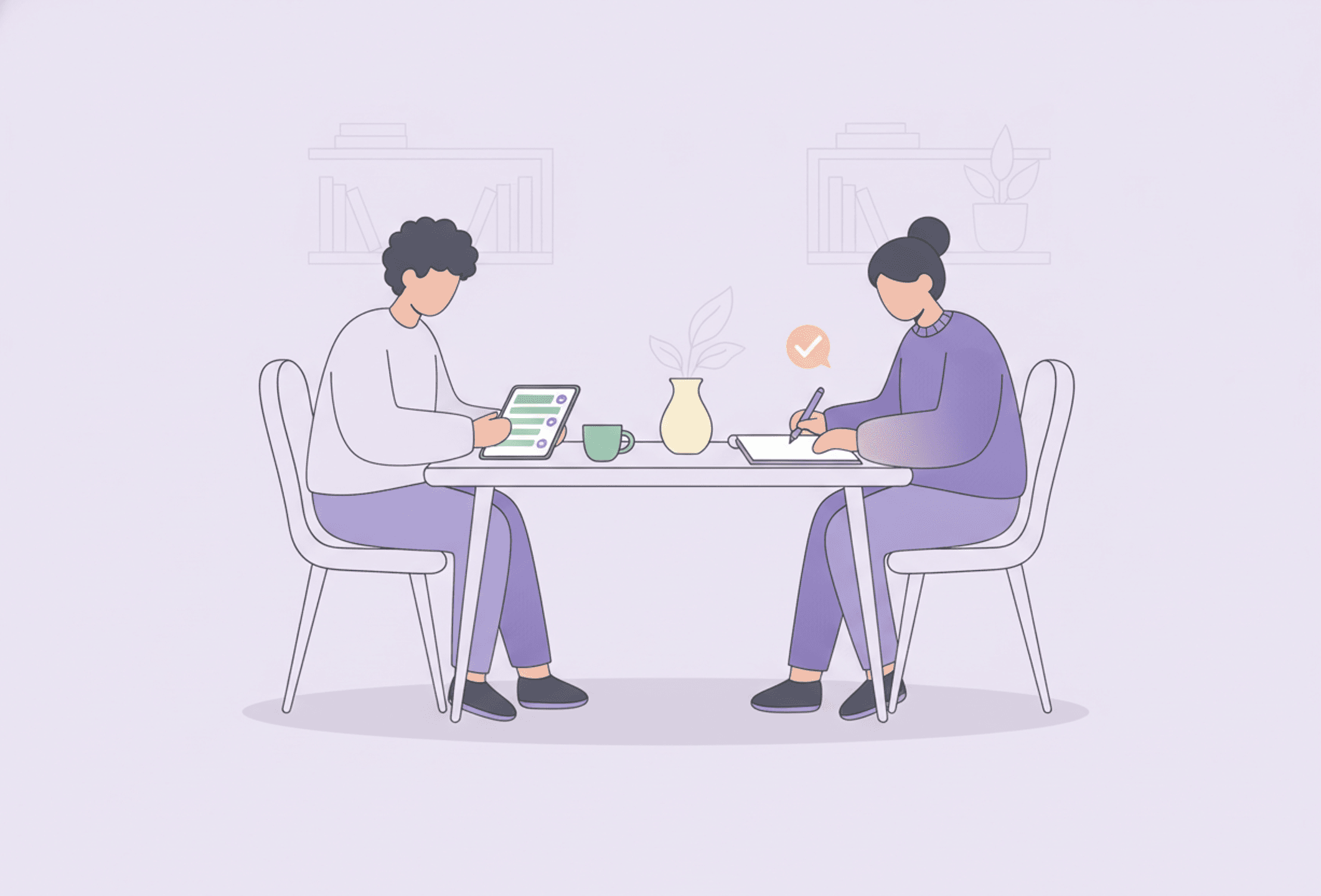
A video call with a friend while you both cook. Body doubling for the difficult hour - someone on a call doing their own work while you do yours. A co-working morning once a week, a gym class rather than a gym membership, a hobby that involves turning up somewhere.
It is not about company for its own sake, though that matters too. It is that a witnessed hour behaves completely differently from an unwitnessed one, and alone you get almost none by default.
Food is the first system to fall over
Eating alone loses both its cue and its shape: there is no shared mealtime, nobody notices, and cooking for one has a bad effort-to-reward ratio at eight in the evening.
Fixes that survive: three or four repeatable meals you can make without thinking, a fixed weekly shop rather than daily decisions, some planning done once instead of nightly, and the honest acceptance that prepared food is not a moral failure - a decent ready meal eaten at seven beats an ambitious plan abandoned at nine. And if food gets forgotten entirely until you feel terrible, that is the body-signal problem rather than laziness, and it wants alarms rather than willpower.
Give the day an end
Nobody else is going to bed, so nothing announces that the day is finished, and the evening will expand indefinitely into the hours you take back once the day is technically over.
Build a hard edge: a shutdown routine at a fixed time, lights changed, laptop physically closed and put somewhere, an alarm that means stop. Make the signal external, because the internal one does not exist when there is nobody else in the flat to notice the hour.
Weekends are the real hazard
Weekdays have work in them, which is a structure whether you like it or not. A weekend alone has nothing at all, which is how you get to Sunday evening having spoken to no one and done nothing you meant to.
One fixed thing on Saturday and one on Sunday is usually enough to hold the whole weekend in shape - the same principle as building any weekend structure, just more load-bearing when you live by yourself.
Build for your worst day, not your best
Everything in the flat is yours to maintain, which means the systems have to work on the day you have nothing left.
That means visible storage over tidy cupboards, a laundry cycle that runs on a fixed day rather than on need, dishes done at a set moment rather than when the pile demands it, and a fifteen-minute reset instead of a two-hour clean. A flat maintained by a tired person is the only design brief that matters, because the tired person is the one who will be doing it.
The real risk is isolation, not mess
This is the part worth saying plainly. Alone, going quiet takes no effort at all - nobody notices the week you did not answer anyone, and it is very easy for a fortnight to pass with no real conversation.
So treat social contact as infrastructure rather than as a mood: one recurring thing in the week that involves other people and does not require you to initiate, because initiating is exactly the step that fails. And there is a line worth drawing: weeks of no contact combined with low mood, or losing interest in things you normally like, is a doctor's conversation rather than a scheduling one.
Have one person who would notice
The unglamorous practical point: living alone means nobody knows if you are ill, and a person who would notice within a day or two is worth arranging deliberately.
A friend you message most days, a neighbour with a key, a family member who calls on Sundays. Nobody wants to think about it; it takes one conversation and it removes a genuinely real risk.
The short version
Living alone removes four things - a pace-setter, a witness, an interruption and an end to the day - and none of them come back through effort. Replace them: three fixed weekly anchors that do not depend on your motivation, scheduled company through body doubling and classes, repeatable meals and a fixed shop, and a hard shutdown at night. Use the one big advantage, which is total control of your environment, to make everything visible. Put a fixed thing in each weekend day, design the flat for your worst day, and treat social contact as infrastructure - plus one person who would notice if you disappeared.
Keep reading
Frequently asked questions
Why is living alone harder with ADHD?
Because it removes four invisible supports: a pace-setter (someone else’s dinner time gives the evening a shape), a witness (standards drift when nothing is checking), the interruption ("have you eaten?"), and an end to the day, since nobody else goes to bed. None of those come back by trying harder - each has to be replaced deliberately with an alarm, an event, or another person.
How do I build structure when I live alone?
Manufacture a pace-setter out of things that do not depend on your motivation: an alarm that means dinner rather than a suggestion, a standing weekly call, a class at a fixed time, a shop that closes. Pick three and keep them in the same slots. Then schedule company on purpose - body doubling, a co-working morning, a class rather than a membership - because a witnessed hour behaves completely differently from an unwitnessed one.
Why does eating fall apart when I live alone?
Because it loses both its cue and its shape: there is no shared mealtime, nobody notices, and cooking for one has a poor effort-to-reward ratio at eight in the evening. What survives is three or four repeatable meals you can make without thinking, one fixed weekly shop instead of daily decisions, and accepting that prepared food is not a moral failure - a ready meal at seven beats an ambitious plan abandoned at nine.
What is the biggest risk of living alone with ADHD?
Isolation rather than mess. Going quiet takes no effort when nobody notices, and a fortnight can pass with no real conversation. Treat social contact as infrastructure: one recurring weekly thing involving other people that does not require you to initiate. And arrange one person who would notice within a day or two if something were wrong. Weeks of no contact plus low mood is a doctor’s conversation, not a scheduling one.