ADHD in Winter: Routines for the Dark Months
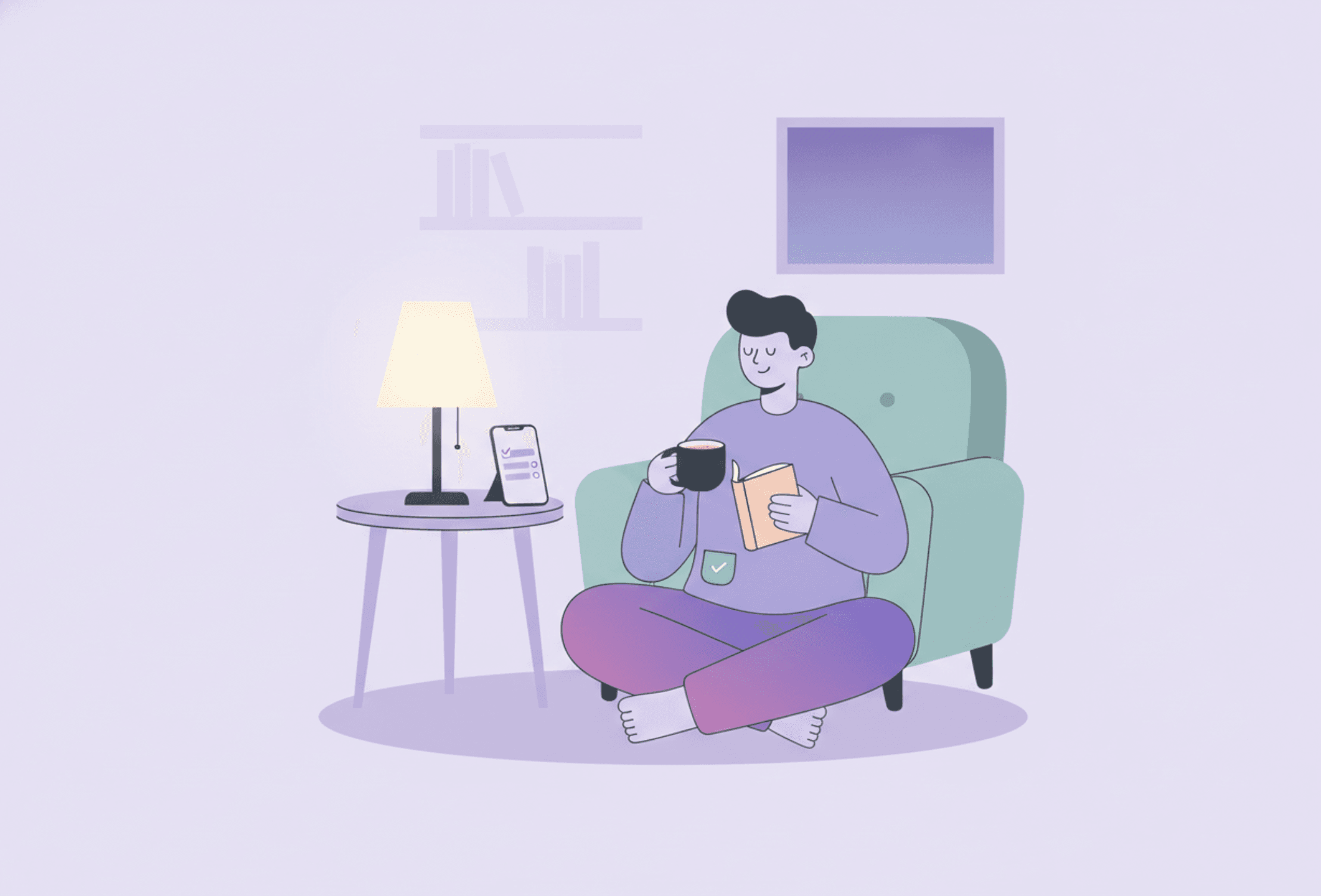
It is twenty to four and already dark. You have done almost nothing since lunch, and in June this same day would have been fine.
It is twenty to four and it is already dark outside. You have done almost nothing since lunch, the day feels finished, and there is a queue of things you were going to do after work.
In June this same day would have gone fine. Same tasks, same you.
ADHD in winter is harder for two specific reasons, and neither is a lack of discipline. The dark takes away daylight as a time cue - and if you read time mostly from the environment, losing it is not cosmetic - and it takes away the reserve of energy that used to cover the gap between what you planned and what you managed. So the fix is not more effort. It is to rebuild the cues artificially and to plan a smaller day for four months.
What actually changes
The day loses its markers. Dark at eight in the morning and dark at four in the afternoon means the day arrives as one undifferentiated block, and for anyone whose sense of time runs on external signals rather than internal ones, that is the difference between a day with shape and a day that just passes.
The start slips. Getting up in the dark is a different task from getting up in the light, and the whole morning shifts twenty minutes later, which is enough to lose the first block.
The evening arrives at four. The dark tells your body it is evening, so the after-work stretch that used to carry errands and chores quietly collapses - not because you decided to skip them, but because it stopped feeling like a time when things happen.
Leaving the house gets expensive. Everything social, everything outdoors, everything that needs shoes costs more than it did in September.
Get outside in the daylight there is
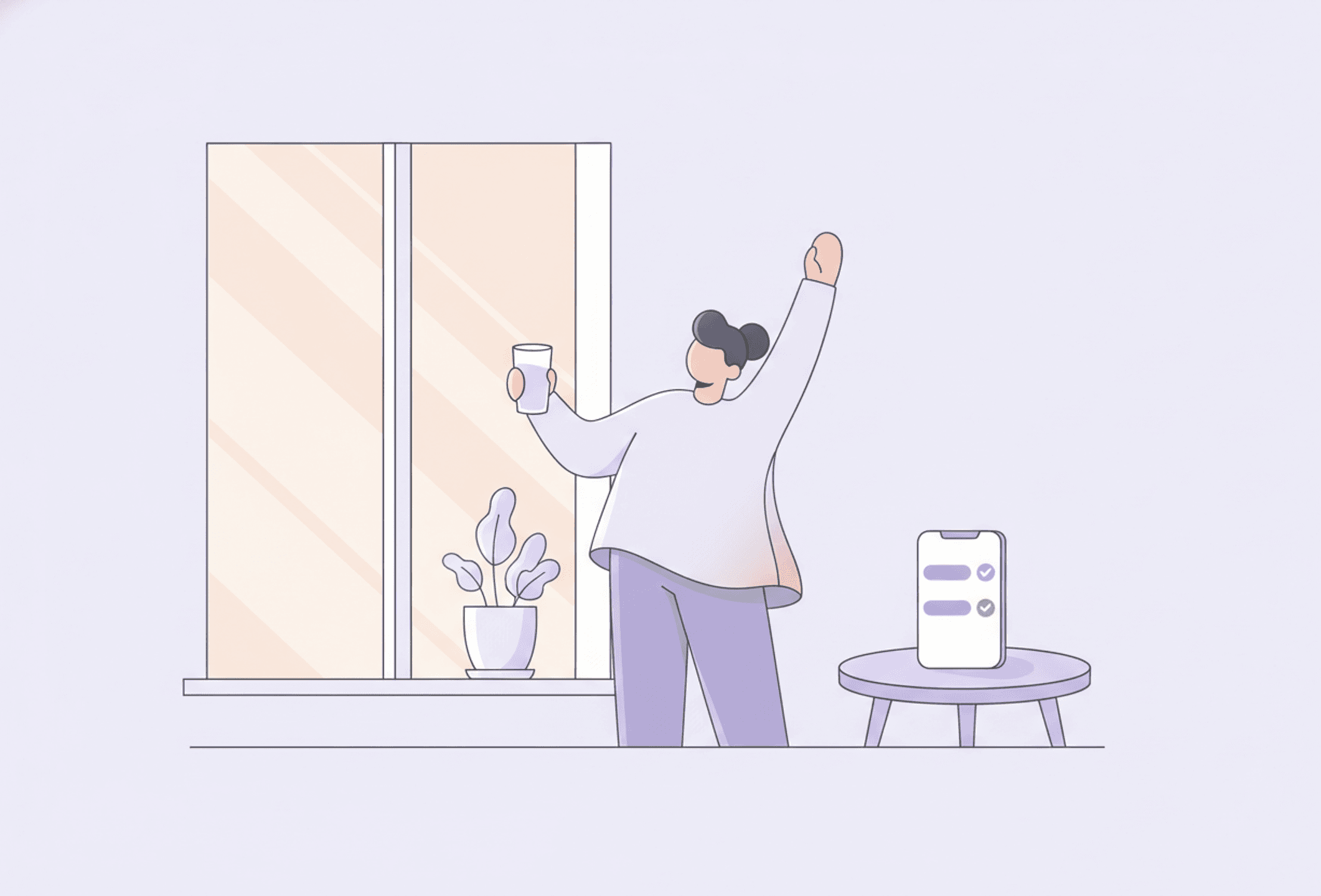
Whatever else you do, get outdoors while it is light, ideally in the first part of the day, even for fifteen or twenty minutes. Daylight is the strongest signal your body clock has, and indoor lighting is far dimmer than outdoor light even on an overcast day.
This is the single highest-value habit of the season, and it is easiest to keep if you hang it on something you already do - a walk before work, coffee taken outside, one errand done on foot at lunch rather than after dark. That is attaching it to an existing cue rather than relying on wanting to.
Rebuild the markers you lost
If the light will not divide your day, something else has to.
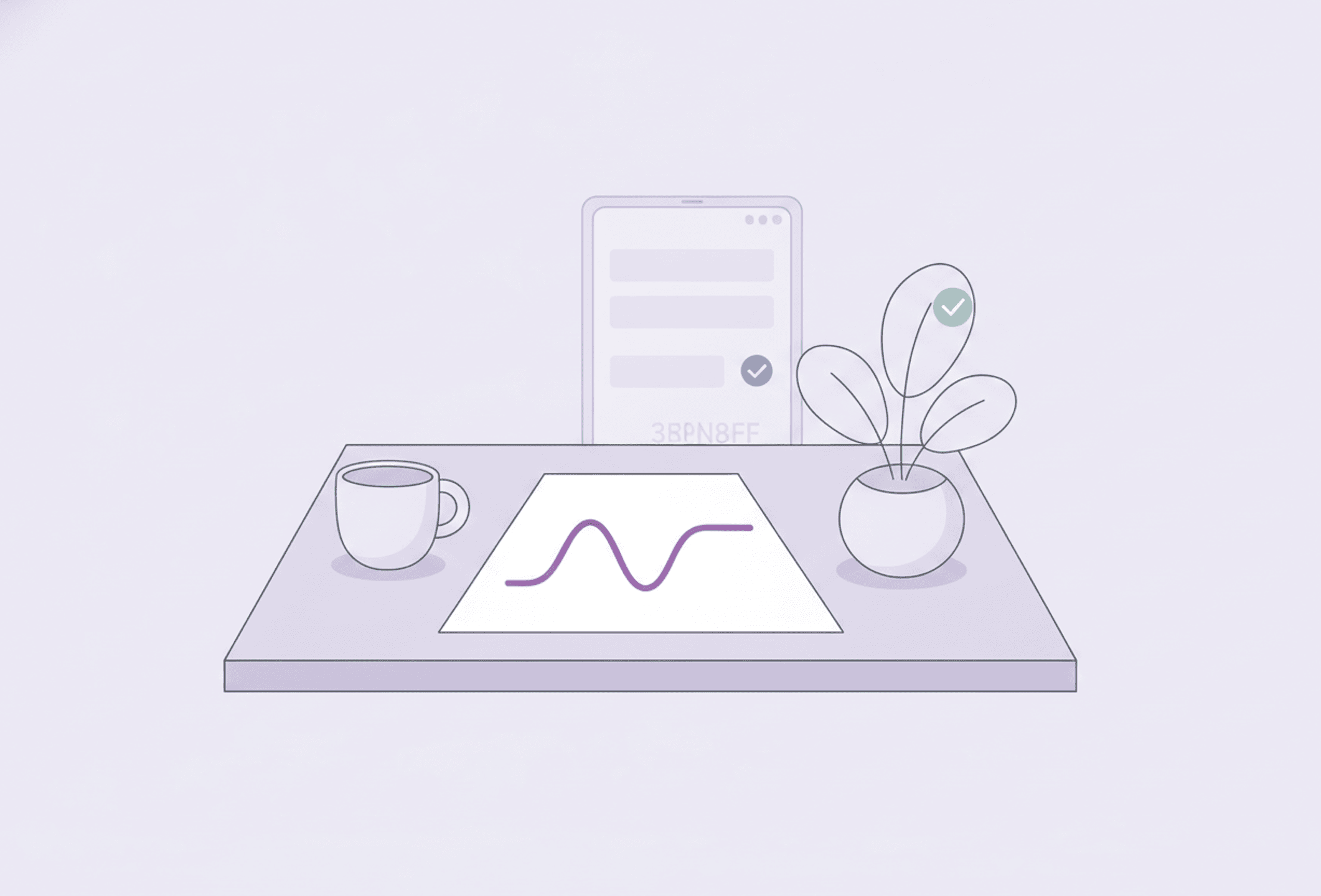
Put two or three fixed anchors in the day and let them be the clock: a set lunch, a set finish time, a fixed thing at four that is not the sofa. Set alarms not as reminders to do things but as markers that time has passed, because when it looks the same at two and at five, the sense of a day moving forward has to come from somewhere.
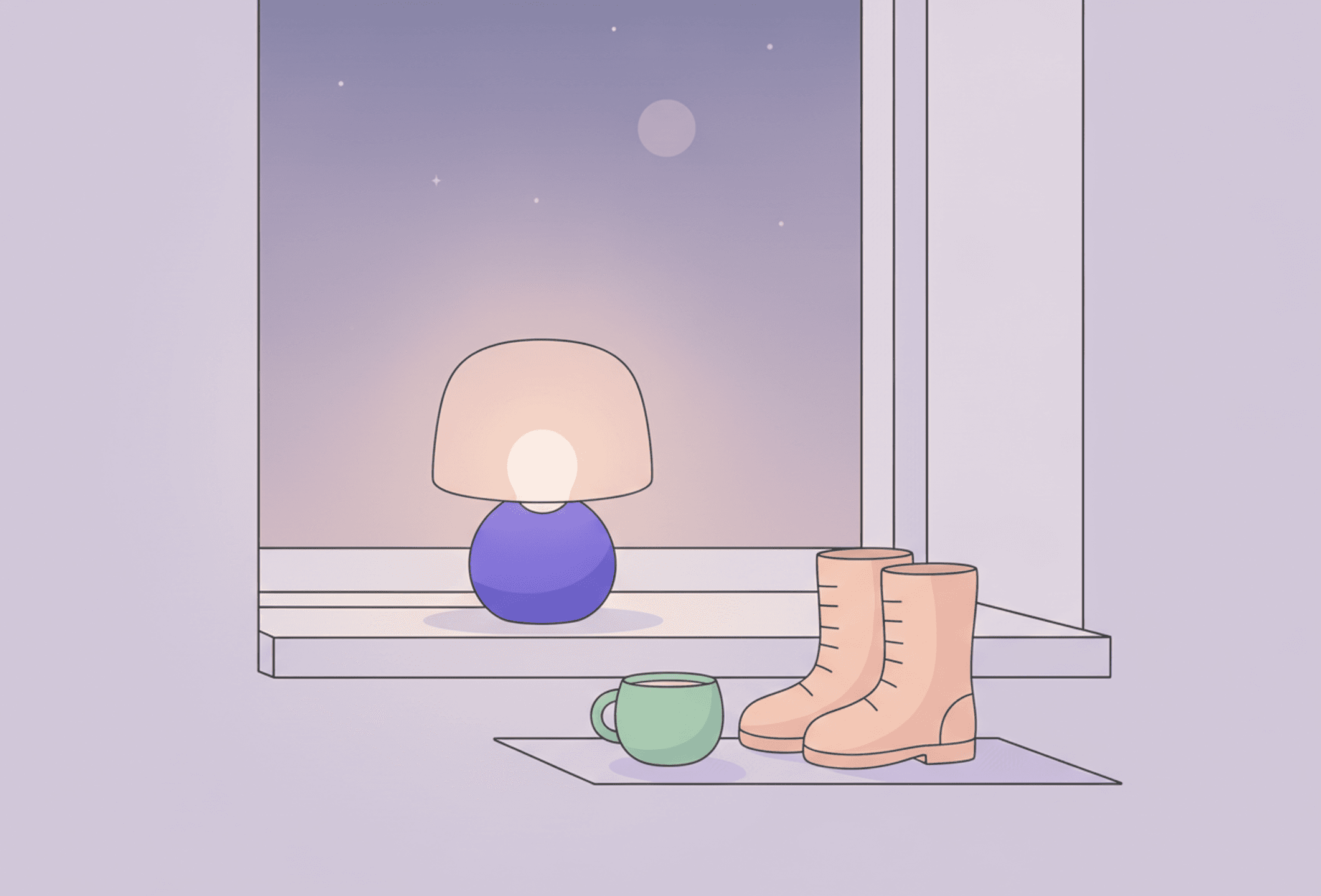
Lamps on timers do this too, and it is worth being slightly deliberate about the house: one overhead light makes an evening; three warm lamps you actually switch on at three in the afternoon make a room you can still work in. That is straightforward environment design, and it does more for a winter afternoon than a pep talk.
Plan a smaller day, on purpose
The most useful thing you can do in November is decide, in advance, that this is a three-task season rather than a six-task season.
Not because you are less capable, but because the same day now costs more: getting up costs more, going out costs more, and the reserve you used to spend covering the difference is not there. Pick the day's few things deliberately and treat the rest as a bonus - it is energy planning rather than lowered standards, and it is the difference between a season of small wins and a season of daily failure.
Move the errands into the light
Anything that has been quietly failing at six in the evening should be tried at lunchtime or on a Saturday morning instead.
Batch them so leaving the house happens once, not four times: post office, pharmacy and shop in one loop, admin done in a single hour while it is still bright. The task did not get harder in winter - the hour you had assigned it to did.
Keep moving, dressed for it
The walk you took automatically in September is the one that disappears first, and it is doing more work than it looks like.
Lower the bar to something you will still do in the rain: ten minutes, in proper clothes, with no expectation that it counts as exercise. The clothing genuinely matters here - most winter walks are lost to not having warm boots by the door rather than to not wanting to go.
Protect the social things, because winter cancels itself
Left alone, a dark season quietly deletes your plans one at a time, and each cancellation is individually reasonable.
Two things help. Put social plans in daylight hours at weekends, where the cost of leaving is much lower. And keep one recurring low-effort thing - the same people, the same evening, no organising required - because a standing arrangement survives a winter that ad-hoc plans do not. If you already know the pull to cancel, decide in advance which ones you will not cancel.
Do not let the evening start at four
The specific trap is sitting down at four in a dark house, because everything after that is negotiation.
So do the one thing before you sit: the washing-up, the ten-minute tidy, the thing that has to leave the house tomorrow. Then start the evening properly with a routine that actually marks it, rather than letting a shapeless five hours dissolve into a late bedtime and a worse morning.
Expect January, and don't schedule your life for it
There is a reliable dip after the holidays, when the season is old, the light has not come back yet, and everything is expensive again.
Knowing that is useful in November: it means you do not start the big life project on the second of January, and you do not read a flat mid-January week as evidence about your character. Plan the ambitious things for March, and let January be a maintenance month.
When it is more than the dark
There is a line worth naming. Feeling flatter and slower in winter is very common. Weeks of persistent low mood, sleeping far more than usual, losing interest in things you normally like, or being unable to function is not something to plan your way out of.
Seasonal patterns in mood are recognised and treatable, and if that is what is happening, the useful next step is a doctor rather than a better morning routine. That is not a failure of your system; it is the correct use of one.
The short version
Winter removes your time cues and the energy that hid the gap between plan and execution. Get outdoors while it is light, ideally in the morning. Rebuild the day's markers with fixed anchors, alarms and lamps that go on before dusk. Deliberately plan a three-task day rather than a six-task one, move errands into daylight and batch them, keep a low-bar walk with the right clothes by the door, protect one standing social thing, and do the one task before you sit down at four. Expect the January dip - and if the flatness is deep and lasting, treat it as a health question rather than a planning one.
Keep reading
Frequently asked questions
Why is ADHD harder in winter?
For two concrete reasons rather than a lack of discipline. Daylight is one of the strongest external time cues, and if you read time mostly from your environment, dark mornings and dark afternoons leave the day without markers. And the dark makes ordinary things cost more - getting up, going out, doing an errand - so the reserve of energy that used to cover the gap between the plan and what you managed is simply not there.
What actually helps in the dark months?
Get outdoors while it is light, ideally in the first part of the day, even for fifteen minutes. Rebuild the markers the light used to give you: two or three fixed anchors, alarms as time markers rather than reminders, lamps switched on before dusk. Plan a three-task day instead of a six-task one for the season, move errands into daylight and batch them, and do one task before you sit down at four.
Why do I get nothing done after four in winter?
Because the dark tells your body it is evening, so the after-work stretch that used to carry errands and chores stops feeling like a time when things happen. The fix is not to push through it but to move that work: do errands at lunchtime or on a Saturday morning, put lights on before dusk rather than after, and do the one remaining task before you sit down, since everything after sitting down is negotiation.
When should winter low mood be taken to a doctor?
Feeling flatter and slower in winter is very common. But weeks of persistent low mood, sleeping far more than usual, losing interest in things you normally enjoy, or being unable to function is not something to plan your way out of. Seasonal patterns in mood are recognised and treatable, so the useful next step there is a doctor rather than a better morning routine.