

When Showering Feels Impossible: ADHD and Hygiene
You know it takes eight minutes and you know you will feel better, and it has still been three days. Here is why hygiene is genuinely hard with ADHD, and the shame-free way to make it happen anyway.
You know it takes eight minutes. You know you will feel better afterwards. You have known both of those things for three days.
Hygiene is hard with ADHD not because you do not care, but because these tasks are long chains of small steps with no deadline, no visible reward and often real sensory friction. That is the exact shape of task an ADHD brain struggles most to start and finish. Once you see the mechanism, the fix stops being "try harder" and becomes something much more practical: lower the bar until it is a bar you can actually clear.
This is general information, not medical advice.
Why hygiene is genuinely hard with ADHD
It is a chain, not a task. "Have a shower" is really: get undressed, get the water right, wash, shampoo, rinse, get out, dry off, moisturise, get dressed, hang the towel, deal with the wet clothes. Executive dysfunction bites hardest on chains, because every link is a fresh chance to stall.
The sensory part is real. Warm room, cold air, hot water, cold air again, wet hair on your neck, the noise of the shower, the clammy towel. That is not fussiness. Unpleasant sensory input genuinely costs more for many people with ADHD, and a task you dislike physically will always lose to one you do not.
There is no deadline and no reward. Nothing goes wrong at 14:00 because you skipped it. Nobody congratulates you afterwards. An interest-based nervous system runs on interest, novelty and urgency, and washing your hair has none of the three.
You may honestly not notice. Noticing your own body's signals is often weaker with ADHD. Not registering that you feel grimy is not denial or indifference - the signal genuinely arrives late.
Shame makes the next attempt heavier. Every skipped day adds a layer of "and now it is worse", which raises the entry cost precisely when your capacity is lowest. That loop is the real enemy here, not the shower.
The one move that changes everything
Partial counts.
The full version is: shower, wash hair, moisturise, fresh clothes. Skip that. Build a version so small it survives your worst day:
- A flannel at the sink instead of a shower.
- Dry shampoo instead of washing your hair.
- Deodorant and a clean t-shirt.
- Teeth brushed standing in the kitchen, if that is where you are.
This is not a lesser, cheating version of hygiene. It is the version that actually happens, and something done badly beats a perfect routine you skip for four days. It is the same logic as micro-habits: set a floor low enough that you never have to decide whether you are up to it.
Shorten the chain
Every link you remove is a place you can no longer stall.
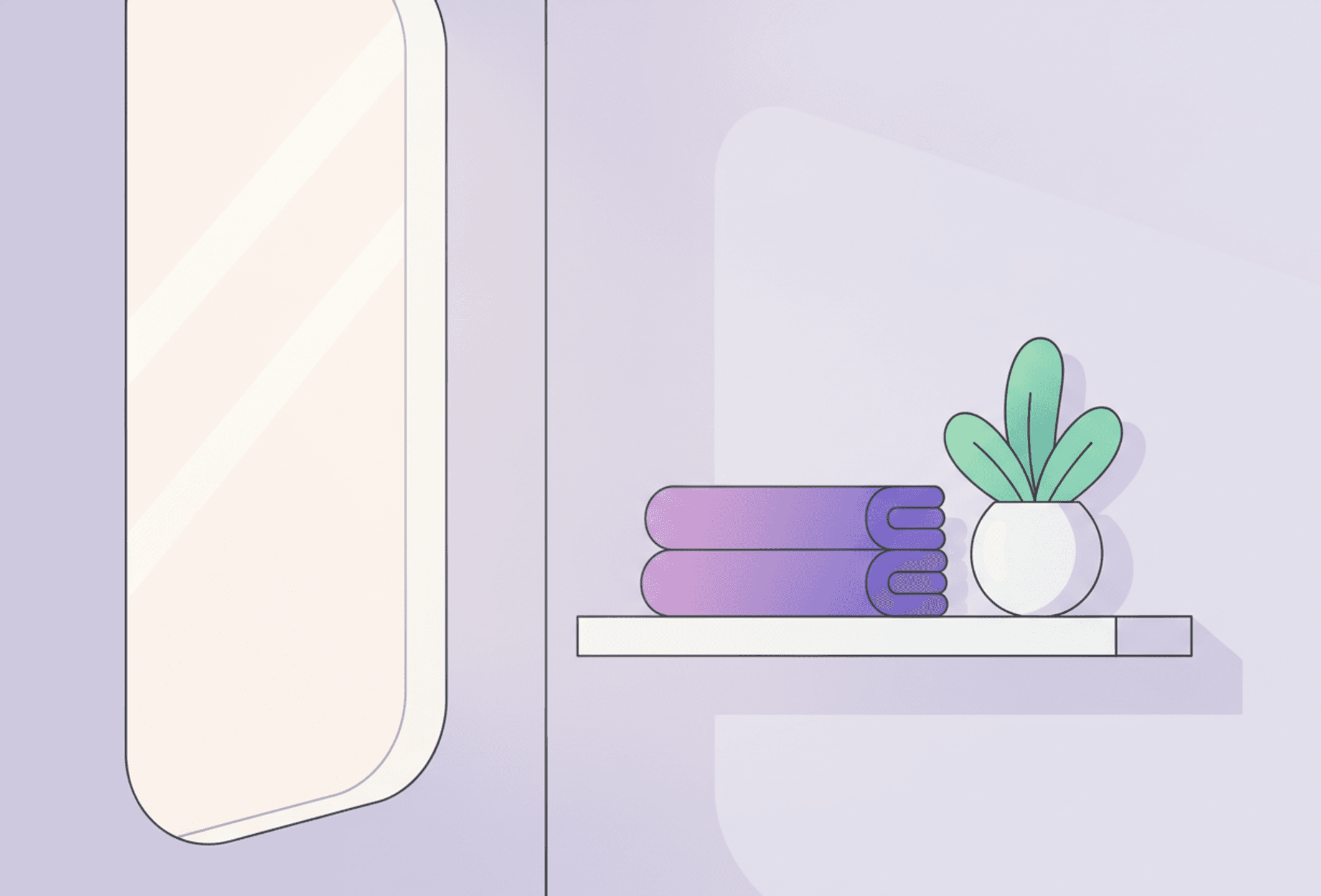
- Supplies in sight, not behind a cupboard door. What you cannot see does not exist.
- Clothes out beforehand, so "get dressed" is not a fresh decision made while cold and wet.
- A towel already hanging where your hand lands.
- One-step products on the shelf: 2-in-1 wash, face wipes, dry shampoo. Fewer bottles, fewer decisions.
- A second toothbrush wherever you actually end up in the evening.
Fix the sensory part instead of pushing through it
The friction is real, so treat it as a design problem.
Warm the room first, so the cold part is shorter. Put on a podcast or loud music - it fills the time and supplies the stimulation the task is missing, which is often the whole difference between eight unbearable minutes and eight fine ones. Set a five-minute timer so the thing has a visible end. Try a softer towel, dimmer light, a different water temperature. These sound trivial and they are not: for a sensory-sensitive brain, small changes shift the whole cost.
Anchor it to something that already happens
Do not rely on remembering, and definitely not on wanting to. Attach it to a thing you already do without thinking: straight after the alarm and before coffee, or the moment your work clothes come off. That is habit stacking, and it works here better than almost anywhere, because the anchor supplies the cue your own body is not reliably giving you.
Put it somewhere you can see it
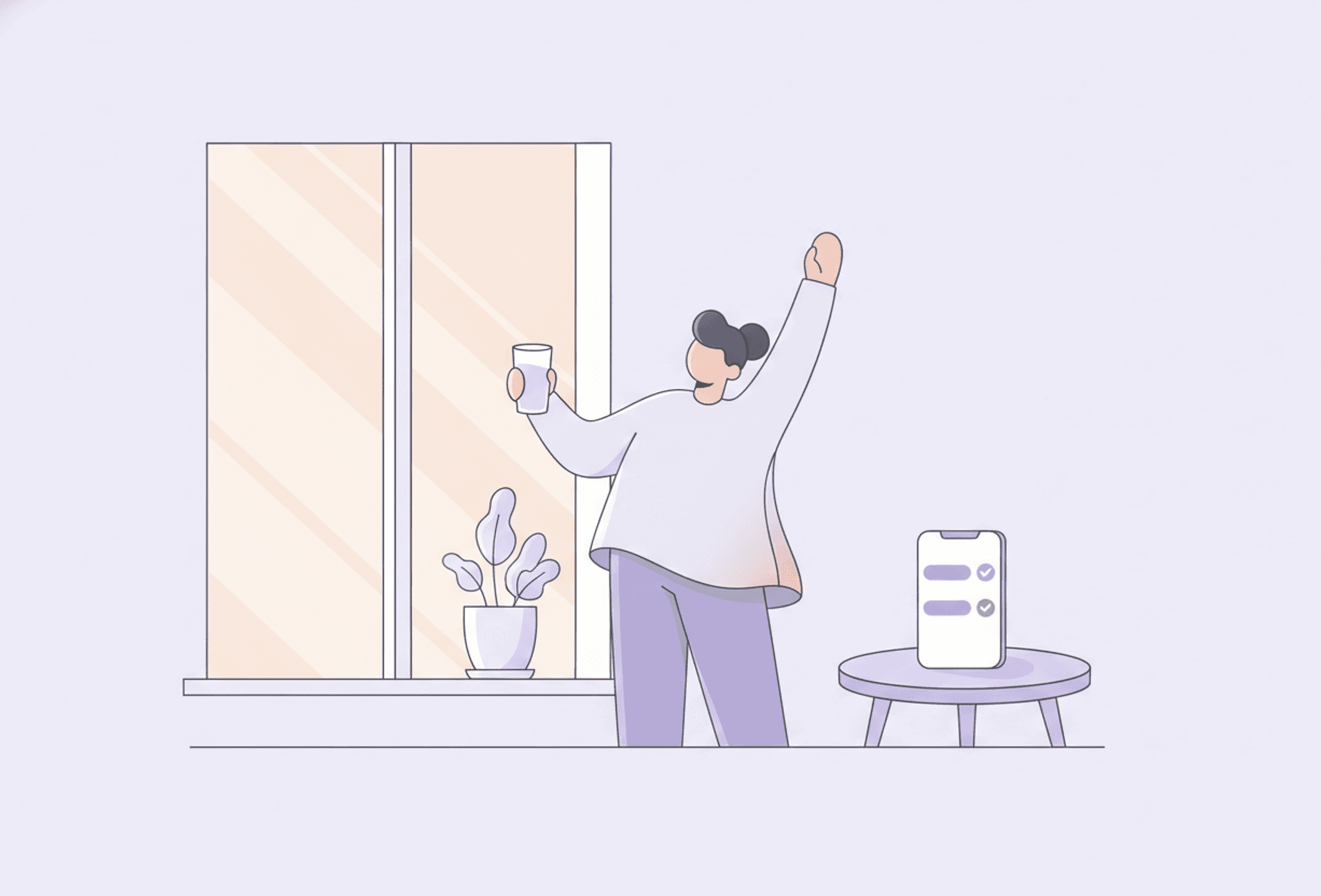
A hygiene step that lives only in your head is a step that competes with everything else in there. Write it into a routine you actually look at - on paper, on the mirror, or in an app like Stedo, where a morning routine and its steps sit in the day and get ticked off one at a time. Stedo is free to start, and the point is not the tick. The point is that the step exists outside your memory, in the same place as the rest of your day.
On the days even the floor is too high
Wipes count. Deodorant counts. Clean socks count. Teeth count on their own. Doing one small thing keeps you in contact with the routine, and that contact is what makes tomorrow's attempt possible. A day where you did one thing badly is categorically different from a day where you did nothing and decided you were disgusting.
When it is worth talking to someone
A long-running struggle with the mechanics of hygiene is very ADHD and very common. A sudden change is a different signal. If it dropped off recently, or arrives together with low mood, exhaustion or losing interest in things you normally like, that is worth mentioning to a doctor - not because hygiene is a moral failing, but because it is a useful piece of information about how you are doing.
Read more
Frequently asked questions
Why is showering so hard with ADHD?
Because it is not one task but a chain of ten or so small steps, with no deadline, no visible reward and often genuine sensory friction - cold air, wet hair, noise. Every link is a new chance to stall, and nothing external pushes you through it. It is a task-shape problem, not a caring problem.
Does a wipe-down or dry shampoo really count?
Yes. The version that happens beats the version that does not. A flannel at the sink, dry shampoo, deodorant and a clean shirt keep you in contact with the routine, and staying in contact is what makes the full version possible again later. Treating only the complete version as valid is the fastest way to end up doing nothing at all.
How often is often enough?
There is no universal number, and chasing one usually adds shame without adding showers. What matters is your own comfort, your skin, and the context you are in. Pick a floor you can hit on a bad day and let the good days go above it by themselves.
When is it more than ADHD?
This is general information rather than medical advice, but a sudden drop-off is a different signal from a long-standing struggle. If hygiene has fallen away recently, or comes alongside low mood, heavy exhaustion or losing interest in things you normally enjoy, it is worth raising with a doctor.