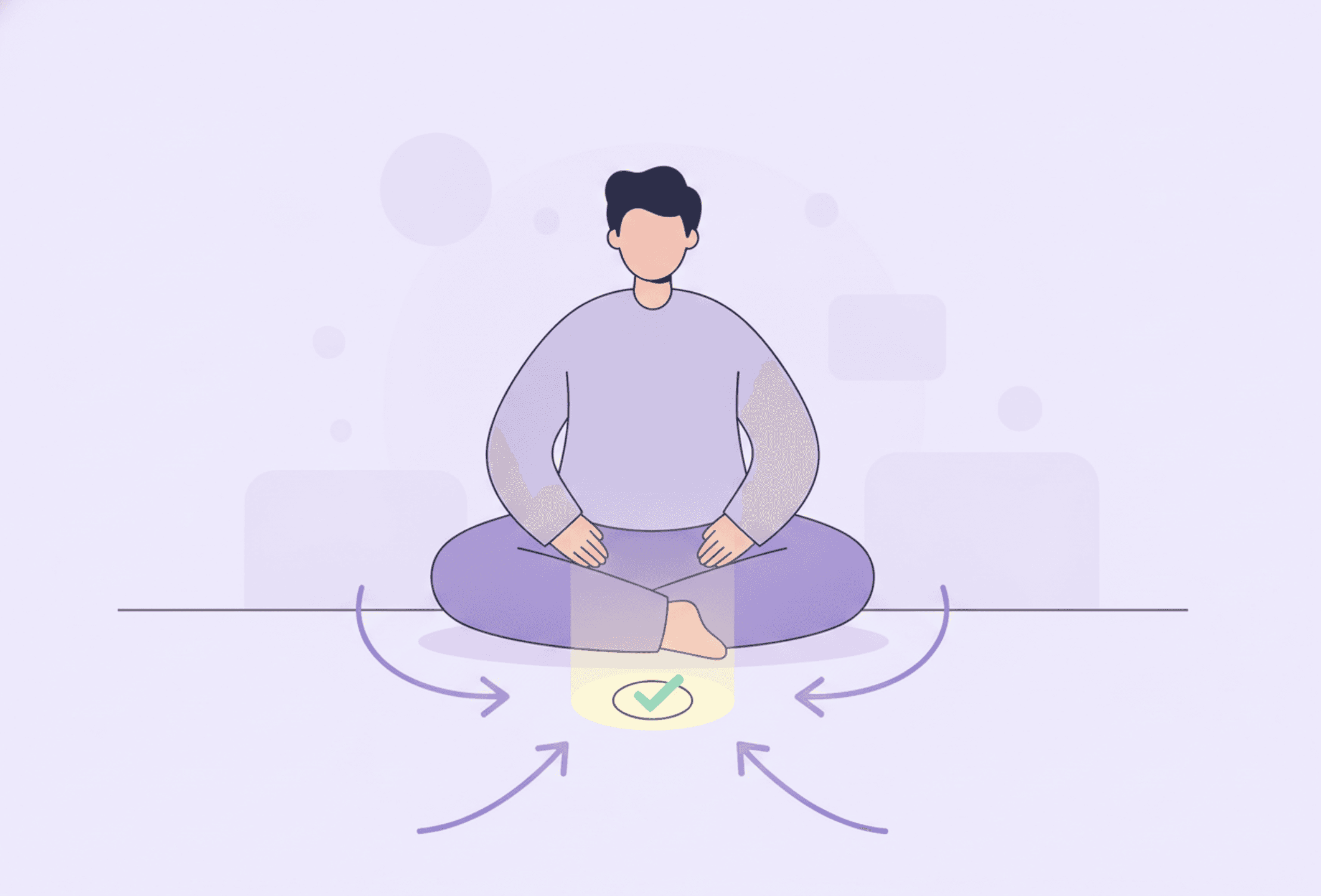


Executive Dysfunction, Explained
You know exactly what to do and still can't make yourself start. That's not a character flaw — it's executive dysfunction, and it responds to different tools than willpower.
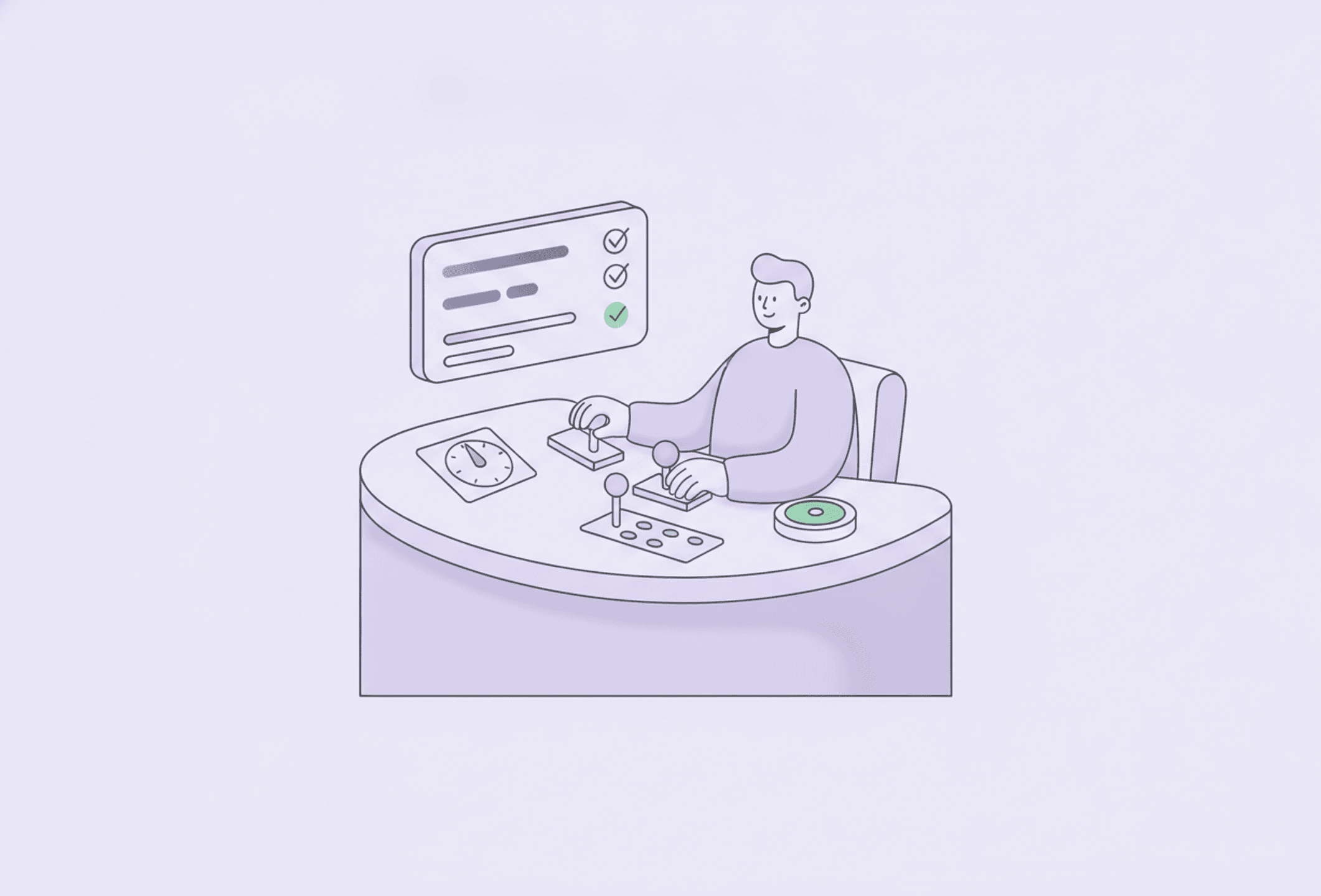
You know exactly what needs to happen. The email is two lines. The dishes take four minutes. And yet you're standing in the middle of the room, doing nothing, for reasons you can't quite explain even to yourself.
Executive dysfunction is when the brain's management system — the part that plans, starts, remembers and regulates — doesn't carry out a task the way clear intention alone would suggest, and it's a brain-based difference, not a character flaw.
What executive function actually is
Think of executive function as the brain's management layer: the quiet staff running things behind the scenes so the part of you that's in charge doesn't have to consciously steer every step. It covers several distinct jobs:
- Planning and prioritising — deciding what matters and in what order
- Task initiation — actually starting, not just knowing
- Working memory — holding information in mind while you use it
- Inhibition and impulse control — pausing before reacting
- Cognitive flexibility — shifting smoothly when plans change
- Emotional regulation — keeping feelings from grabbing the wheel
- Self-monitoring — noticing your own progress and mistakes
- Time perception — sensing how long things take and how much is left
Most people run these mostly on autopilot without ever naming them. Executive dysfunction is what it's called when one or more stalls.
What it actually feels like
Executive dysfunction rarely introduces itself by name. It shows up as specific, maddening moments:
- You know exactly what to do, and your body simply will not move toward it. That's task initiation failing, and at its most extreme it's ADHD paralysis — fully able, fully stuck.
- You walk into a room with a clear purpose, and by the time you're standing in it, the purpose has evaporated. That's working memory dropping the plan mid-transit.
- Three hours disappear between just checking one thing and looking up again — the clock stopped meaning anything.
- The form stays unopened, the reply stays unsent, the appointment stays unbooked, not because you decided against it but because deciding was the part you couldn't do, and the pile of postponed decisions keeps growing.
Each of those is a different function struggling, but from the outside — and often from inside your own head too — they all get read as the same thing: laziness.
It isn't laziness, and it isn't fixed
Executive dysfunction is wiring, not willpower. It's also not constant. The same brain that can't start a load of laundry on Tuesday will handle a far bigger task on Thursday without much trouble, because capacity moves with sleep, stress, interest and energy. That inconsistency is often the most confusing part, for you and for anyone watching from outside, but it's exactly consistent with how executive function actually behaves: a resource that fluctuates, not a fixed trait you either have or lack.
It's strongly associated with ADHD, but it isn't exclusive to it. Autism, depression, anxiety and burnout all affect the same system, so executive dysfunction on its own describes a pattern, not a diagnosis.
You can't willpower a system into working — you externalise it
Here's the strategy that actually holds up: stop trying to force the internal system to perform on command, and build an external one that does the job instead. Match each weak spot to one concrete outside support.
- Working memory dropping things? Stop holding them in your head. The moment something appears, get it onto a list — a brain dump empties your head faster than remembering ever will.
- No reliable sense of time? Borrow one. A timer or alarm doesn't ask you to feel how long five minutes is; it just tells you when it's over.
- Planning collapsing daily? Stop rebuilding it from scratch each morning. A routine turns tomorrow's decisions into today's already-made ones.
- Forgetting what you meant to do? Put it somewhere your eyes will land on it. A visible cue beats a memory you're hoping arrives on schedule.
- Can't generate your own urgency? Borrow someone else's. Working alongside another person, even quietly on unrelated things, is the whole idea behind body doubling.
- Frozen in front of an open-ended task? Shrink the field to one decided next step instead of the whole project.
This is also where an app like Stedo earns its place: a task list, routines and reminders sitting outside your head do the remembering, timing and structuring that a strained executive system can't reliably manage alone. Not a cure — a sturdier outside brain.
When it's worth getting assessed
If this pattern shows up most days and is shaping your work, relationships or how you feel about yourself, it's worth raising with a doctor. This article is general information, not a diagnosis or medical advice; an assessment can help identify what's underneath it — ADHD, something else, or a few things layered together — and which support genuinely fits.
Read more
Frequently asked questions
Is executive dysfunction the same as laziness?
No. Laziness is choosing to avoid effort you're capable of; executive dysfunction is a brain-based difficulty carrying out a task even when you want to and know exactly how. The frustration itself is a clue — someone who genuinely doesn't care rarely feels this stuck about it.
Does executive dysfunction only happen with ADHD?
It's strongly linked to ADHD, but the same executive system is affected by autism, depression, anxiety, chronic stress and burnout too. Executive dysfunction describes a pattern of difficulty, not a diagnosis on its own, so it's worth exploring what's underneath it with a professional.
Can executive dysfunction improve?
Capacity does shift, with sleep, treatment, lower stress and practice using the right external supports, and tasks that once felt impossible often get easier over time. Even when the underlying difference doesn't disappear, externalising the parts that struggle, through lists, timers and routines, reliably makes daily life more manageable.
Why does it seem to come and go?
Executive function draws on a limited resource that shifts with sleep, stress, novelty and interest, so the same task can feel easy one day and impossible the next. That's normal variation in a system that fluctuates, not inconsistency of character.