

The One-Touch Rule: Handle It Once, Not Five Times
The mail on the counter, the jacket on the chair, the dish that's 'soaking' — each one started as something put down 'for now'. The one-touch rule: handle each thing once, to done or to its home.
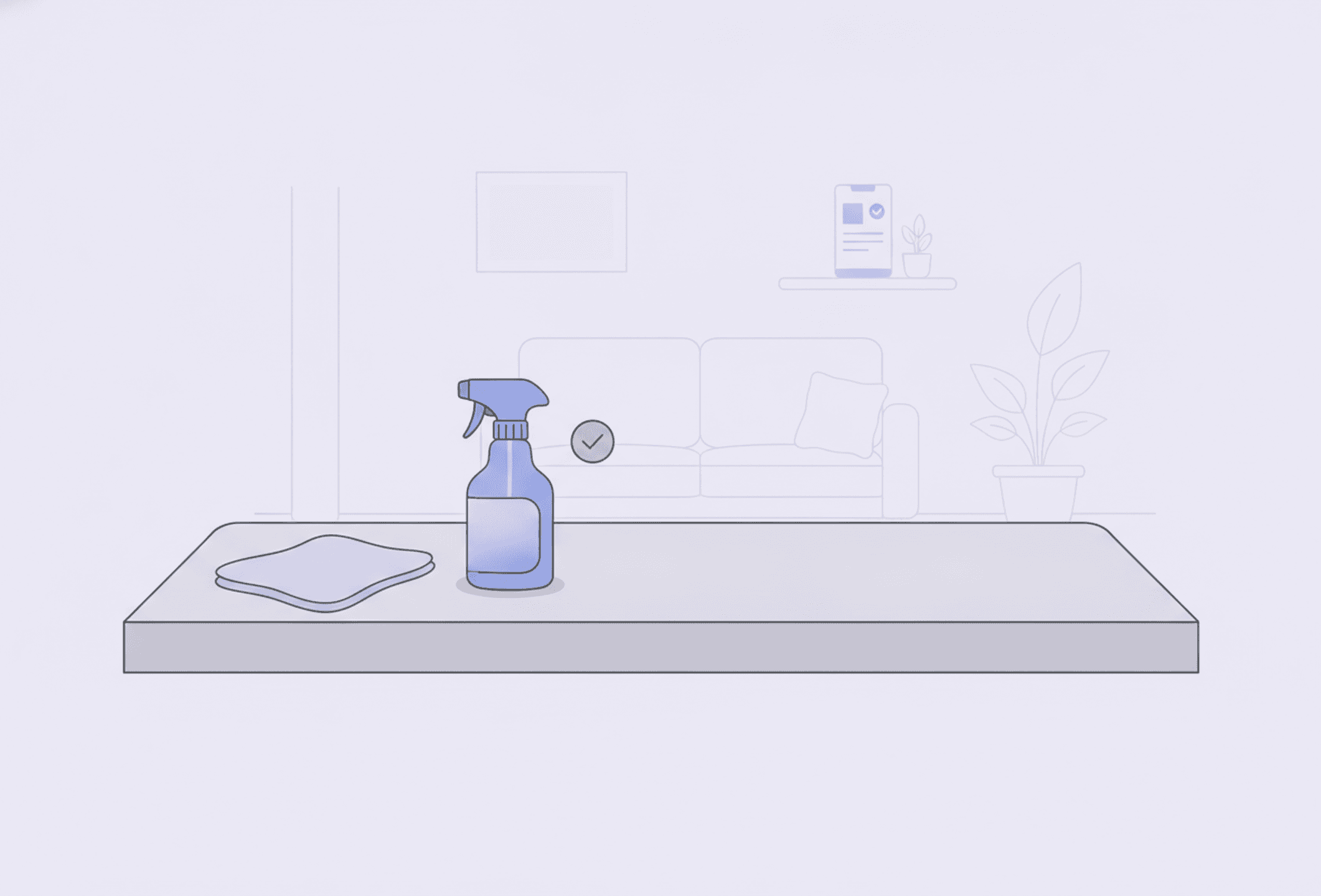
The mail has sat on the counter for four days. Your jacket lives on the back of a chair, because the chair is three steps closer than the hook. The pan has been "soaking" since Tuesday, which isn't a stage of cleaning — it's just a place things go to wait.
The one-touch rule says: when you pick something up, take it all the way to done or all the way to its home — never back down "for now". One touch, one outcome. Skip that, and the object doesn't vanish; it just hands the decision to a version of you who hasn't shown up yet.
Every "for now" spot is a pile in progress
A parked item looks harmless sitting there, but it isn't neutral. The decision you didn't make — keep it or bin it, wash it or fold it, reply or archive — doesn't disappear when you put the thing down. It waits inside the object, and the next time you touch it, you pay for that decision again, from scratch, plus a little interest: now there's a second thing beside it, then a third.
That's how one letter becomes a stack, one mug becomes a full sink, one "I'll deal with it tonight" becomes a chair you can't see anymore. And a pile isn't quiet while it grows — every walk past it costs a flicker of guilt, a small "I should", whether or not you ever act on it.
Why parking feels like the only option
None of this is about being lazy. Three ordinary costs push you toward "for now":
- Transitions cost more than they look like they should. You're rarely just hanging up a coat — you're interrupting whatever you were already walking toward, and switching eats attention you'd rather spend on the next thing.
- Deciding costs energy too, and most parked objects are parked precisely because the decision inside them is genuinely unclear in the moment.
- "Later" feels like a real, better-resourced version of you who'll enjoy sorting the post. Time blindness is exactly what makes that future self feel so vivid — and exactly why they never quite show up with more time than you have right now.
This isn't the two-minute rule
If this sounds like the two-minute rule, it's a close cousin, not the same idea, and mixing them up is where people get stuck.
The two-minute rule sorts by time: under two minutes, do it now. The one-touch rule sorts by the object: whatever the task takes, you don't get to handle the same thing twice. They agree on the easy cases — a two-minute task obviously gets one touch. They part ways on the letter that needs a proper fifteen-minute reply: it fails the two-minute test, but one-touch still has an instruction for it — you don't put it back on the counter where it hides. Carry it to wherever replies actually get written, and it's done in one movement, even though the reply itself happens tonight. Two minutes decides when. One touch decides where things land.
Where it earns its keep
The rule matters most in the handful of flows that generate almost all household clutter:
- Mail — open it standing over the recycling bin. Junk falls immediately; anything real goes straight into one tray, not onto the counter.
- Dishes — into the dishwasher, not the sink. The sink was never a waiting room.
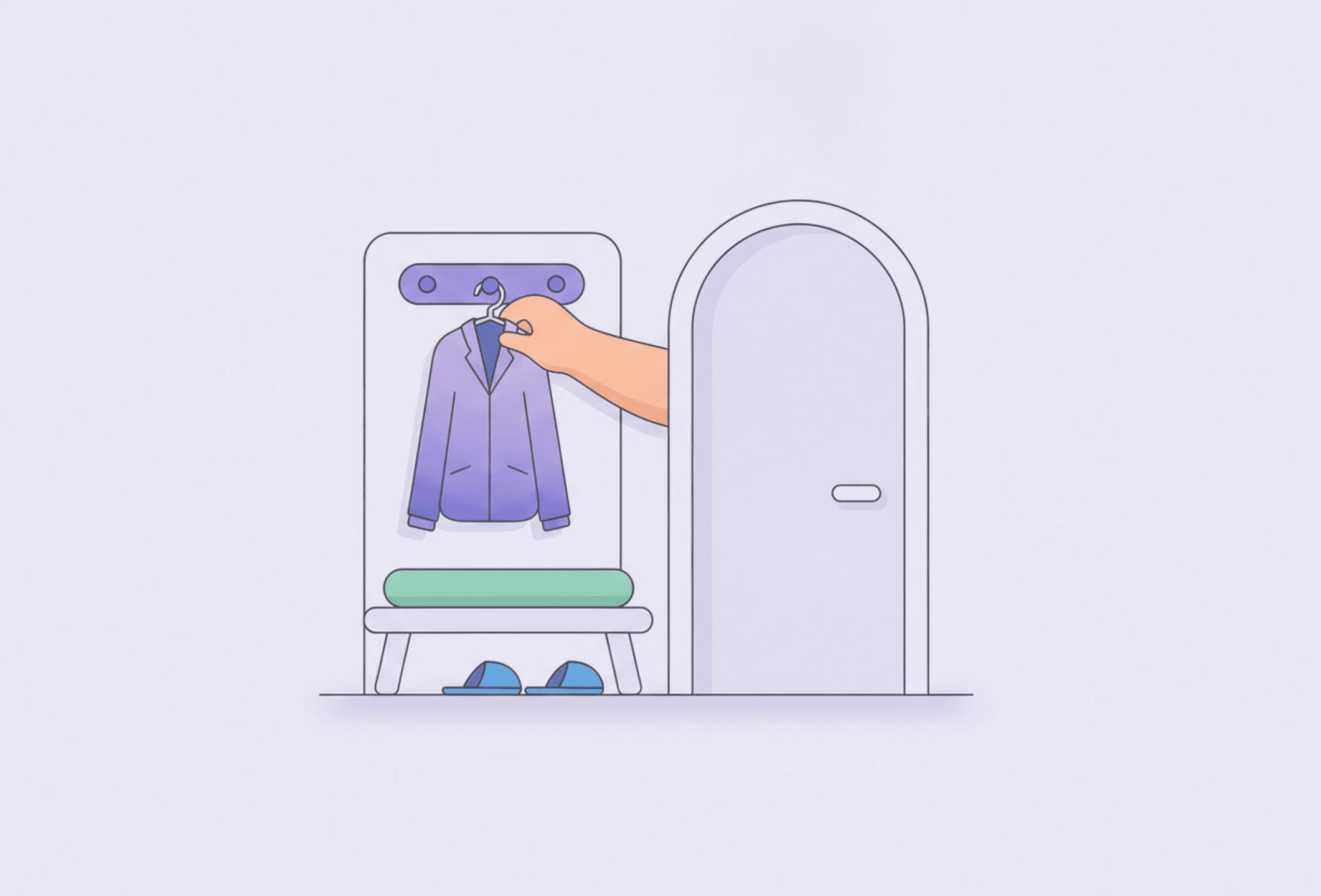
- The jacket — hook, every time, not the chair.
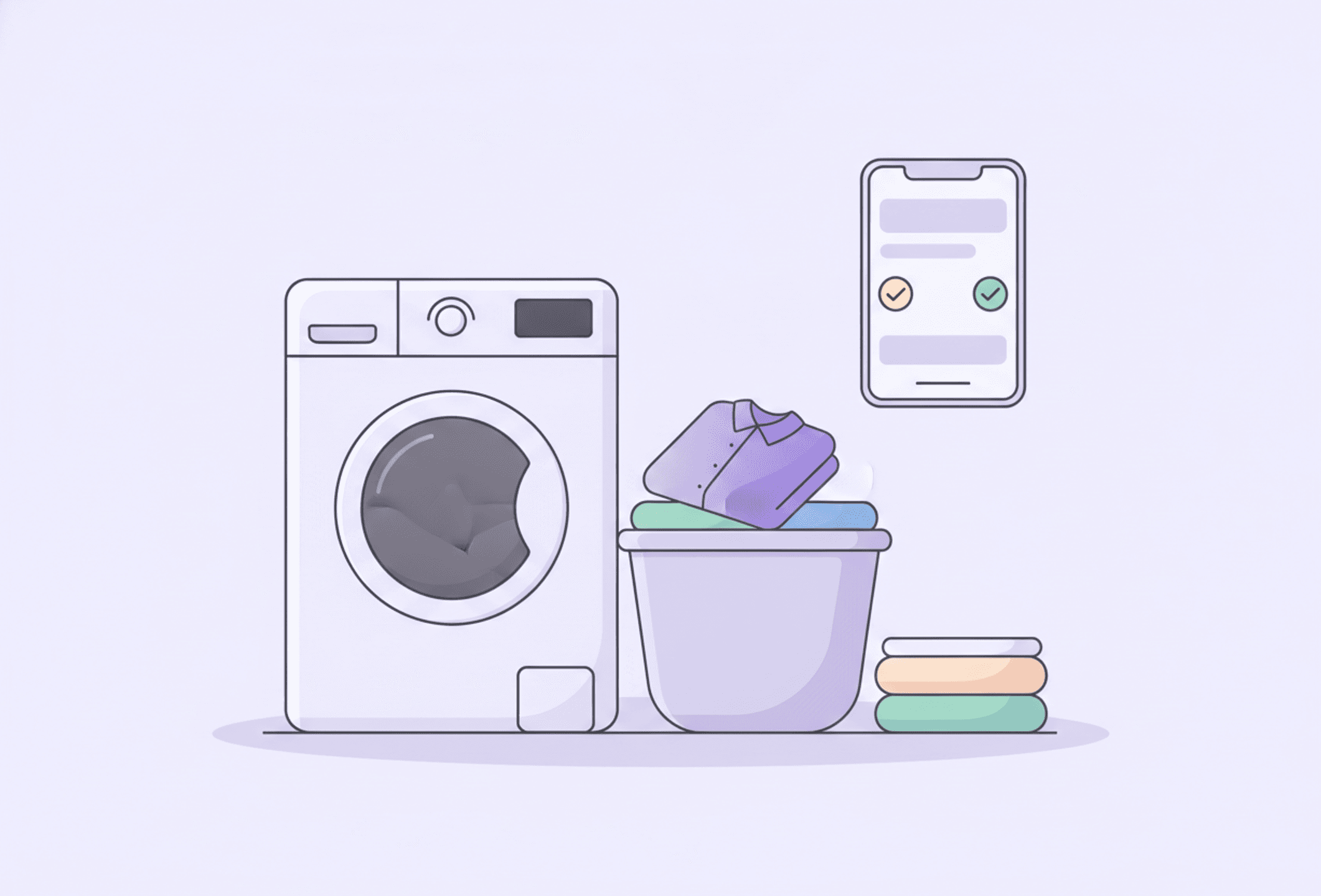
- Laundry — worn clothes go in the basket or back on a hook. A chair pile is a decision you'll still owe yourself on Saturday.
- Email and messages — when you open one, finish it: reply, archive, or turn it into a task. "Read and leave it" just means you'll read it four more times.
- Groceries — unpack in one pass. A half-emptied bag is tomorrow's confusion about what's actually in the fridge.
A hook beats a rule
Here's the part that makes one-touch actually work: it only holds up if everything has a home, and that home sits right on the path you're already walking.
If hanging up the jacket means opening a closet and fighting three other hangers, the chair wins every single time — no amount of willpower changes that math. A hook just inside the door wins because it makes the right move the easy move. Keep the homes visible where you can: for ADHD brains, what's out of sight tends to genuinely be out of mind, so an open tray or basket beats a closed drawer for anything still waiting on an action.
The honest version
You will not one-touch your entire life, and treating it as all-or-nothing is the fastest way to drop the whole idea by Thursday.
Pick the two or three flows that build the piles you resent most — for most people, some mix of mail, dishes and clothes covers it. Run the rule hard there, and let the rest of the house stay human. A rule that actually runs on three flows beats a rule that was supposed to cover everything and lasted a week.
When not to touch it
One real exception: this rule is for things you're already handling, not things heckling you mid-task.
If you're deep in focused work and a notification badge or a stray cup catches your eye, one-touching it right now has another name — getting derailed. Write the intruding thing on a running distraction list instead, on paper or in a capture inbox, and give it its one touch once you actually surface. A free capture inbox, like the one in Stedo, works well for exactly this: one place to drop the thought so it stops fighting for space in your head.
Handle each thing once. You just get to choose when that touch happens.
Read more
- The two-minute rule
- A cleaning routine that actually sticks
- How to stop procrastinating
Frequently asked questions
What is the one-touch rule?
When you pick something up — a piece of mail, a dish, an email, your jacket — you take it all the way to done or all the way to its home, instead of setting it down somewhere temporary. The goal is to stop paying for the same object twice: every re-touch costs a fresh decision, and every 'for now' spot slowly turns into a pile.
How is the one-touch rule different from the two-minute rule?
The two-minute rule sorts by time: if a task takes under two minutes, do it now. The one-touch rule sorts by the object: you don't handle the same thing twice, no matter how long it takes. They overlap on quick chores, but only one-touch tells you what to do with the letter that needs a real reply — move it to where you'll act on it, not back onto the pile.
Why do I keep putting things down 'for now' with ADHD?
Because parking something is the cheapest option in the moment: transitions cost effort, deciding costs effort, and 'later' feels like a real time when the task will be easier. None of that is laziness — it's your brain making a reasonable trade. The catch is that the postponed decision waits inside the object, and you pay it again in full the next time you touch it.
Do I need to apply the one-touch rule to everything?
No, and trying to is usually what kills it. Pick the two or three flows that create the piles that bother you most, often mail, dishes and clothes, and run the rule there. It also isn't meant for mid-focus moments: if something catches your attention while you're working, capture it on a list and deal with it once you're done.