

A Low-Effort Cleaning Routine
The flat is fine, and then suddenly it isn't. Here's a cleaning routine built for brains that can't do the big Saturday clean, and don't need to.
Everything is fine, and then one day you look up and it isn't. Every surface has something on it, the sink is full, and the job is now so big that you'd need a free afternoon and a personality transplant to start it. So it waits, and grows.
The usual advice is to schedule a cleaning day. That's exactly the thing that doesn't work.
A low-effort cleaning routine is a handful of tiny daily habits plus one small rotating zone, instead of one big weekly clean. It keeps the house at "liveable" permanently, which is a much easier target than getting it from bad to perfect every couple of weeks.
Why the big cleaning day fails
- The activation energy is enormous. "Clean the flat" has no obvious first step, no end point, and no reward until hours in. That's a near-perfect recipe for not starting.
- It's all-or-nothing. If you can't do the whole thing, you do none of it, and the standard you set becomes the reason nothing happens at all.
- It's exhausting when it does happen. A four-hour clean costs so much that you avoid the next one harder, which makes the gap longer and the next clean worse.
The mess isn't a discipline failure. The plan is just badly designed for the brain that has to run it.
Lower the bar to "less bad"
The goal is not a clean home. The goal is a home that never gets far enough from clean to feel impossible.
This reframe does a lot of work, because it makes two minutes worth doing. Wiping one counter is a real contribution to "less bad" and no contribution at all to "spotless". Aim at the standard you can actually hit every day.
Three tiny daily habits
Pick these and nothing else to start. They're small enough to survive a bad week.
- One surface, once a day. Clear and wipe a single surface, ideally the one you look at most. The kitchen counter or the table is usually the highest-impact choice.
- Dishes before you sit down. Not after. Once you're on the sofa, the evening is over. Anchor it to the end of eating, so the cue is automatic, exactly like habit stacking.
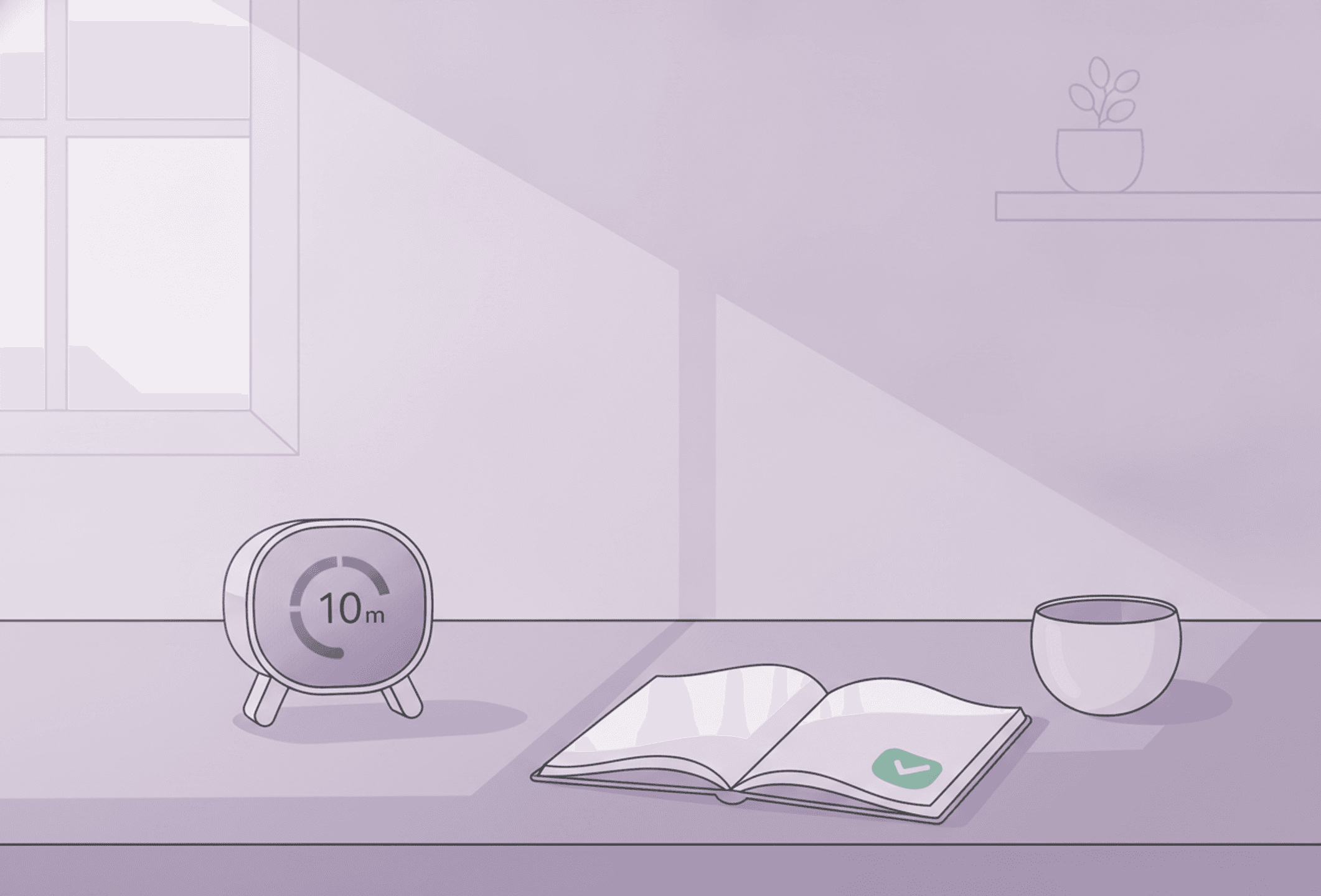
- A five-minute pick-up before bed. Not cleaning, just returning things to where they live. Set a timer and stop when it goes off, even if the room isn't done.
That's under fifteen minutes a day and it prevents most of the mountain.
Rotate one small zone per day
Instead of one big cleaning day, give each day one small zone. Monday the bathroom sink and mirror. Tuesday the kitchen floor. Wednesday the bedroom surfaces. Ten to fifteen minutes, timed, and then you're finished regardless of how it looks.
The rotation matters more than the schedule. Every zone gets touched roughly weekly, no single session is dreadful, and you never face the whole house at once. When you skip a day, you don't restart, you just do today's zone tomorrow.
Keep supplies where the mess is
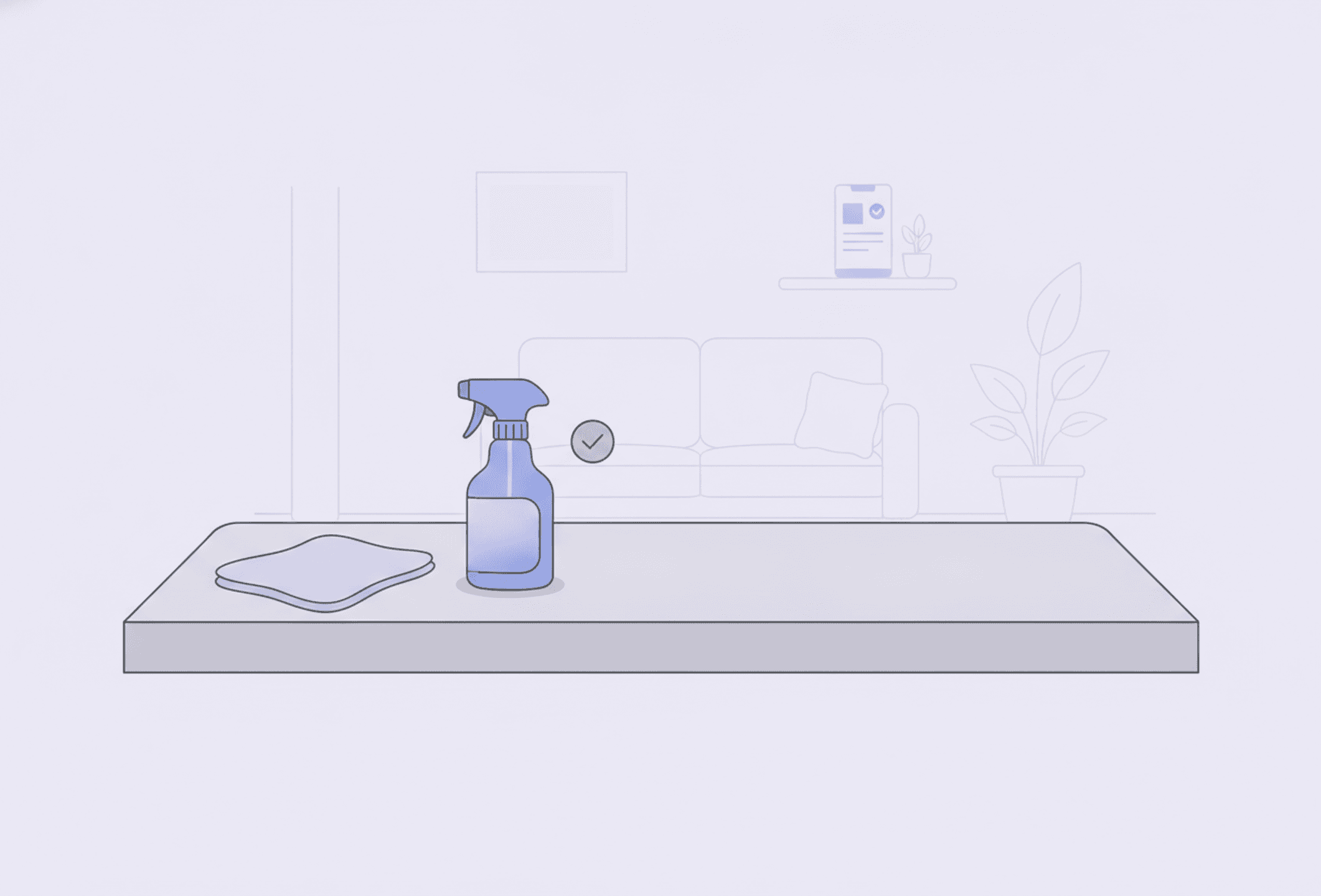
Distance kills cleaning routines. If the spray and cloth live under the kitchen sink, the bathroom doesn't get wiped.
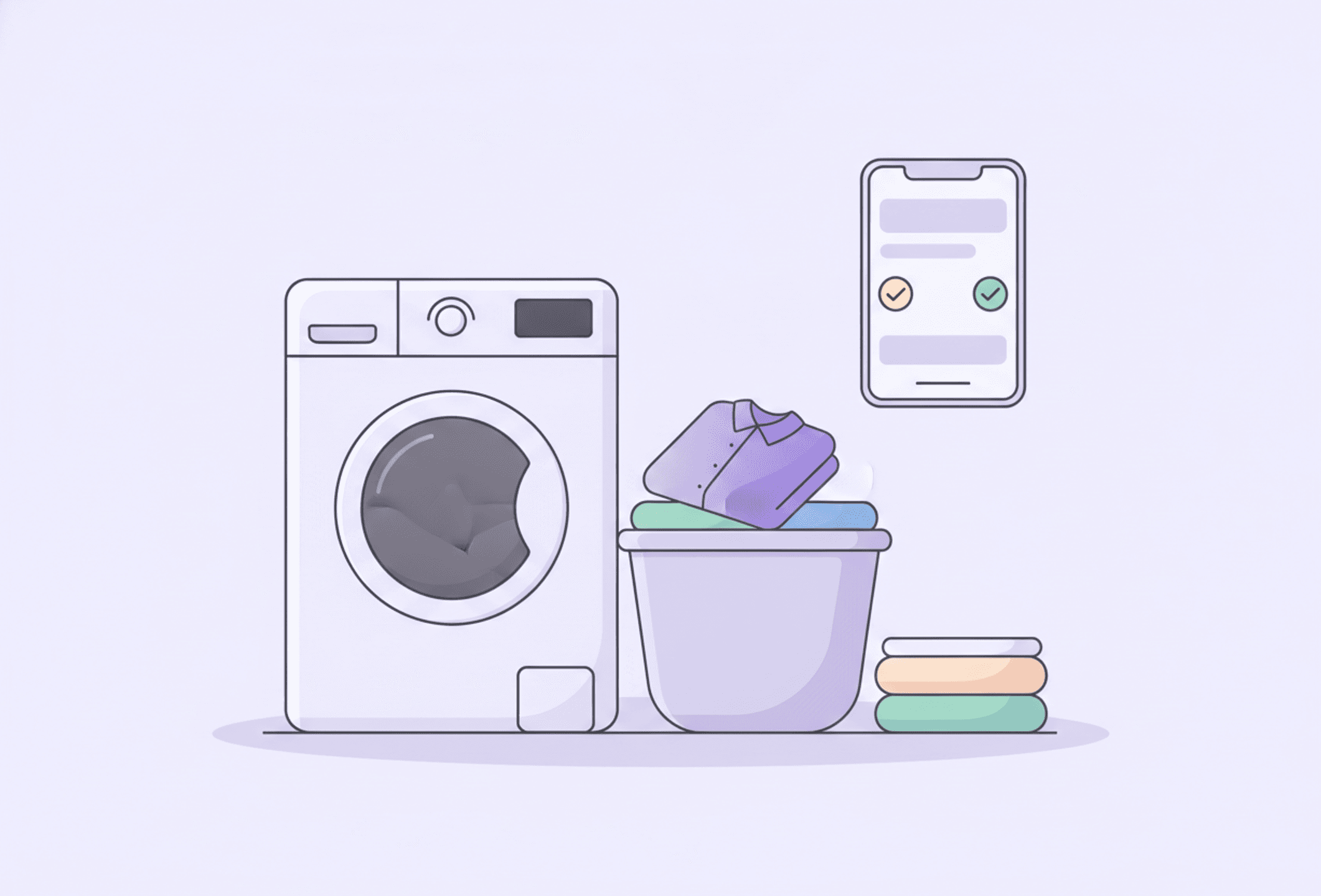
Buy a second set. Keep wipes or a cloth and spray in each room where cleaning happens, a bin in every room including the bedroom, and a laundry basket wherever clothes actually come off. Every metre you remove from the task is a metre you don't have to overcome on a bad day.
Make it easier to be tidy in the first place
A lot of what looks like a cleaning problem is a storage problem.
- Give the most-dropped items an obvious home: keys, post, chargers, bag. If the home is a bowl by the door, that's fine.
- Reduce surfaces. Flat empty space collects, and a decorative tray on the table is a magnet for everything you own.
- Keep the homes visible and open. Things put away behind closed doors get forgotten, the standard out of sight, out of mind problem, so open shelves and baskets beat neat cupboards.
Add stimulation, because it's boring
Cleaning is under-stimulating, which is a big part of why it's so hard to start. So don't do it in silence. Put on a podcast or a loud album you only listen to while cleaning, which is temptation bundling and works especially well for hands-busy chores. Set a visible timer and race it. Do it with someone else on a video call.
Boring tasks get easier when they come with something your brain actually wants.
The version for bad days
Some days you have nothing. The routine still needs a floor, so make the minimum tiny and non-negotiable: rubbish in the bin, dishes in the sink, one surface cleared. Three minutes.
And when it has already got away from you, don't try to fix everything. Do a timed ten-minute reset to get back to a starting position, then pick up the daily habits tomorrow. Falling behind isn't a reason to redesign the routine. It's just a Tuesday.
Read more
Frequently asked questions
What is a good cleaning routine when you have ADHD?
A few tiny daily habits plus one small rotating zone, rather than a big weekly clean. Wipe one surface a day, do the dishes before you sit down, do a five-minute pick-up before bed, and give each day one ten-minute zone like the bathroom sink or the kitchen floor. The aim is keeping the home liveable, not spotless.
Why can't I make myself clean, even when the mess bothers me?
Because "clean the flat" has no clear first step, no end point and no reward until hours in, which makes it extremely hard to start. It's also under-stimulating, and all-or-nothing thinking means that if you can't do the whole job you do none of it. Shrinking the task and adding music or a timer changes that.
How long should each cleaning session be?
Ten to fifteen minutes, on a timer, and you stop when it goes off regardless of how the room looks. Short timed sessions are finishable, which means you'll do them again, and repeated short sessions keep a home in far better shape than an occasional four-hour marathon.
What do I do when the mess has already got out of hand?
Don't try to fix everything. Set a timer for ten minutes and do a reset: rubbish out, dishes in the sink, one surface cleared, things back to their rooms. The point is to get from chaos back to a starting position, and then restart the small daily habits tomorrow rather than planning a big clean.