

The Distraction Parking Lot: Capture, Don't Chase
You're focused, then your brain pings: did I reply to that email? Off you go. A distraction parking lot catches those thoughts so you can keep working and deal with them later.

You finally settle into a task, and two minutes later your brain helpfully reminds you that you need to book a dentist appointment, that you forgot to reply to a message, and that you're curious how tall the Eiffel Tower is. Each thought feels urgent right now, so you chase it, and twenty minutes later you surface from a rabbit hole with no idea how you got there. There's a simple, almost embarrassingly low-tech fix for this: the distraction parking lot.
What a distraction parking lot is
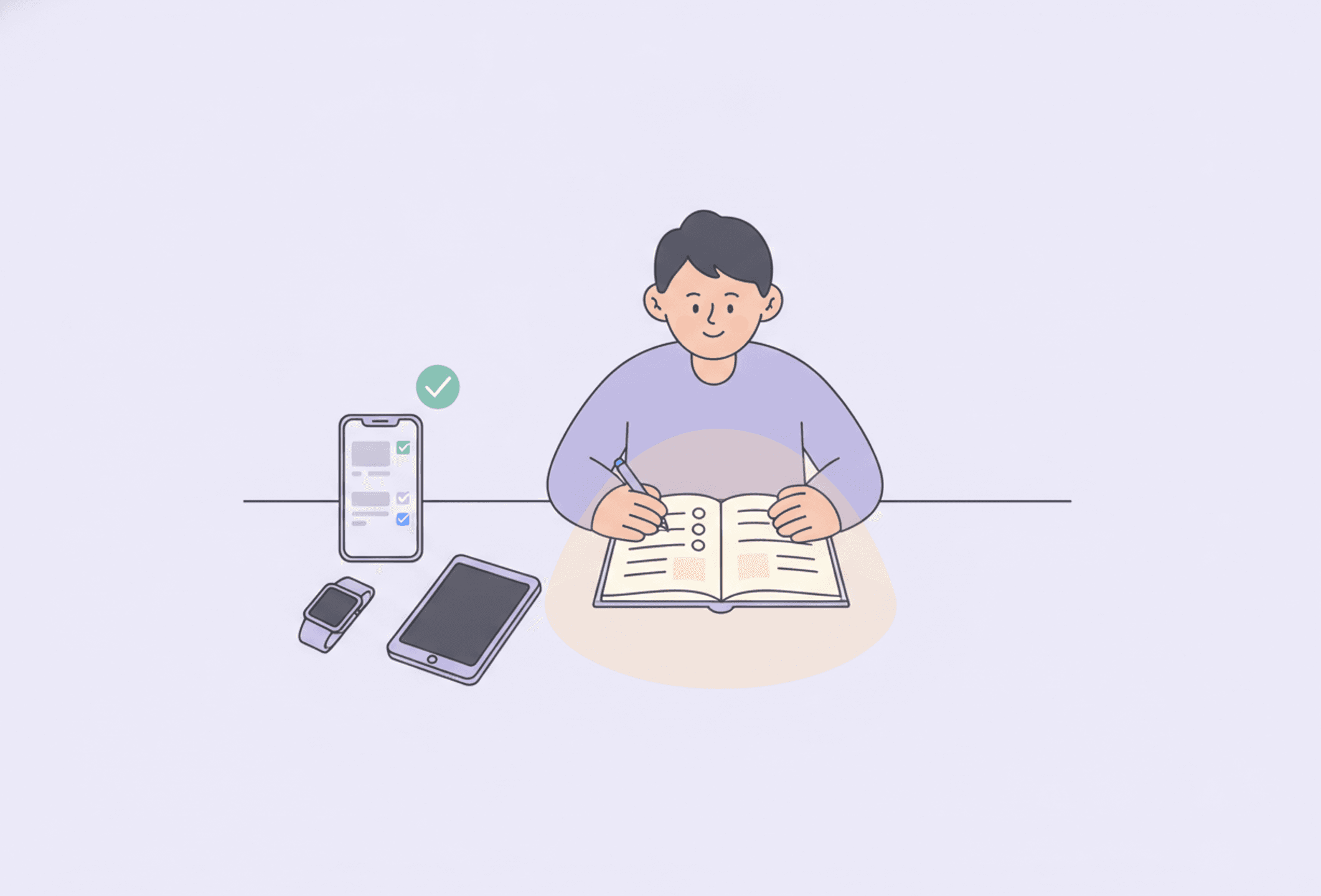
A distraction parking lot is just a sheet of paper or a note next to you while you work. When a distracting thought pops up, instead of acting on it, you write it down in one line and immediately go back to what you were doing. The thought is parked, you'll deal with it later, and your focus stays where you put it.
That's the whole technique. Its power is in a small reframe: you don't have to choose between forgetting the thought and chasing it. You capture it.
Why it works (especially for ADHD)
The reason interruptions are so costly isn't only the time you spend on them, it's that switching tasks leaves attention residue, a part of your mind stuck on the thing you just dropped, so it takes real effort to get back. For ADHD brains this is amplified twice over: intrusive thoughts arrive more often, and the fear of forgetting something makes them feel impossible to ignore. So you chase them, partly just so they'll stop nagging.
The parking lot solves the real problem. The reason a thought nags is that your brain doesn't trust you to remember it, so it keeps replaying it. The moment you write it down, your brain relaxes, it's safely captured, it can let go. You get the relief of dealing with it without actually breaking focus. It's the same logic as a full brain dump, shrunk down to one thought at a time.
How to use it
- Keep it physically next to you. A notebook, a sticky note, a single open note on your phone or computer. It has to be faster to jot the thought than to act on it.
- One line, no detail. Book dentist, reply to Sam, check Eiffel Tower height. You're not solving it, just capturing it. Don't let the parking lot become its own distraction.
- Go straight back. The instant you've written it, return to the task. The win is the immediate return, not the note itself.
- Process the list later. When your focus block ends, go through the lot: do the two-minute things, add real tasks to your actual list, and cross off the ones that turned out not to matter. Many won't.
What ends up in the lot
Once you start, you'll notice the parking lot catches a real mix:
- Real tasks you genuinely need to do (these move to your to-do list).
- Random curiosities ("what year did that film come out?") that felt urgent and absolutely weren't.
- Worries that, once on paper, lose a lot of their grip.
Seeing how much of it was noise is its own quiet lesson in what your distractions actually are.
Pair it with the basics
The parking lot handles distractions that come from inside your own head. It works best alongside removing the external ones, the tabs, the notifications, the second screen, so you're only fighting one front at a time. It's a core tool for single-tasking and for protecting a block of deep work.
The takeaway
When a distracting thought interrupts you, you don't have to choose between losing it and losing your focus. Write it in one line on a distraction parking lot, go straight back to work, and deal with it later. Capture, don't chase, and most of what felt urgent turns out to be noise you can clear in two minutes at the end.
Read more
Frequently asked questions
What is a distraction parking lot?
It's a simple list, a sheet of paper or a note, you keep beside you while working. When a distracting thought pops up, you write it down in one line instead of acting on it, then go straight back to your task. You deal with the parked thoughts later, so your focus stays where you put it.
Why does writing down distractions help?
A thought nags because your brain doesn't trust you to remember it, so it keeps replaying it. Writing it down reassures your brain that it's safely captured, so it can let go, and you get the relief of dealing with it without breaking focus. It also avoids the attention residue that task-switching leaves behind.
How is this different from a to-do list?
A to-do list is your planned work; a distraction parking lot is a temporary catch-all for thoughts that interrupt you mid-task. When your focus block ends, you process the lot: real tasks move to your to-do list, two-minute things get done, and the noise gets crossed off.
Does a distraction list help with ADHD?
Yes. ADHD brains get intrusive thoughts more often and feel a stronger fear of forgetting, which makes distractions hard to ignore. Capturing each thought in one line satisfies the need to not-forget without chasing it, so you can stay on task.