How to Work When You Can't Stop Thinking About Something Else
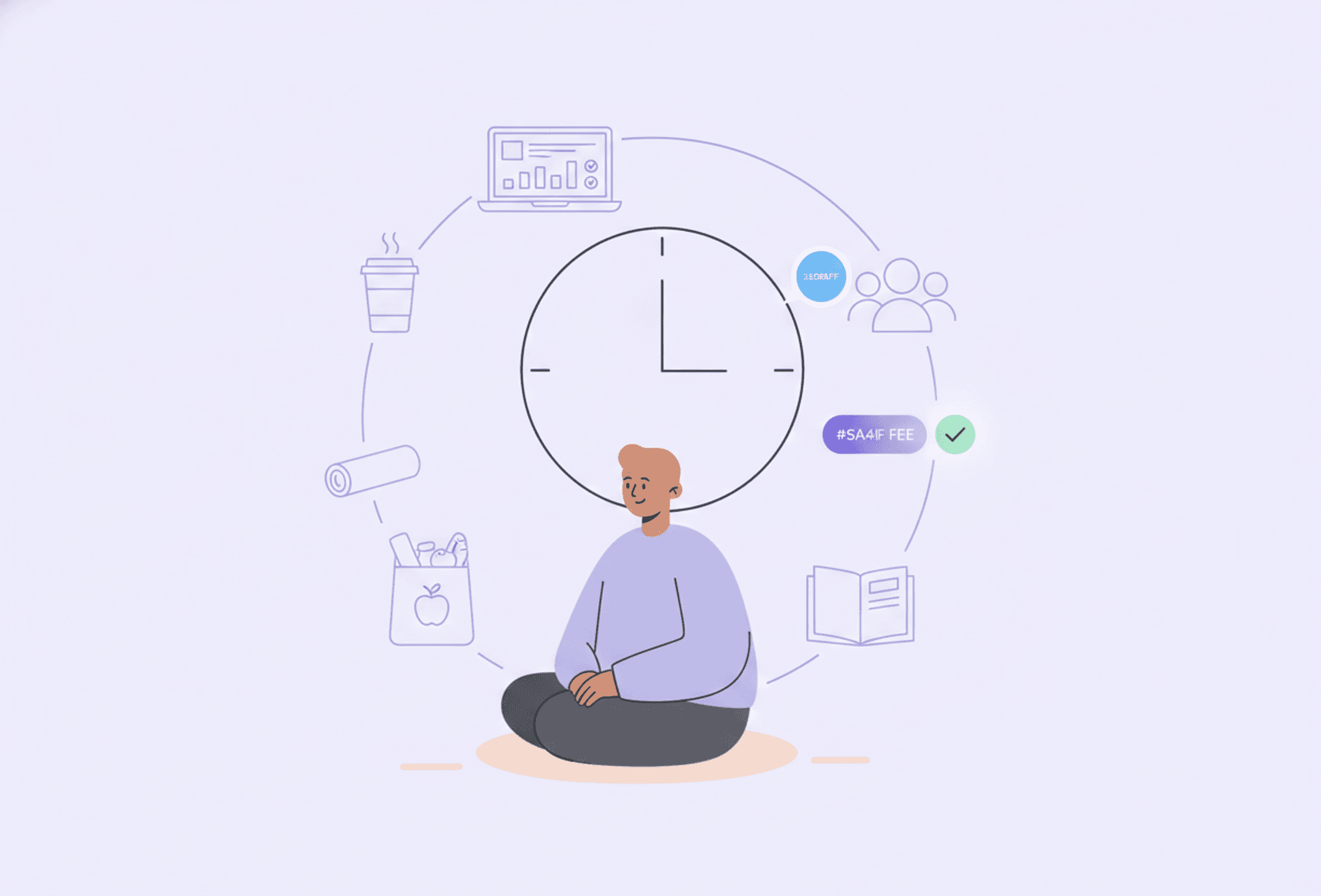
You have read the same three lines eight times. The document is not the problem - the thing you are waiting to hear is.
You have read the same three lines eight times.
The document is fine. The work is not difficult. But somewhere underneath it is the message you are waiting for, the result, the conversation you have to have on Thursday, the thing you said on Tuesday that you are still turning over - and every forty seconds it comes back and takes the room.
Trying to focus when worried is not a willpower problem, because worry does not compete with work for your time. It competes for working memory - the same small, already-scarce space the task needs. So "just concentrate" asks you to run two things in one slot. What works is giving the worry a container it can be held in outside your head, and then changing the work to fit the capacity you actually have left.
Why it takes the whole room
Unresolved things stay active. An open loop with no decision attached keeps re-raising itself, because as far as your mind is concerned it has not been dealt with, and re-raising is what it does instead of forgetting.
With ADHD that lands on the exact bottleneck. Working memory is already the scarce resource, so an occupied portion of it is not a small tax - it is most of what you were going to use for the task.
Emotion raises the priority of the loop, so the more it matters, the more often it interrupts. And if the thing is scheduled - a call at three, a result on Friday - the whole stretch before it can disappear into waiting mode, where nothing gets started because something is coming.
Get it out of your head, in full
Five minutes, on paper, not in your head and not as a neat to-do line. Write the actual worry: what you are afraid of, what you think will happen, what you would do if it did.
This is not journalling for its own sake. It is emptying the loop into something that can hold it, and the reason it works is mechanical - a written worry does not need to be kept active to survive, so the re-raising slows down.
Most people find the written version is smaller than the held version. That is not a trick; it is what happens when a vague loop is forced to become specific sentences.
Attach a decision, even if the decision is "wait"
A loop with no decision on it will keep coming back. So give it one, in writing:
- The next physical action, if there is one. "Send the email at nine tomorrow." "Ring them Thursday morning."
- Or the honest version: "Nothing I can do until Friday."
That second one closes the loop far better than people expect, because the thought's actual question is are we handling this? and "yes, on Friday" is an answer. Put it on a waiting-for list with a date, so you are not the one holding it - the list is.
Give it a slot, so refusing it is not suppression
If the worry keeps returning anyway, book it: twenty minutes at five o'clock, same place, with the paper.
Then when it arrives at eleven in the morning you are not pushing it away - you are deferring it to a real appointment, which your mind accepts far more readily than being told to stop. It is the same reason a distraction list works during focused work: "later, and here is where later lives" is a much stronger move than "not now".
Then change the work, not just the effort
This is the part people skip. If a third of your working memory is spoken for, choose work that needs less of it - the same logic as a day after bad sleep.
Move the deep, ambiguous, blank-page work to another day if you possibly can, and use today for the mechanical: the list, the tidying, the formatting, the calls, the fifteen small things that need hands rather than reasoning. Shorten your blocks, and write the next three steps down so the task itself does not depend on the memory you are currently renting out.
Walk before you argue with it
Ten minutes of walking does more to lower the volume of a loop than any amount of reasoning with it, and it is available immediately.
Reasoning with a worry tends to keep it in play - you are still holding it, just more analytically. Movement, a change of room, cold water, anything physical, changes the state rather than the content, and the state is usually what is driving the frequency.
Don't let the phone become the check
If the worry is attached to something arriving - a reply, a result, a decision - the trap is refreshing every four minutes.
Each check restarts the loop, and each also drops you into everything else the phone offers, so an hour goes and neither the work nor the waiting has moved. Set a fixed check time - on the hour, or after this block - and put the phone somewhere that requires standing up.
Say one sentence to one person
Worry that has been said out loud once runs quieter than worry that has only been held.
It does not require a conversation or advice. "I'm waiting to hear about X today and I am not much use" is enough, and it also lowers the cost of the day, because the people around you stop reading your distraction as something they did.
When the feeling is louder than the event
Sometimes the size of the reaction is out of proportion to the thing, particularly if the worry is about what someone thinks of you. That is worth naming rather than arguing with: emotional intensity is part of the ADHD picture for many people, and if the trigger was a perceived rejection or criticism, it has a name and a shape that make it much easier to sit with.
Knowing "this is the feeling being loud, not the situation being enormous" does not remove it, but it does stop you making decisions inside it.
When it is more than one bad week
There is a line worth drawing. Occasional worry that hijacks a day is normal and this article is for that.
Worry most days, that you cannot put down, that is affecting your sleep, your appetite or your ability to work, is a different thing. Anxiety is very common alongside ADHD and it is treatable, and the useful next step there is a doctor rather than a better focus technique - trying to plan your way out of it is the slowest available route.
The short version
Worry competes for working memory, not for time, which is why concentrating harder does not work. Write it out in full for five minutes, attach a decision - even if the decision is "nothing until Friday" - and put it on a dated list so you are not the one holding it. Book a worry slot so refusing it is deferral rather than suppression. Then pick mechanical work over deep work, shorten your blocks, walk for ten minutes, set one fixed time to check your phone, and tell one person one sentence. If it is most days rather than this week, treat it as a health question.
Keep reading
Frequently asked questions
Why can I not concentrate when I am worried about something?
Because worry does not compete with work for time - it competes for working memory, which is the same small and already-scarce space the task needs. An unresolved thing with no decision attached keeps re-raising itself, and emotion increases how often it interrupts. So concentrating harder is asking two things to run in one slot; the fix is to move the worry out of your head and then choose work that needs less of what is left.
How do I stop a worry interrupting my work?
Write it out in full for five minutes - the actual fear, not a tidy to-do line - and then attach a decision, even if the decision is "nothing I can do until Friday". A loop keeps returning because its real question is whether this is being handled, and a dated answer on a waiting-for list settles that. If it still returns, book a twenty-minute worry slot, so refusing it in the moment is deferral rather than suppression.
What kind of work should I do on a day like that?
Mechanical work rather than deep work. If a third of your working memory is spoken for, move the ambiguous blank-page task to another day and spend today on lists, tidying, formatting, calls and the fifteen small things that need hands rather than reasoning. Shorten your blocks and write the next three steps down, so the task does not depend on the memory you are currently renting out.
When should worry be taken to a doctor?
When it is most days rather than this week - when you cannot put it down, or it is affecting your sleep, your appetite or your ability to work. Anxiety is very common alongside ADHD and it is treatable, so that conversation belongs with a doctor. Trying to plan or focus your way out of persistent anxiety is the slowest available route, and it is not what planning tools are for.