The Not-To-Do List: Deciding What You'll Never Get To
There are ninety items on your list. You will never do about thirty of them, and you know exactly which ones.
There are ninety-odd items on your list. About thirty of them you are never going to do.
You know which ones. They have been there for a year. You read past them every single morning, and each pass costs you a flicker of guilt and a fraction of a decision you then do not make.
A to-do list is a set of open promises to yourself, and an undecided promise is not free - it charges rent every time you look at it. The fix is not better prioritising. It is finality: making "no" something you are allowed to write down, so the item stops asking. That is what a not-to-do list is for.
Why nothing ever leaves the list
Four things keep dead items alive.
Deleting feels like admitting a failure rather than making a decision, so the item stays as a kind of unpaid debt. Many items are attached to an identity - the guitar, the language, the business idea - and removing the task feels like removing the version of you that was going to do it. Some are kept "just in case", which is free to say and expensive to store. And most importantly, there is nowhere to put a no: the only two states your list offers are doing and not done yet, and guilt fills the gap where a decision should be.
The twenty-minute sort
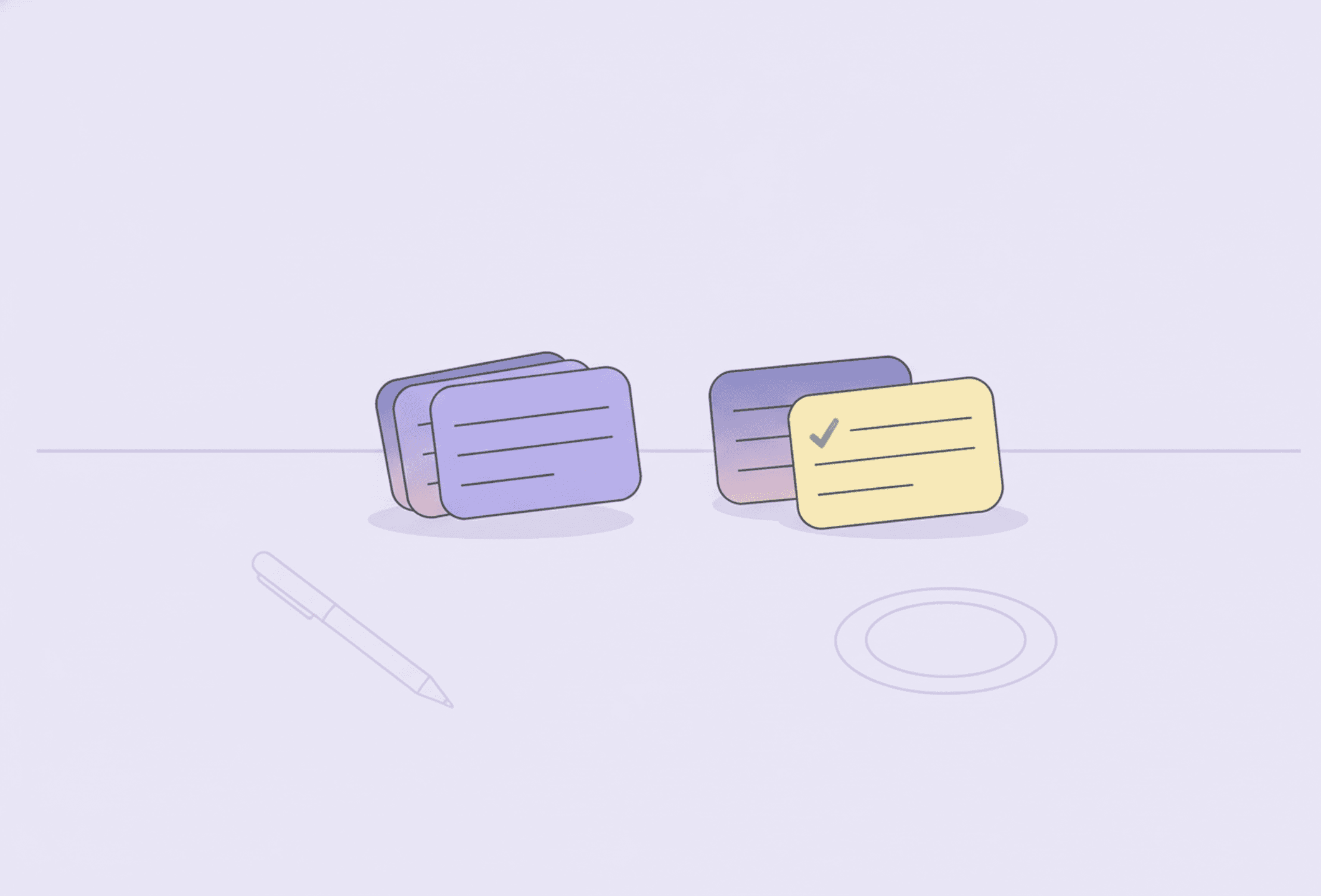
Sit down with the list once, and give every item exactly one of four fates. Not "later" - a fate.
Do it. It is small, it is real, it has a day. Put a date on it and move on.
It is not a task, it is a project. Anything that cannot start without a decision or three sub-steps has been failing because it was written wrong, not because you are lazy. That is a project to break into a first step, not a line item.
Someday. You genuinely might, but not now. It leaves the active list entirely - see below.
Not doing. You are deciding, today, that this will not happen. Write it down as a decision.
A useful hard rule while you sort: if an item has been carried forward more than five times, it is no longer a task. It is a decision you keep deferring, and deferring it is what costs you - so decide it now, in either direction.
Write the no down, don't just delete it
This is the part most people skip, and it is the part that works.
A deleted item comes back in three weeks as a fresh, undated guilty thought, and you re-litigate the whole thing from scratch. A recorded no answers the thought when it returns: not learning Italian this year - revisit in December. Then when the idea shows up at eleven at night, you are not deciding again. You are reading a decision you already made.
Keep them in one place, with a date and, if you can manage it, one line of reason. It takes about eight seconds per item and it is the cheapest mental relief available in the whole of planning.
What belongs on it besides tasks
The list gets much more useful when it also holds behaviours - the recurring things that eat your weeks:
- No work email after eight in the evening.
- Not saying yes to anything on a phone call; "let me check and come back to you" instead.
- No new projects before the current one ships.
- Not reorganising my system when I am actually avoiding a task - which is the honest version of system hopping.
- Not agreeing to two evening commitments in one week.
These are the ones that pay repeatedly, because each entry prevents a whole class of future decisions instead of one task. Half of the pressure that shows up as an over-full list is really saying yes too often, and this is where you get to say it in advance.
The someday list, kept honestly
Someday items go to a separate place with no dates on them, and you look at it once a month - a natural fit with a monthly reset or the end of a weekly review.
Two conditions make it work. It must be out of sight the rest of the time, or it is just your to-do list with a friendlier name. And it must actually be read, or it is a graveyard - which is genuinely fine, but then call it a graveyard and stop feeling watched by it. A capture place you never revisit is not a system, it is a brain dump that never got processed.
The identity items are the hard ones
The guitar is not really about the guitar.
It helps to separate three different things that all look the same on a list: I don't want this any more, I want it but not in this part of my life, and I want to be the kind of person who wants this. Only the third one should be let go, and it is reliably the one held hardest.
Nobody should run that sort with a productivity rule. Do it slowly and kindly, and let a real want stay on the someday list for years if it wants to - the cost of dead items is the daily guilt, and a someday item you have consciously parked is not charging you that.
Say the no out loud when someone else is waiting
Some of your undone items belong to other people: the thing you borrowed and will not fix, the favour you agreed to four months ago and have been silently not doing.
Those cost more than the others, because someone is quietly waiting for you and you are paying interest on the silence. One sentence closes it: "I'm not going to get to this - sorry for holding on to it, here it is back." That is a bad ten seconds and a genuinely lighter month, and it is almost always received better than the four more months of nothing.
How often
Run the sort monthly, and keep a lighter version in your weekly pass - anything moved forward five times gets decided rather than moved again.
The signal that you are overdue is not the number of items. It is the day you stop reading the list at all, because a list you have started avoiding is a list that has more debt on it than tasks, and rebuilding it from scratch is often faster than repairing it.
The short version
An undecided task charges rent every time you read it. Once a month, give every item one of four fates: do it, break it into a project, move it to someday, or decide not to do it. Write the nos down with a date instead of deleting them, so they answer the thought when it comes back at eleven at night. Put behaviours on the list too, keep someday out of sight and genuinely reviewed, handle the identity items gently, and tell the one person who has been quietly waiting.
Keep reading
Frequently asked questions
What is a not-to-do list?
It is a written record of the things you have decided you are not going to do, kept alongside your to-do list. It exists because deleting a task does not settle it - the idea comes back in three weeks as a fresh guilty thought. A recorded decision, with a date and a line of reason, answers that thought instead of re-opening it, and it also holds behaviours: no work email after eight, no new projects before the current one ships.
How do I clear a to-do list that has gone out of control?
Sit down once and give every item exactly one of four fates: do it with a date on it, break it into a project because it was never a single task, move it to a someday list that lives out of sight, or decide not to do it and write the no down. A hard rule helps: anything you have carried forward more than five times is not a task any more, it is a decision you keep deferring.
Should I keep a someday list?
Yes, on two conditions. It has to live somewhere other than your active list, or it is just your to-do list with a friendlier name and it will keep charging you guilt daily. And it has to actually be read - once a month, alongside a monthly reset or a weekly review. If you never revisit it, that is fine, but call it a graveyard rather than a plan, and stop feeling watched by it.
How do I let go of something I feel I should want to do?
Separate three things that look identical on a list: I no longer want this, I want it but not in this part of my life, and I want to be the kind of person who wants it. Only the last one needs to go, and it is usually the one held hardest. Do that sort slowly rather than with a productivity rule - a genuine want can sit on a someday list for years without costing you anything.