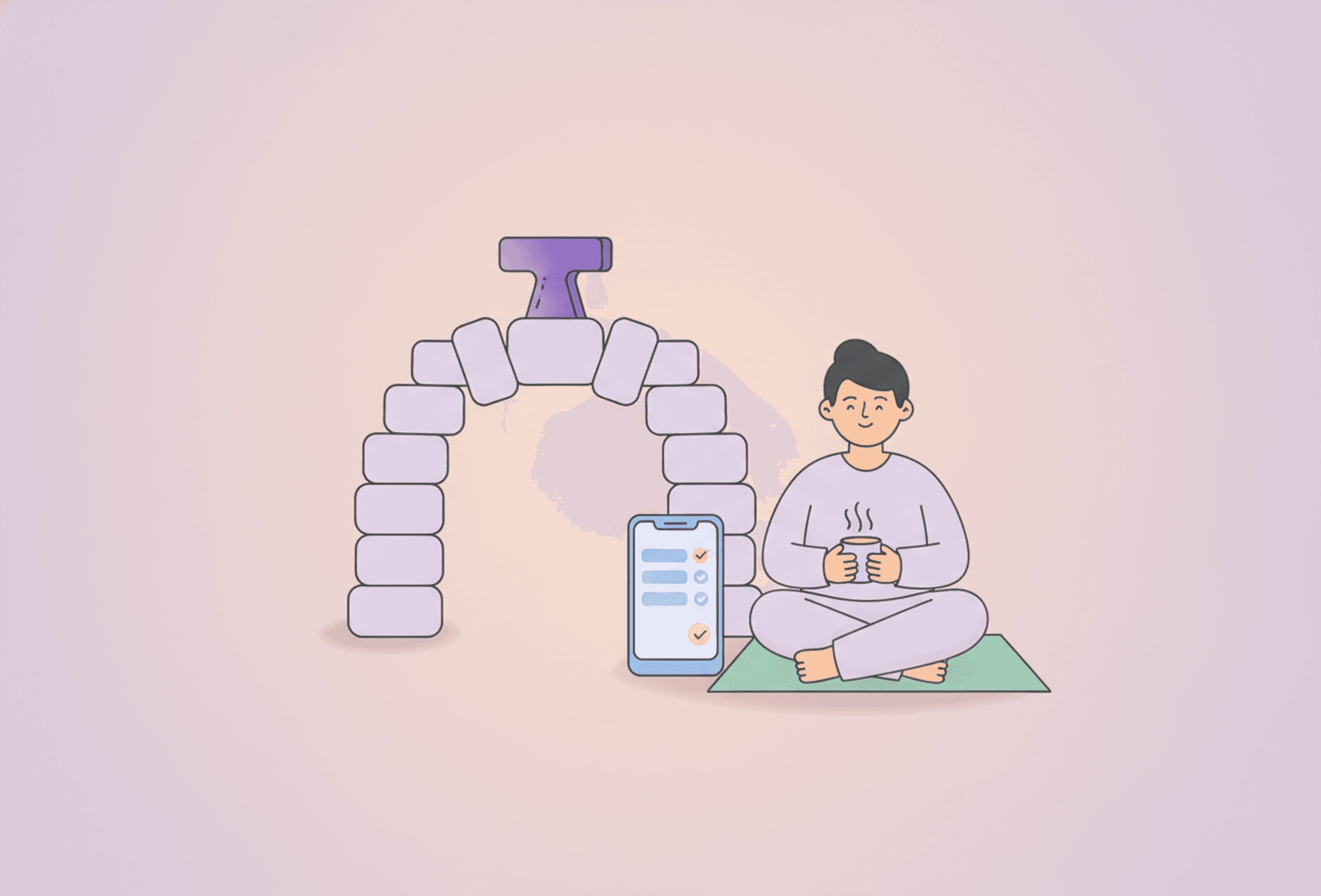


One Habit at a Time: Why the Total Overhaul Always Fails
On Sunday you decided to change seven things. By Thursday all seven were gone, and you concluded the problem was you.

On Sunday night the plan was complete. Gym three times a week. Meal prep. No phone in bed. Journalling. Up at seven. Cold showers. And a proper budget, finally.
By Wednesday two had gone. By Thursday the rest had. And by Friday the conclusion was not that was too many things but there is something wrong with me.
That was never seven habits. It was one enormous change, built on the assumption that how motivated you feel on Sunday night predicts what you can do on a bad Wednesday. It does not, and it never has.
Why running seven at once cannot work
A new habit is expensive while it is new. It costs remembering, deciding, and overriding whatever you used to do instead - and all three come out of the same limited daily budget.
One new habit spends a manageable slice of that budget. Seven spend it by ten in the morning, which is why the whole structure collapses on the first day that goes wrong. And a day goes wrong every week; that is not pessimism, it is just what weeks are like.
There is also a specific ADHD trap here. The planning is the enjoyable part - the notebook, the app, the fresh start, the imagined version of yourself who does all of this. That novelty is genuinely rewarding, which makes designing a seven-habit overhaul feel like progress in itself. Wednesday, when it is just admin, offers nothing comparable.
Pick one - the one that carries others
So choose a single habit. Not because you can only handle one thing, but because one is the number that survives contact with a normal week.
When choosing, prefer the one that drags others along with it. Sleeping at a consistent time makes the mornings, the food and the mood easier. Getting outside once a day does more than the number of steps implies. These are keystone habits, and starting with one of them means the other six get easier rather than being abandoned.
And make it absurdly small. Not "the gym", but "put the kit by the door". Not "journal", but "one sentence". Micro-habits are not a watered-down version of the real thing - the small version is what actually gets repeated, and repetition is the whole mechanism.
When can you add the next one?
Not after a fixed number of days. The number that gets quoted is a rough average, and habits vary enormously in how long they take to settle.
The real signal is this: you did it on a bad day without deciding to. When it survives a day where nothing else went well, it is no longer running on your attention budget, and there is room for something new.
If you are unsure, wait longer. Adding the second habit too early is the most common way to lose the first one.
What to do with the other six
Write them down. That is the entire trick, and it works because an unwritten intention keeps circling and demanding to be started now.
Keep a short "not yet" list with a date on it - a month out, say - and look at it then. Two things happen: the ideas stop nagging, and about half of them turn out not to matter by the time the date arrives, which is useful information about what you actually wanted.
The exception worth knowing
Sometimes several habits genuinely are one habit, because they happen in the same moment and in the same order.
Shoes by the door, coat on, out for ten minutes is not three habits - it is one sequence, triggered once. That is habit stacking, and a stack that lives at a single point in the day counts as one thing.
What does not work is calling seven separate habits at seven separate times of day "a routine" and treating that as one project. Different moments, different triggers, seven times the cost.
When you fall off, do not add anything
A missed week is not evidence that you need a stricter, bigger system. It usually means life got heavier - and the correct response is to shrink, not to redesign.
So when you start again, start with one habit, at its smallest version, and nothing else. The urge to relaunch everything at once is exactly the same urge that produced the seven-habit Sunday, and it will produce the same Thursday.
The honest arithmetic
One habit at a time feels unbearably slow. Four a year sounds like nothing at all when the list has thirty items on it.
But four habits a year that are still running is a transformed life in three years, and it beats twelve attempts a year of which none survive February. The slow version is not the modest option - it is the only one with a non-zero success rate.
The short version
Seven habits at once was not ambition, it was a budgeting error. New habits are expensive while new, and the cost all comes out of the same account.
So pick one, ideally one that makes others easier, shrink it until it is almost embarrassing, and add the next only when it happens on a bad day without a decision. Everything else goes on a written list with a date. That is how a habit actually sticks.
Read more
Frequently asked questions
Why does changing everything at once fail?
Because a new habit is expensive while it is new: it costs remembering, deciding and overriding the old behaviour, and all three come out of the same limited daily budget. One habit spends a manageable slice of that; seven spend it by mid-morning, so the whole structure collapses on the first day that goes wrong - and a day goes wrong most weeks.
Which habit should I start with?
The one that drags others along with it. Consistent sleep makes mornings, food and mood easier; getting outside once a day does more than the step count implies. Those are keystone habits, and starting with one means the rest get easier instead of being abandoned. Then shrink it until it is almost embarrassing - the small version is what actually gets repeated.
How do I know when to add a second habit?
Not after a fixed number of days - the number usually quoted is a rough average and habits vary enormously. The real signal is that you did it on a bad day without deciding to. When it survives a day where nothing else went well, it is no longer running on your attention budget. If you are unsure, wait longer: adding the second one too early is the most common way to lose the first.
What do I do with all the other things I want to change?
Write them on a short not-yet list with a date a month out, and look at it then. Writing them down stops them circling and demanding to be started now, and by the time the date arrives about half of them turn out not to matter - which is useful information about what you actually wanted.