

Eat the Frog: Do the Hardest Task First
The eat the frog method means tackling your most important, most dreaded task first — before the day eats your energy. Here's the origin, why it works, and how to actually apply it without pressure.
The eat the frog method comes down to one thing: do the most important, most dreaded task of your day first. Once the "frog" is eaten, the rest of the day feels lighter, and you stop carrying the dread around for hours. Below you'll find the origin, why it works, and how to do it in practice.
What does "eat the frog" mean?
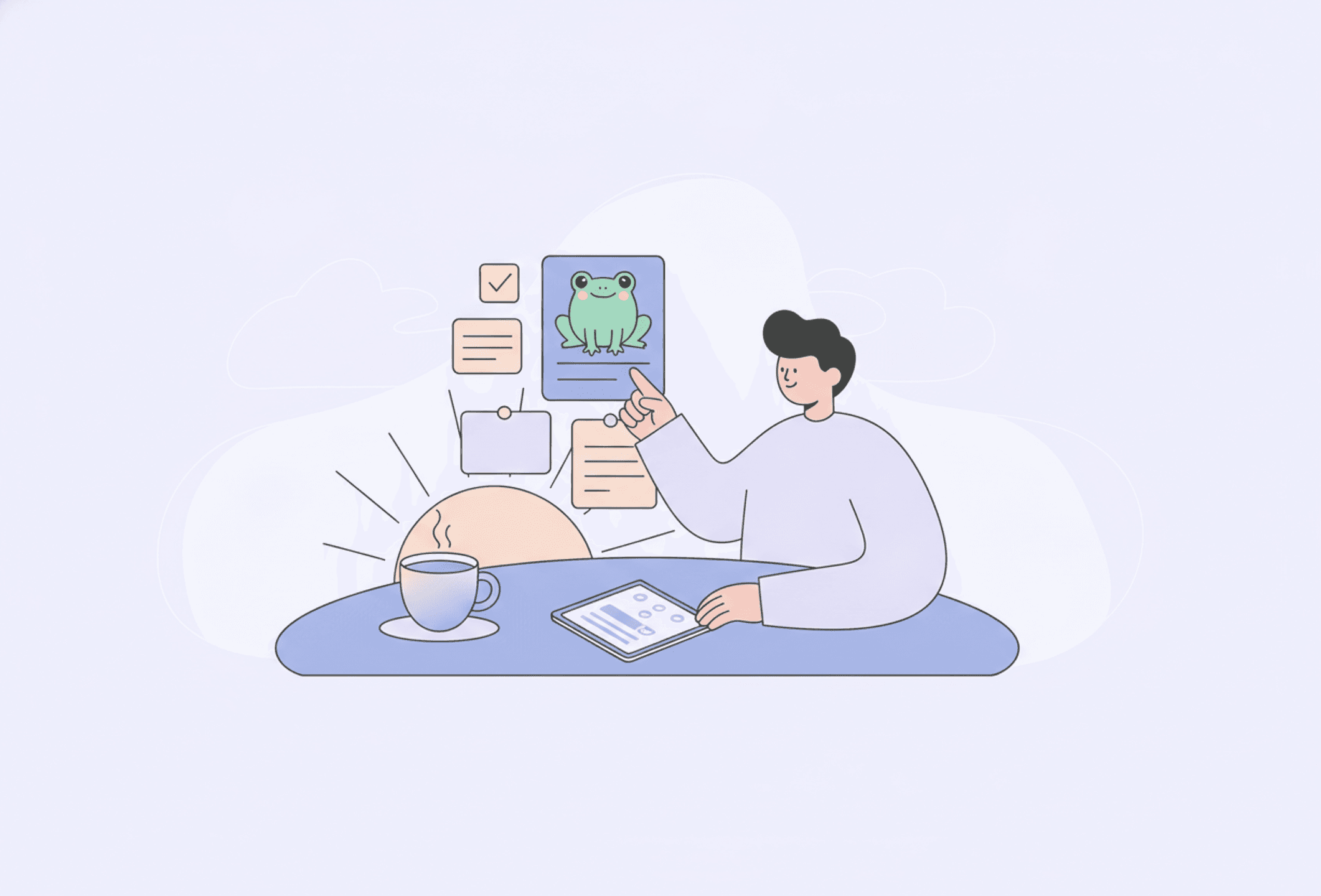
The phrase builds on a Mark Twain-inspired idea popularized by productivity author Brian Tracy: if the first thing you do each morning is eat a live frog, you can go through the rest of the day knowing the worst is already behind you.
The frog is, of course, a metaphor. It stands for the task you'd most like to put off — the one that's important but unpleasant, big, or boring. It's that call you're dreading, the taxes, the difficult email, or the report that's been hanging over you all week. Often it isn't the biggest task on your list, but the one that stirs up the most resistance.
So the heart of the eat the frog method isn't working more or faster. It's about order: deliberately putting your most resisted task first, before the rest of the day fills your time and drains your energy. Everything else can jostle for space later — but the frog comes first, while you still have the strength to face it.
Why doing the hardest task first works
It sounds almost too simple, but the order of your day matters a lot. Here are three reasons the eat the frog method tends to work.
Your energy is highest in the morning
For many people, the ability to focus and make decisions is sharpest early in the day, before meetings, messages, and small choices have worn it down. Putting the demanding task there means you meet it when you have the most to give — instead of in the afternoon when you're already running on empty.
You stop carrying the dread all day
An uneaten frog stays lodged in the back of your mind. You think about it in the shower, between meetings, over lunch — and each time it gives a small sting of stress. By doing it first, you cut off that background worry early, and the rest of the day feels lighter simply because the worst is done.
You build momentum right away
Getting something hard done first thing creates a sense of progress that colors the whole day. You've already won a victory before ten o'clock, and that feeling carries — the next task feels smaller, and you meet it with a tailwind instead of guilt. Put the frog off instead and the effect reverses: every hour it lingers, it quietly chips away at your confidence.
How to apply the eat the frog method
The method is simple, but a few concrete habits make it far easier to actually follow. You don't have to adopt them all at once — pick one and start there.
Pick the frog the night before
The morning is a poor time to work out what matters most. If the decision is already made, you skip both the dithering and the temptation to pick an easier task instead. So decide the night before: which single task would make the biggest difference tomorrow if it got done?
A simple question to ask yourself: which task am I most likely to put off — and most likely to regret putting off? That's usually your frog.
Break the frog into a tiny first step
A frog is intimidating precisely because it feels big and vague. "Write the report" isn't something you just start. So shrink it until the first step is almost laughably small: "open the doc and type three headings." Once the first action is concrete and small, most of the resistance melts away.
- Ask: what's the very first physical action?
- Keep splitting until no step feels like a wall.
- Aim for a first step that takes under two minutes to begin.
Protect the first focus block of the day
The frog deserves your best, undistracted time — not the leftovers. Give it its own block early, before you open your inbox or social media. Silence notifications, put your phone out of reach, and work only on that one task until the block ends.
A focus timer helps you hold the line. A short, bounded sprint — 25 minutes of focus and a 5-minute break is the classic — makes the frog manageable: you don't have to face "the whole morning," just the stretch until the next break.
If you have two frogs, eat the ugliest first
Sometimes two important, dreaded tasks sit in front of you. The rule then: eat the ugliest frog first. Take the one you dread most, the one you'd most like to escape. Once the worst is gone, the other feels almost like relief, and you've already proven to yourself that you can handle the hard thing.
So don't pick the easier of the two to "ease in gently." It's the heavy one that gains the most from being done while your energy is at its peak.
When not to eat the frog first
The eat the frog method is a tool, not a law. There are days and tasks where it fits less well, and on those it's perfectly fine to set it aside.
- When something is genuinely more urgent. If a fire is burning elsewhere, the frog can wait — the important comes before the merely unpleasant.
- When you need a gentle start just to get going. Some days your energy is too low to begin with the heaviest thing. A small, easy task first can be what sets you in motion, and the frog can come as block number two.
- When the "frog" is really a whole project. If the task is so big it won't fit in one focus block, the next step is to break it down, not to swallow it all in one morning.
If it feels wrong on a given day, skip it without guilt. A method should serve you, not the other way around.
Build it into a calm routine
The nice thing about the eat the frog method is that it fits neatly with a calm evening and morning routine. During your evening wind-down, you choose tomorrow's frog as you plan the day, so the decision is already made when you wake up. Then, in the morning, there's no negotiating with yourself — you simply follow the routine straight into the day's first focus block.
An app like Stedo is built for exactly that flow: an evening routine where you plan tomorrow, a morning routine that leads you into the block, a Focus timer with Pomodoro presets to protect the time, and the option to break the frog into small sub-steps so the first action is concrete rather than vague. Learn more at www.stedo.app.
In short
Eating the frog isn't about doing more — it's about order: put your most important, most dreaded task first, while your energy is highest and the day isn't yet full. Pick the frog the night before, shrink it to a small first step, and protect the day's first focus block. If you have two frogs, eat the ugliest first. And on the days it doesn't fit — be kind to yourself and let the frog wait.
Frequently asked questions
What does the eat the frog method mean?
It means doing the most important, most dreaded task of your day first, before anything else. The "frog" is a metaphor for the task you'd most like to put off. Once it's done, the rest of the day feels lighter because the worst is already behind you.
Why should you do the hardest task first?
For many people, energy and focus are highest early in the day, so the demanding task gets your best time. You also avoid carrying the dread around for hours, and getting something hard done in the morning builds momentum that colors the rest of the day.
What do I do if I have two hard tasks?
Eat the ugliest frog first — take the one you dread most. Once the worst is gone, the other feels almost like relief, and you've already proven to yourself that you can handle the hard thing. Don't pick the easier one just to ease in gently.
When is the eat the frog method not a good fit?
When something else is genuinely more urgent, when you need a gentle start just to get going, or when the "frog" is really a whole project that needs breaking down first. The method is a tool, not a rule — skip it without guilt on days it doesn't fit.