

ADHD Overstimulation: How to Calm Sensory Overload
When the world turns into noise on noise and even your shirt is too much, snapping or shutting down isn't a flaw — it's a full buffer. How to catch overload early, calm it fast and make it rarer.
The dishwasher is running, two people are talking at once, your phone keeps lighting up, and the tag in your shirt has been sawing at your neck since lunch. Then someone asks one small, reasonable question — and you snap at a person you love, or go completely silent.
Overstimulation — sensory overload — is what happens when more input reaches your brain than it can filter and process. With ADHD that point arrives sooner, and ADHD overstimulation has a concrete mechanism behind it: the brain's filter is leaky, so background noise never quite becomes background.
This is general information, not medical advice. Sensory issues that regularly overwhelm you are worth discussing with a professional.
Why ADHD overstimulation happens
Most brains triage input constantly. The fridge hum, the itchy label and the distant traffic get dimmed before they reach attention, so the conversation in front of you plays against a quiet background.
An ADHD brain filters less automatically. The hum, the label, the traffic and the conversation all arrive at roughly the same volume, and sorting them takes deliberate effort. That's why an ordinary open-plan office or a family kitchen costs you extra processing all day — even on days when nothing goes wrong.
Sensory sensitivities are also simply common with ADHD: certain sounds, textures and lights genuinely register as more intense. This is shared territory with autistic people, for whom sensory overload is often even more central, and many AuDHD adults will recognise every word of this. It isn't fussiness in either case. It's how the input actually feels.
Learn your early warning signs
By the time you're shouting or hiding in the bathroom, the overload has been building for a while. Catching it early is most of the skill: early, you need five minutes of quiet; late, you need the rest of the evening.
The signs are personal, but these are common:
- Irritability rising with no visible cause — everyone suddenly seems louder and more annoying.
- Touch turning unbearable — the waistband, the sock seam, a well-meant hand on your shoulder.
- Hearing that narrows — someone asks you something and you realise you caught none of it.
- The urge to flee — a growing, physical need to be anywhere else.
A short daily mood note — on paper or in an app like Stedo — makes your pattern visible within a week or two: which places, which days, which combinations.
First aid: reduce the input, fast
Mid-overload, the goal is not to cope better with the input. The goal is less input, immediately and without apology.
- Leave the room. A bathroom, a balcony or a parked car counts. “I'll be back in ten minutes” is a complete sentence.
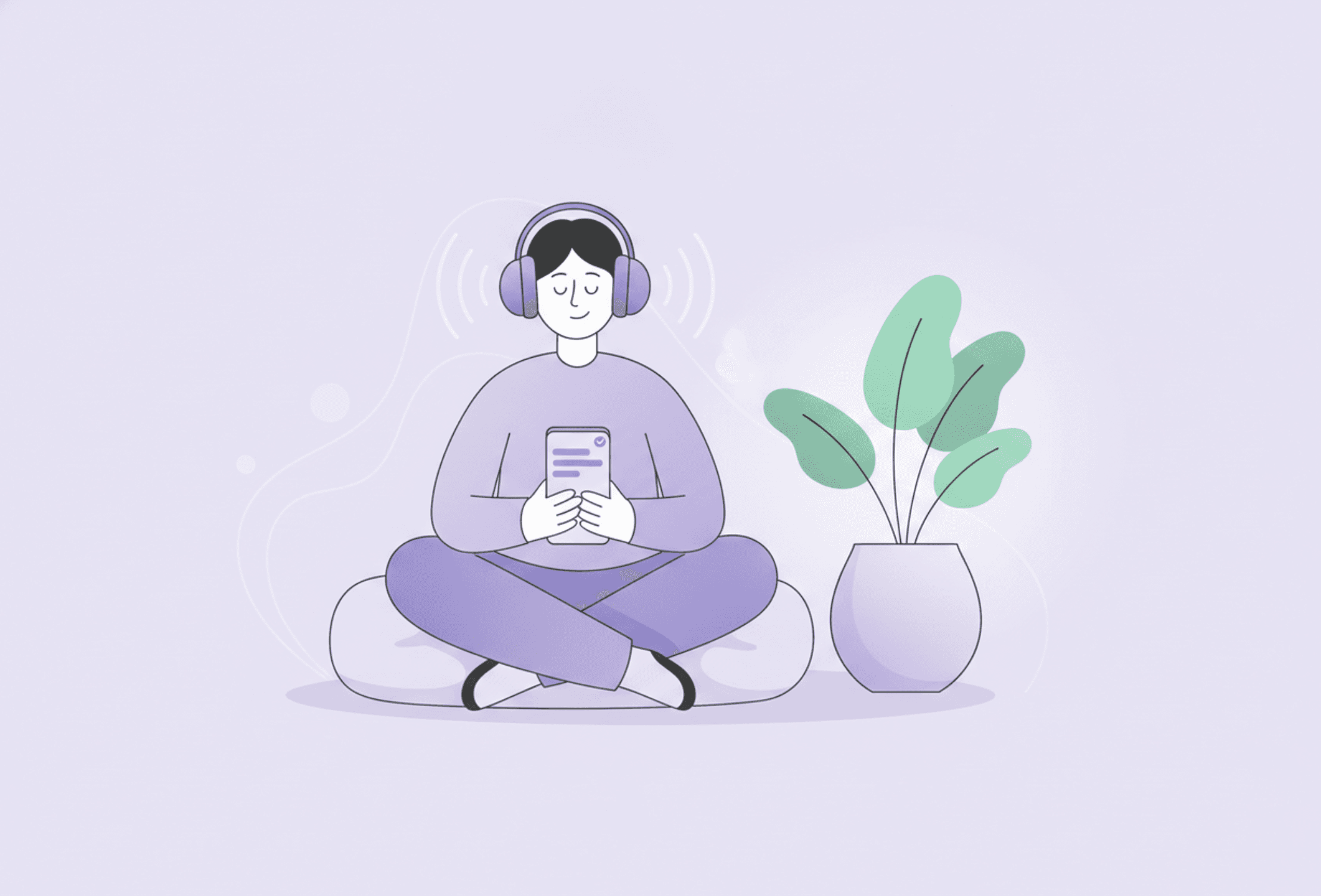
- Cut the sound. Headphones on or earplugs in, even if it looks odd. Odd is cheaper than the alternative.
- Dim the light, silence the phone. Two taps remove two entire input streams.
Then help the body settle: exhale slowly, longer out than in. Run cold water over your wrists. Press your feet into the floor. Or move — a short walk gives the agitation somewhere to go.
One more rule: no decisions and no important conversations mid-overload. Nothing said in that state represents you well. A ready-made script helps: “I need ten minutes, then I can talk properly.” People take that far better than being snapped at.
Recovery takes longer than you want
Once the flood has passed, your nervous system doesn't reset in five minutes. After a serious overload, feeling normal again can take an hour or more — and diving straight into the next loud thing invites round two.
So plan quiet after loud, deliberately. After the birthday party, the conference day or the open-plan sprint, the calendar should contain something silent and undemanding. Not as a reward — as part of the event's actual cost.
Make your world quieter by default
First aid handles the acute moment; prevention lowers how often you get there. A one-off sensory audit of the places where you spend your days is worth an afternoon. Walk through them and ask what you can quiet permanently:
- Notifications. The cheapest win of all — most of them you never chose. Turning them off at the source removes dozens of small spikes per day.
- Background noise. The TV nobody watches, the radio on out of habit. Off is a valid default.
- Light and clothes. Swap the harsh ceiling light for a lamp. The scratchy sweater you always regret can simply leave the wardrobe.
Then look at the calendar. Stimulating events stacked back-to-back all but guarantee overload, so put buffer time between them instead. Protect a daily pocket of real quiet — even twenty minutes — before you're desperate for it. And lower your exposure on days when you're tired, hungry or already stretched: the less charge you have, the sooner the flood arrives, which makes this as much energy management as sound management.
Overstimulation or burnout?
They can feel related, but they run on different clocks. Overstimulation is acute: too much input right now, recovery measured in hours. ADHD burnout is chronic: weeks or months of running past your capacity, and it doesn't lift after one quiet evening.
They do feed each other, though. A life of daily unrecovered overload is exactly the kind that burns you out, so taking the acute floods seriously is long-term maintenance too.
Read more
Frequently asked questions
What does ADHD overstimulation feel like?
Common signs are irritability rising out of proportion, sounds and touch turning genuinely unbearable, trouble following what people say, a crawling restlessness and a strong urge to leave. Left uninterrupted, it often ends in snapping at someone or shutting down completely. The pattern is personal, and learning your own is the most useful skill.
What helps fastest in the moment?
Reduce the input before anything else: leave the room, put in earplugs or headphones, dim the light and silence your phone. Then settle the body with a slow, extended exhale, cold water on your wrists or a short walk. Save decisions and important conversations for when you're back.
Is overstimulation the same as ADHD burnout?
No. Overstimulation is acute — too much input right now, with recovery measured in hours. Burnout is chronic — weeks or months of running past your capacity, and a quiet evening doesn't fix it. They are linked: frequent overload without recovery is one of the roads into burnout.
Does getting overstimulated easily mean I'm autistic?
Not by itself. Sensory sensitivities are common with ADHD, and they're also a central part of many autistic people's experience — many AuDHD adults know both sides from the inside. If sensory overload regularly limits your life, discuss it with a professional rather than settling the question alone.