ADHD Masking: What It Costs and How to Put Some of It Down
You get to the car after the meeting and something in you drops. Nothing went wrong. You performed for fifty minutes.
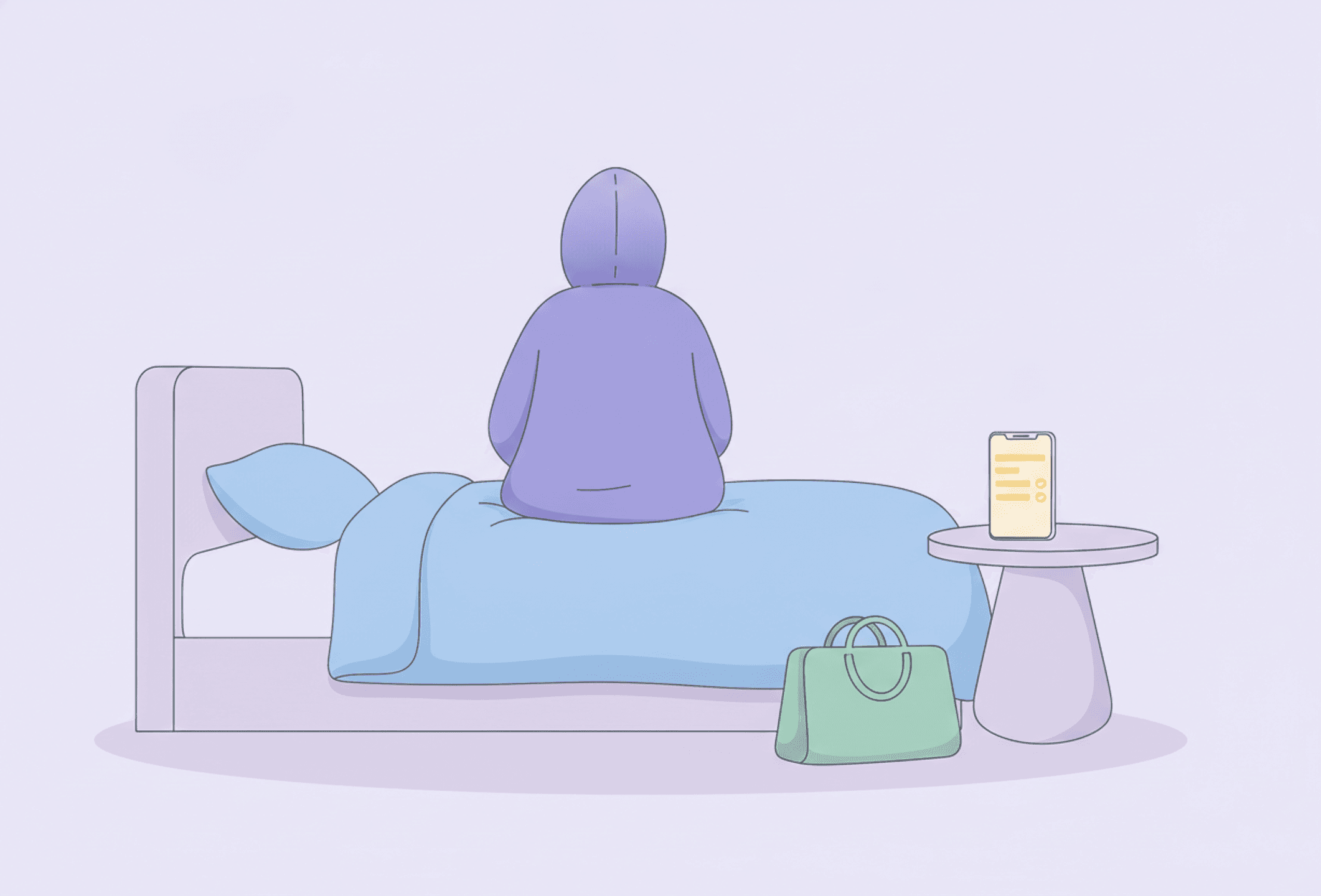
You get to the car after the meeting and something in you drops out.
Nothing went wrong. Nobody was unkind. You were, by every visible measure, fine - and you are more tired than the fifty minutes can account for, because you were not only in the meeting. You were also running the performance of being someone comfortably in the meeting.
ADHD masking is the work of appearing to do things the way other people appear to do them: rehearsing sentences, hiding your systems, holding still, reconstructing afterwards what you did not retain. It is not dishonesty and it is not vanity. It is a skill you built because it worked. The problem is that it is billed by the hour, and the invoice arrives later, in a different currency - your evenings, your weekends, and the capacity you needed for your own life.
What masking actually looks like
It is rarely dramatic. It is a hundred small adjustments:
- Rehearsing a sentence two or three times before you say it, so it comes out in the right order.
- Nodding through instructions you have already lost, then rebuilding them afterwards from context.
- Hiding the scaffolding - the alarms, the lists, the timers - so nobody sees how much structure it takes.
- Sitting still when your body wants to move, at the cost of most of your attention.
- Writing a three-line email six times.
- Saying yes to something you do not have room for, to pre-pay for a failure you are expecting.
- Never letting anyone visit without two days' notice and a hard clean first.
Why you do it, and why "just stop" is bad advice
Masking is not a character flaw. It is an adaptation, and adaptations exist because they pay.
It buys credibility at work, it buys being liked, and in some rooms it buys not being punished for how your attention behaves. That is a real return, and the people who advise you to simply drop it are usually not the ones who would carry the cost of the drop.
So this is not an argument to stop. It is an argument to look at the price list, because most people who mask heavily have never actually seen it.
The price, in four parts
Cognitive. Masking runs on the same executive resources as the work in front of you. In every meeting you are doing two jobs, one of which nobody can see and nobody credits, which is why an ordinary hour can flatten a whole afternoon.
Delayed. The bill does not arrive during the performance. It arrives at six in the evening, on Saturday, or in a spring where everything is suddenly heavier than it was - and that road, walked long enough, ends in ADHD burnout.
Self-knowledge. After years of optimising for looking fine, it becomes genuinely hard to answer "what do you need?" You know how you are supposed to appear. What actually helps is a different question, and it has gone quiet.
Relational. People respond to what they see. If what they see is a person coping, the support you get will be calibrated for a person who does not need any - and then their surprise, when you finally say something, lands as further evidence that you should have kept performing. It is also one of the reasons a diagnosis arrives so late for so many, especially for women whose presentation was quiet all along.
Signs you are paying too much
You need hours of silence to recover from ordinary social contact. Dread ahead of small events is out of proportion to the events. You are competent at work and non-functional the moment you get home. And, the clearest one: there is nobody in your life who has seen you tired without you tidying yourself first.
Putting some of it down
The useful news is that this is not one switch. Masking is dozens of separate behaviours, and you can choose them one at a time and per room.
Sort them into three piles. What protects you in a specific context - keep it, without guilt. What is pure habit, kept up long after the room that required it - test it. What is costing you far more than it currently buys - that is where to start.
Start with tools, not disclosure. The cheapest, safest unmasking is letting your scaffolding be visible: the notebook open in the meeting, "hold on, I'm writing that down", the timer on the desk, the alarm that goes off in front of people. Nobody needs an explanation for a notebook, and you have just stopped paying for the concealment of the thing that makes you work.
Ask in work terms, not identity terms. "Can you send that in writing?", "Can I get the agenda beforehand?", "I'll confirm the decisions by email." These are ordinary professional requests, they remove most of the load meetings put on working memory, and none of them require you to explain yourself. Much of what people want from disclosure at work can be had this way - see working with ADHD.
Stop faking retention. "I've lost the thread - can you say the last bit again?" costs four seconds. Reconstructing the same information later costs a morning, and sometimes gets it wrong.
Stop pre-paying. Taking on extra work to compensate for a failure you have not made yet is the most expensive form of masking there is, and it reliably creates the failure it was insuring against. That habit has its own article: why you keep over-committing.
Let your body move. Walking for phone calls, standing at the back, something in your hands. A great deal of masking energy goes into stillness that helps nobody.
Then, if you want, one person. Not a public campaign - one relationship where the unedited version is allowed. Most of the relief people describe when they stop masking comes from a single person, not from a general policy.
Disclosure is a separate decision
Unmasking and telling people you have ADHD are not the same move, and it is worth keeping them apart.
What disclosure costs and buys varies enormously by country, employer, industry and the individual manager, so this is not something an article can decide for you - and if it involves your job, it is worth getting advice from someone who knows the rules where you live. What you can do meanwhile is take the practical part, which is the adjustments, and ask for those on their own merits.
Budget for recovery, or the bill compounds
If you have a day that requires heavy masking, the recovery is not a luxury item to fit in afterwards - it is part of the cost of the day.
Put an empty slot after it rather than an activity, and treat the flatness that follows as an invoice rather than a personality failure. What rest actually needs to be is a genuinely useful thing to work out, because for a lot of people the default recovery is scrolling, which does not refund much. And when the tiredness comes with a running commentary about what is wrong with you, that commentary is shame doing its usual work, not a report.
The short version
Masking is the hidden second job of appearing to work the way others appear to work. It is rational, it is expensive, and it is not one decision but dozens. Sort yours into what protects you, what is only habit, and what costs more than it buys. Start by letting your tools be visible and asking for things in plain work terms, stop faking retention, stop pre-paying with extra work, and let one person see the unedited version. Keep disclosure as a separate decision, and budget recovery time as part of the day rather than a reward for it.
Keep reading
Frequently asked questions
What is ADHD masking?
It is the effort of appearing to do things the way other people appear to do them: rehearsing sentences before saying them, hiding the alarms and lists that make you work, sitting still, nodding through instructions you have already lost and reconstructing them later. It is not dishonesty - it is a skill built because it paid off. The cost is that it runs on the same executive resources as the task itself, so you are doing two jobs at once.
Why is masking so exhausting?
Because it is a second job performed simultaneously with the first, and nobody sees it or credits it. An ordinary hour of it can flatten an afternoon, and the bill is delayed - it lands at six in the evening, at the weekend, or in a stretch where everything is suddenly heavier than it was. Sustained long enough without recovery, that pattern is one of the main roads into ADHD burnout.
How do I stop masking?
Not all at once - it is dozens of separate behaviours, not one switch. Sort them into what protects you in a specific room, what is pure habit left over from an old room, and what costs more than it buys. Start with the cheapest and safest: let your tools be visible, say "hold on, I am writing that down", ask for things in writing, and stop faking retention. Save the harder ones for contexts where you are safe.
Should I tell my employer I have ADHD?
Unmasking and disclosing are separate decisions. What disclosure costs and buys varies a lot by country, employer and manager, so it is worth getting advice from someone who knows the rules where you live rather than deciding from an article. In the meantime you can ask for the practical part on its own merits - agendas in advance, instructions in writing, decisions confirmed by email - without explaining why.