

Build a Second Brain: An External Memory You Trust
The thought that felt unforgettable at 09:14 is gone by 09:20. A second brain is one trusted place outside your head that does the remembering, so your working memory doesn't have to.
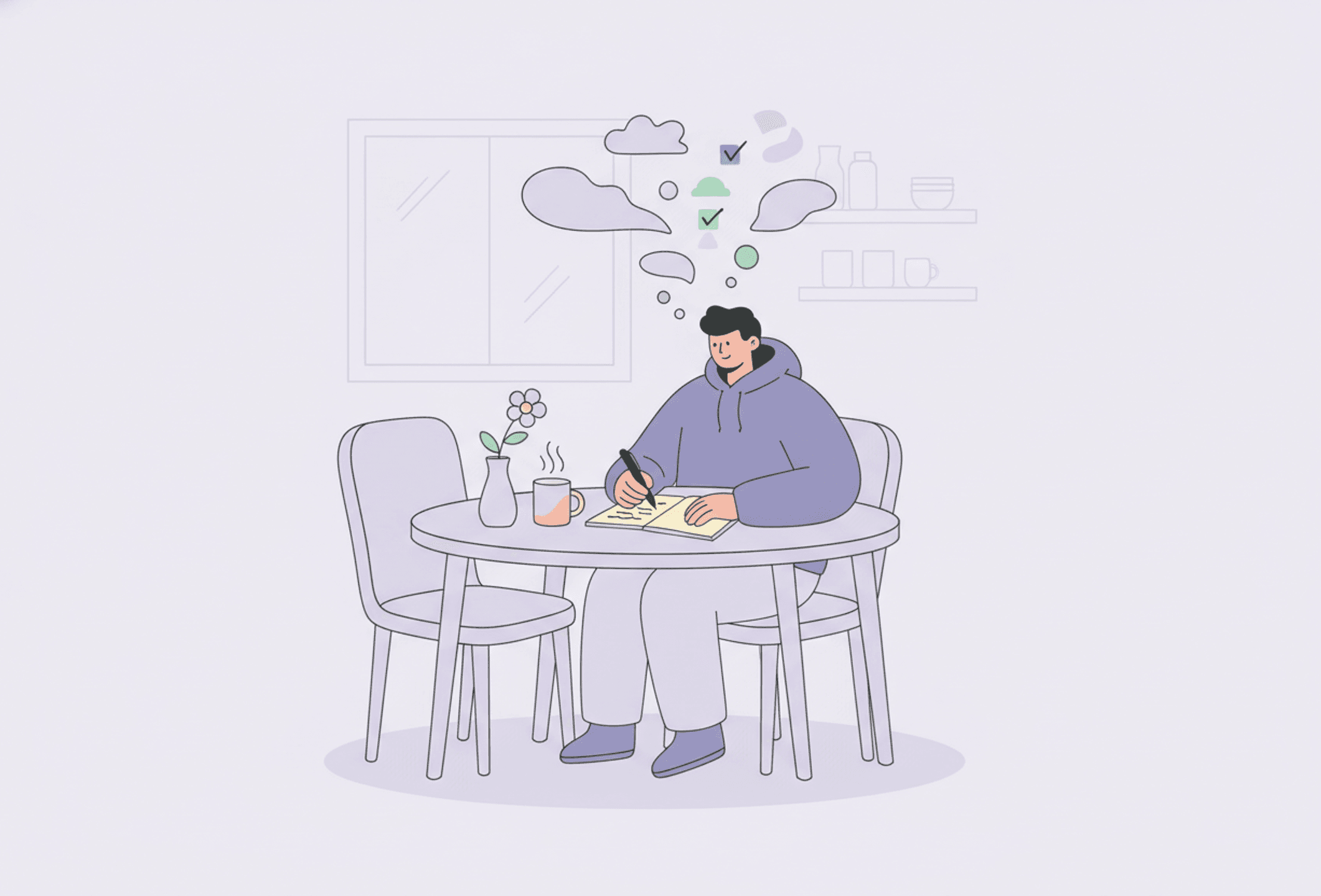
At 09:14 the thought shows up: reply to Anna about Thursday. It feels unforgettable, so you don't write it down. At 09:20 someone asks you a question, and the thought is gone — until Thursday night, when it comes back with interest.
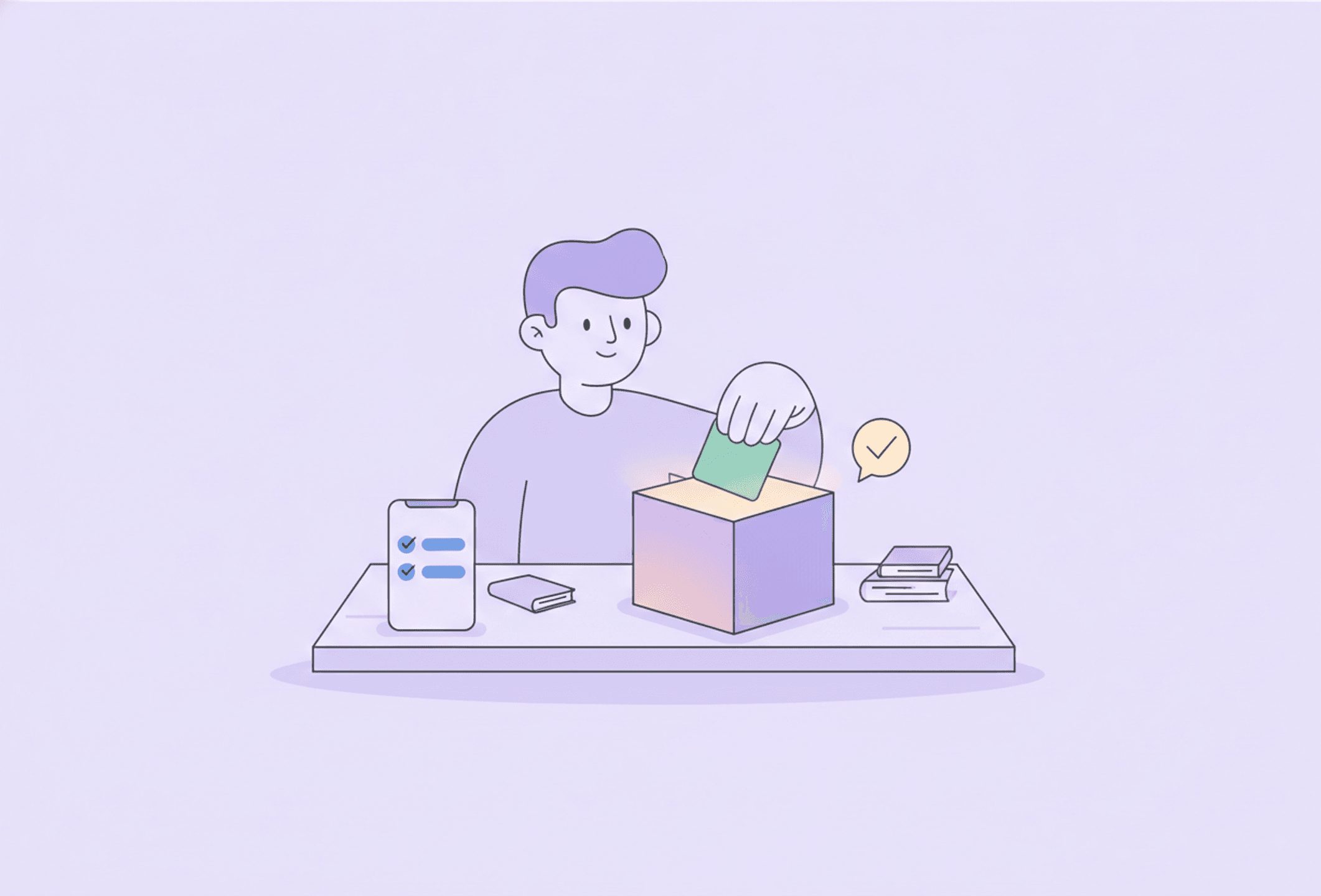
A second brain is one trusted place outside your head — an app or a notebook — where every task, idea, date and “don't forget” gets written down the moment it appears, so your working memory doesn't have to hold any of it. The name sounds grander than the thing. In practice it's the simplest deal you can make with yourself: everything goes in one place, and in exchange, your head gets to let go.
Why an ADHD brain needs a second brain
Working memory is the mental scratchpad that holds a thought until you can act on it. With ADHD, that scratchpad is small and it leaks. Thoughts don't wait in an orderly queue; they evaporate the moment something louder arrives. The 09:14 thought didn't fail because you're careless — it failed because it was stored in hardware that isn't built for storage.
Trying to hold everything anyway has a second cost, quieter and worse: it runs in the background all day. Some part of you is permanently spending energy keeping “call the dentist” and “buy a present before Saturday” alive, and the fear of dropping one of them is a real, low-grade anxiety. Many people who think they have a concentration problem actually have twenty open loops humming underneath everything they do.
And whatever isn't in front of you barely exists — out of sight really is out of mind. An external system doesn't fight any of this. It accepts it, and changes the job: instead of “remember everything”, your only task becomes “check one place”.
One place, not five
The usual way this fails is not too little capturing but too many places: a notes app, emails to yourself, three notebooks, a whiteboard and the back of a receipt. Fragments kill trust. If a reminder could be in any of five places, your brain knows that none of them is safe — so it quietly goes back to holding everything itself, now with extra guilt about the system.
So the first rule is blunt: one capture point, always within reach. Everything that needs remembering goes there — tasks, ideas, dates, the name of the podcast, the thing you promised your sister. Not the important things. Everything. The moment you start deciding what “counts”, you're back to keeping a mental list of the exceptions.
Capture must take five seconds
Friction kills capture. If writing something down means opening an app, choosing a project, setting a date and picking a priority, you'll do it four times and then never again. At the moment of capture you get to do exactly one thing: get the thought out. No sorting, no tags, no decisions — deciding is a separate job, done later, in calm.
This is also where a second brain differs from a brain dump. A brain dump is the one-off emptying: twenty minutes, everything currently circling in your head, onto paper. The second brain is the standing system you empty into — every day, one thought at a time, the moment each one appears. The dump clears the backlog; the system keeps it cleared. (This is exactly what the capture inbox in Stedo is for: one tap, type the thought, done — sorting is a later problem.)
Keep the structure almost embarrassingly simple
The graveyard of second brains is full of beautiful forty-folder taxonomies. A system that asks “which of my nineteen categories is this?” every time you write something down is a system you'll stop filing into by Thursday.
Three buckets cover almost everything: today, later, someday. Things with a real date get the date. That's it. When you plan your morning, you pull a handful of items from the system onto today's list — the system holds the rest so the list can stay short.
A weekly look-through keeps it trusted
A system you never look at becomes a junk drawer, and your brain notices long before you do — it starts holding things again “just in case”. The antidote is small: once a week, ten minutes. Skim what you captured, delete what's dead, give real dates to what earned them, and move the rest to later or someday. It slots naturally into a weekly review if you do one.
The point isn't tidiness. The point is evidence. Your head only lets go of things once it has seen, repeatedly, that written-down things come back at the right time.
Paper or app? Yes
A pocket notebook is a perfectly good second brain, and for some people the best one: nothing to unlock, nothing to update, no feed lurking behind the capture screen. What an app adds is the part paper can't do: reminders that fire at the right moment, recurring items that come back on their own, search, and the fact that your phone is already in your pocket. Both work. The only wrong answer is both-at-once plus a whiteboard.
Start with capture only
Don't build the system first. For one week, do nothing but capture: every task, idea and “don't forget” goes into the one place, and you're not allowed to organise any of it. At the end of the week you'll have the two proofs that matter — that writing things down actually works, and that your head is noticeably quieter. Structure is easy to add once trust exists. It's impossible to add trust to a structure you've already abandoned.
Read more
Frequently asked questions
What is a second brain?
One trusted place outside your head — an app or a notebook — where every task, idea and date gets written down the moment it appears. Instead of trying to remember everything, you check one place. For ADHD brains it compensates for exactly the thing that leaks: working memory.
What's the difference between a second brain and a brain dump?
A brain dump is a one-off emptying: everything currently circling in your head goes onto paper in one sitting. A second brain is the standing system you empty into every day, one thought at a time. The dump clears the backlog; the second brain keeps it cleared.
Do I need an app, or does paper work?
Both work. A pocket notebook is a perfectly good second brain: zero friction, nothing to unlock. An app adds what paper can't — reminders that fire at the right moment, recurring items and search. The only real rule is one capture point, and capture that takes seconds.
Why do my systems always collapse after two weeks?
Usually one of three reasons: several capture places instead of one (so no single place can be trusted), too much structure at capture time (friction kills capture), or no review (a system you never look at becomes a junk drawer). One place, five-second capture and a short weekly look-through fix all three.