How to Calm Morning Anxiety
A knotted stomach or a racing mind before the day has even started is common, and it has real causes. Here's why mornings spike anxiety, and what actually helps calm them.

Your eyes haven't even opened yet, and your stomach already knows something is wrong. The alarm hasn't gone off, but the dread got there first — a tight chest, a racing pulse, a mind already listing everything the day might go wrong before you've so much as sat up.
Morning anxiety is that wave of dread, racing thoughts, or a knotted stomach that arrives before the day has actually started, and it has real, physical causes — several of which respond well to small changes.
This is general information, not medical advice. If mornings are consistently overwhelming, that's worth mentioning to a doctor.
Why morning anxiety happens
- Your cortisol is peaking. Cortisol rises naturally in the thirty to forty-five minutes after you wake up — it's your body's built-in way of switching you on for the day. If you're already anxious, that same spike can feel less like energy and more like alarm bells.
- Your blood sugar is low. After eight-plus hours without food, blood sugar sits at its lowest point of the day, and low blood sugar produces sensations — shakiness, jitteriness, a racing heart — that are hard to tell apart from anxiety itself.
- The day has no shape yet. A day with no clear outline isn't calming, it's a wall. When the mind can't see what's coming, it fills the gap by scanning for what might go wrong.
- The rush starts immediately. Snooze, panic, scramble — if the first ten minutes are already chaotic, the nervous system never gets a calm moment to start from.
The ADHD layer
Mornings pack a string of transitions into a short window — asleep to awake, still to dressed, home to out the door — and transitions are exactly where ADHD brains spend the most friction. Time blindness makes it genuinely hard to know whether you have twenty minutes or two, so the morning often starts already feeling behind, regardless of what the clock says. And if enough mornings have gone sideways before, the dread stops being about today specifically — it becomes a prediction, built from experience, running before the day has even had a chance to prove it wrong.
None of that means anxious mornings are fixed. It means the fix works better aimed at the pattern than at willpower.
Decide the morning the night before
Every decision you'd otherwise make at seven a.m., you can make the night before instead, while you're calmer and have more to work with. Lay out clothes, decide breakfast, and pick the very first task before you even brush your teeth. This is most of what an evening wind-down is actually for — not just better sleep, but a morning with fewer open questions waiting in it.
Calm the first ten minutes
Before checking anything, give your body what it's actually asking for:
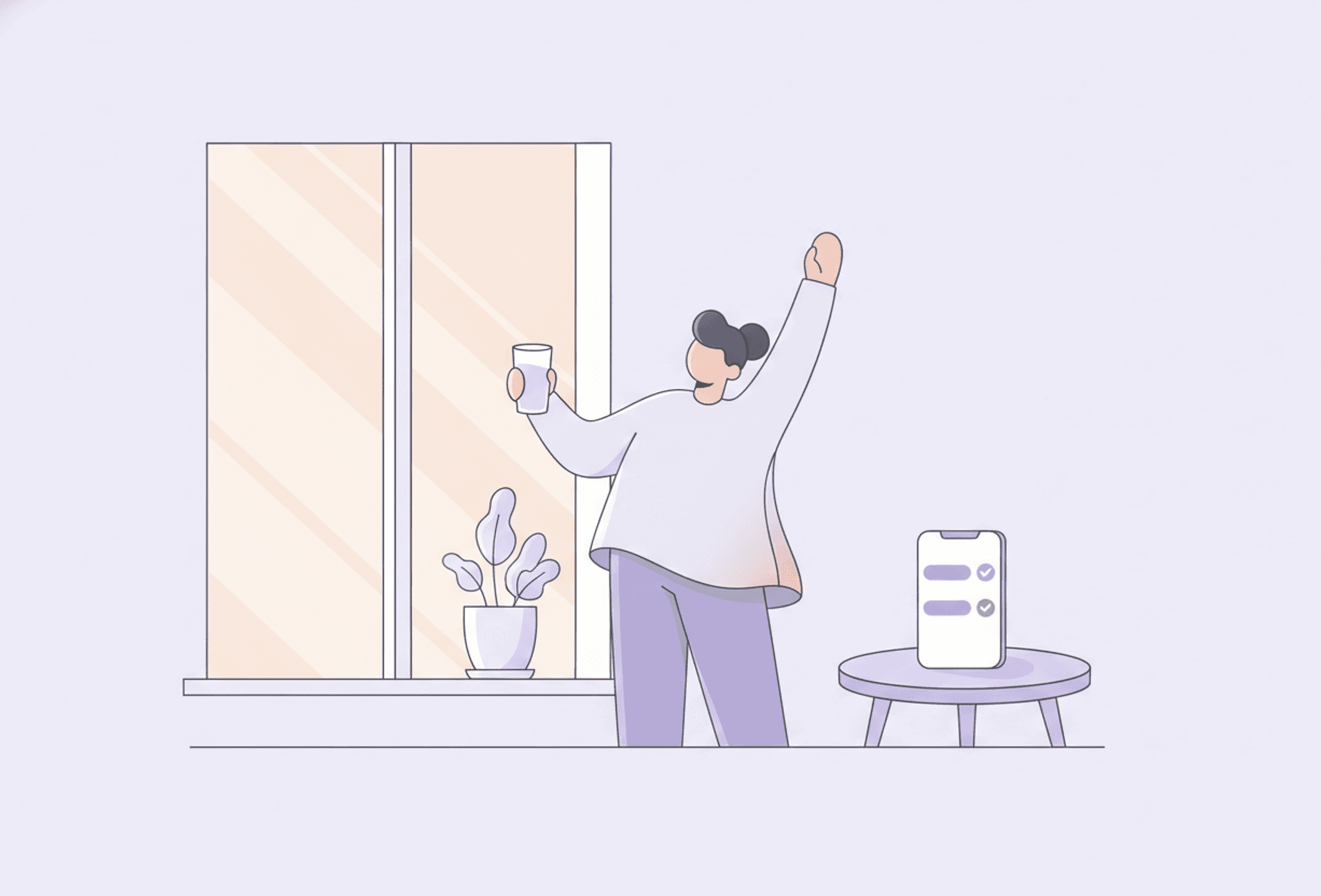
- Light. Open the curtains, or step near a window. Light is the fastest signal to your body that the day has safely begun.
- Water. A glass by the bed, first thing, before coffee.
- Something in your stomach. It doesn't need to be a real breakfast — even toast or fruit blunts the blood-sugar dip that's fuelling the jitters.
- Your phone, later. News and social feeds are a jolt of other people's urgency landing on a nervous system that's already keyed up. Give yourself ten minutes before you open them.
One small anchor, not an ambitious routine
This is not the moment to design an elaborate ten-step morning. One reliable anchor — the same small thing, done the same way, every day — teaches your nervous system that mornings are predictable, and predictable is calming. A full morning routine can grow from there once the anchor is solid, but it isn't where you start.
Make the day concrete
A vague day is a scarier day, because the mind fills vagueness with worst cases. A short glance at what's actually ahead — three or four known things instead of an undefined blob — does more to settle a racing mind than almost anything else on this list. Glancing at a short plan turns a formless day into a known one. Keep that plan somewhere you'll actually see it first thing; a simple checklist on your phone's home screen, in an app like Stedo, works well because it's visible the moment you wake up, not something you have to reconstruct from memory.
Let your body join in
A short walk, some stretching, even just opening a window and standing in the air for a minute — movement and daylight both lower physical arousal directly, rather than trying to talk your way out of it. It doesn't need to be exercise. It needs to happen before the day has fully closed in around you.
When it's more than a rough morning
Some anxious mornings ease with structure. Others don't, and that's worth taking seriously rather than pushing through alone. If dread is a daily fixture, or if it's spilling into panic, lost sleep, or avoidance, a doctor or therapist can help in ways a routine can't — this article is general information, not a substitute for that.
Read more
Frequently asked questions
Why is anxiety worse in the morning?
Several physical things stack up at once: cortisol naturally spikes in the first half hour after waking, blood sugar is at its lowest after a night without food, and an undefined day gives an anxious mind nothing concrete to hold onto except worst-case guessing. Rushing on top of that keeps the nervous system from ever finding a calm starting point.
Is morning anxiety connected to ADHD?
It can be. Mornings pack in more transitions than almost any other part of the day, and transitions are where ADHD brains spend the most effort. Time blindness makes it hard to know if you're actually behind, and a history of rough mornings can turn dread into a learned prediction rather than a reaction to that specific day.
What's the fastest way to calm a morning that's already gone anxious?
Light, water, and something in your stomach, in that order, before you look at your phone. All three address a physical piece of the anxiety directly, and none of them require the day to already be under control.
Should I see a doctor about morning anxiety?
If it's a near-daily pattern, or if it's tipping into panic, avoidance, or lost sleep, yes. A doctor or therapist can help in ways a morning routine can't. This article is general information, not a diagnosis or a substitute for professional support.